Disclaimer: The information published on LoansJagat is intended for general informational and educational purposes only and should not be considered financial, legal, or investment advice. Interest rates, loan terms, statistics, and other data may change over time and may vary by lender or source. Please verify the latest information and consult a qualified financial advisor or the respective Bank/NBFC before making any financial decisions.
Subscribe Now
About the author

Arshathul Afia is a journalism graduate and fintech content writer with 4+ years of experience in digital publishing and research-led writing. She has written 200+ articles covering personal finance, lending, banking, digital payments, credit, insurance, and major financial developments in India. At LoansJagat, she focuses on simplifying complex fintech news, RBI updates, loan-related changes, policy developments, and industry trends for everyday readers. Her journalism background helps her approach stories with research, context, and clarity, while her SEO experience ensures content remains discoverable and relevant. She aims to make financial news easier to understand, practical, and useful for readers across India.
Related News
Simplify All Your Loans Into One Affordable EMI

Customers Served

Debt Consolidated

1200+ Reviews

Locations in India
Club all Loans & Credit Card Bills into Single EMI

Quick Apply Loan
Consolidate your debts into one easy EMI.

Takes less than 2 minutes. No paperwork.

10 Lakhs+
Trusted Customers

2000 Cr+
Loans Disbursed

4.7/5
Google Reviews

50+
Banks & NBFCs Offers
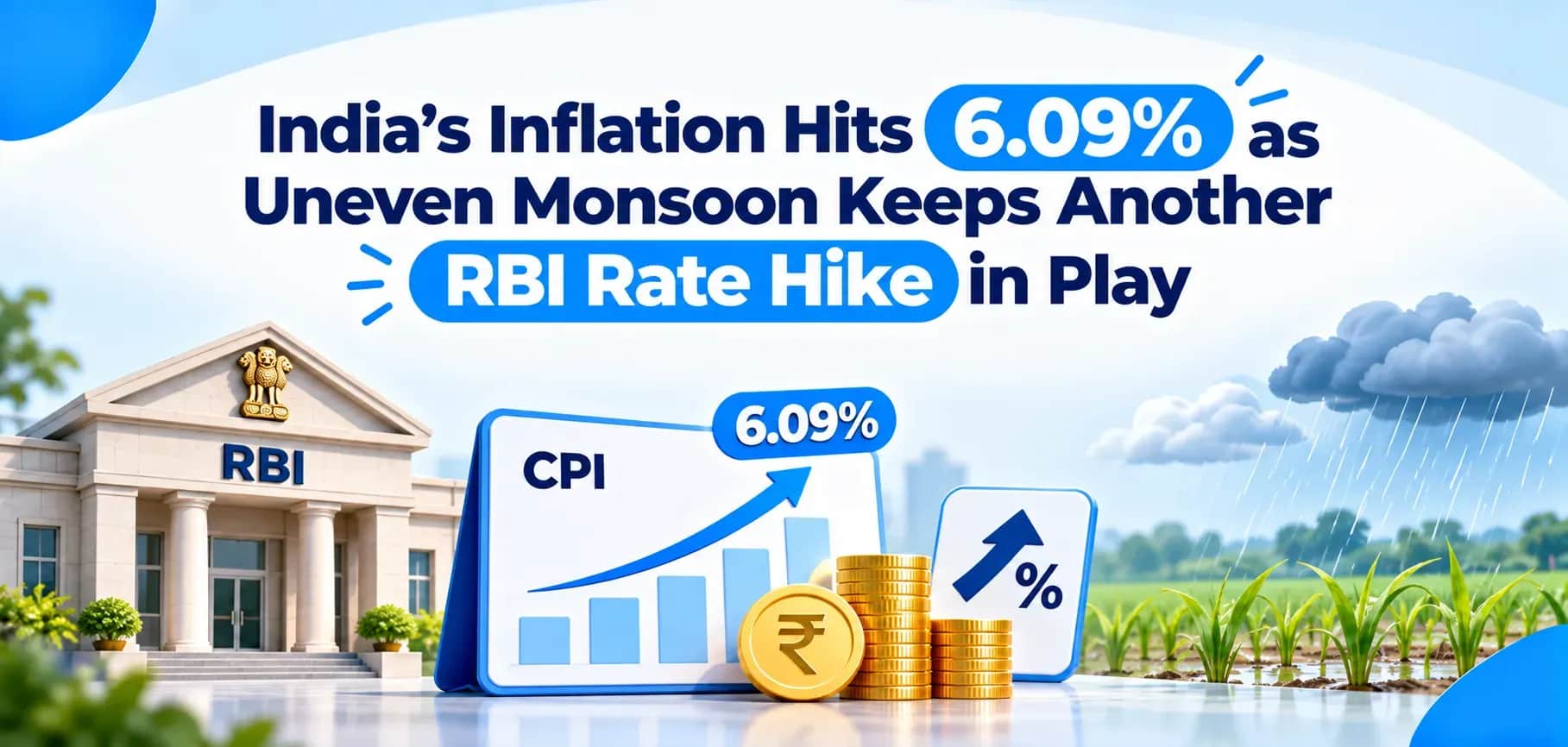
Uneven rainfall and El Niño could keep food prices under pressure this financial year, leaving another RBI rate hike possible even if overall inflation eases.
Key Highlights
India’s retail inflation crossed the Reserve Bank of India’s (RBI) 6% upper tolerance limit in October for the first time under the current Consumer Price Index (CPI) series. The provisional figures, released on 12 November 2026, put rural inflation at 6.63% and urban inflation at 5.41%.
A brokerage report covered on 13 November attributed most of the increase to food prices and a low comparison base. It found that pressure from consumer demand remained relatively contained. The report expects inflation to stay elevated in the near term, with room for it to ease later in FY27 as the base effect fades and supply pressures subside. Uneven rainfall and El Niño could slow that progress.
The increase was in line with the report’s expectations. On its rounded figures, annual inflation went from 5.5% in September to 6.1% in October, against an October 2025 reading of around 0%. The CPI itself rose from 109.49 in September 2026 to 110.05 in October, so prices also increased over the month.
Food prices moved in both directions. Onions cost 116.22% more than a year earlier in October, and garlic prices rose 60.74%. Potato prices fell 14.24%. The separate Consumer Food Price Index put annual food inflation at 8.94%, up from 7.74% in September. That index tracks a different basket from the CPI’s food and beverages category.
Restaurants faced higher commercial LPG and ingredient costs. The report also linked part of the rise in clothing and footwear inflation to higher cotton prices and the cost of crude-linked inputs. Core inflation, which excludes food and fuel, edged up to 4.8%.
Super-core inflation, which also excludes commodities, rose to 3.8%. The report still identified food prices and the low base as the main reasons for the rise in headline inflation.
India received 759.4 mm of rain during the June to September southwest monsoon, about 12.6% below the long-term average. The shortfall was deeper in the southern peninsula, where seasonal rainfall was around 24% below normal. For growers, where and when the rain falls affects how much water is available when crops need it.
El Niño, a warming of the central and eastern tropical Pacific, can weaken India’s summer monsoon. A weak monsoon can leave less moisture in the soil when farmers sow winter crops such as wheat and rapeseed. If crop supplies come under pressure, food inflation could take longer to cool even as the effect of last year’s low prices fades.
The Monetary Policy Committee raised the repo rate by 25 basis points to 5.50% on 7 October. It also shifted to a calibrated tightening stance, leaving room for a further increase or a pause depending on the inflation and growth outlook. Its October projections put FY27 inflation at 5.2% and inflation for the October to December quarter at 6.0%.
The brokerage report sees another hike as possible and expects any tightening cycle to be limited. At its 2 to 4 December meeting, the RBI will weigh how long the current pressures could last and whether higher costs are spreading across more goods and services.
Easing supply pressures could bring inflation down later in FY27. If uneven rainfall keeps food prices high or price increases spread across more categories, another RBI rate hike remains possible.
Annual inflation compares prices with the same month a year earlier. When the price level in that earlier month is low, the annual rate can rise even if prices have moved only modestly since the previous month.
The CPI tracks a weighted basket of goods and services. A household that spends a larger share on groceries, rent or transport may see its own bills rise faster or slower than the national rate.
Kirana shops often buy fresh produce through local wholesale markets, where traders gather supplies from growers or commission agents. A shortage at the market can raise the shop’s buying costs and, in turn, the prices shoppers pay.
The RBI targets annual CPI inflation of 4%, with a tolerance band of 2% to 6%. The government retained that framework for five years, from 1 April 2026 to 31 March 2031.
A floating-rate home loan linked to the repo rate can become more expensive at its next rate reset. Depending on the loan terms, the borrower may face a higher EMI, a longer repayment period or both.
Start your journey today
Apply Now*T&C apply