
By continuing, you agree to LoansJagat's Credit Report Terms of Use, Terms and Conditions, Privacy Policy, and authorize contact via Call, SMS, Email, or WhatsApp
Disclaimer: The information published on LoansJagat is intended for general informational and educational purposes only and should not be considered financial, legal, or investment advice. Interest rates, loan terms, statistics, and other data may change over time and may vary by lender or source. Please verify the latest information and consult a qualified financial advisor or the respective Bank/NBFC before making any financial decisions.
Subscribe Now
About the author

LoansJagat Team
‘Simplify Finance for Everyone.’ This is the common goal of our team, as we try to explain any topic with relatable examples. From personal to business finance, managing EMIs to becoming debt-free, we do extensive research on each and every parameter, so you don’t have to. Scroll up and have a look at what 15+ years of experience in the BFSI sector looks like.
Related Blog Post
Simplify All Your Loans Into One Affordable EMI

Customers Served

Debt Consolidated

1200+ Reviews

Locations in India
Club all Loans & Credit Card Bills into Single EMI

Quick Apply Loan
Consolidate your debts into one easy EMI.

Takes less than 2 minutes. No paperwork.

10 Lakhs+
Trusted Customers

2000 Cr+
Loans Disbursed

4.7/5
Google Reviews

50+
Banks & NBFCs Offers
Other services mentioned in this article
India’s inflation outlook has improved as global commodity prices soften. However, not all households will experience relief at grocery stores. Food inflation is rising, and the inconsistent rainfall could lead to higher vegetable, cereal, and dairy costs through 2026.
Key Highlights
Retail inflation remained below 4% in May, while declining commodity prices offered some relief for transport operators, farmers and manufacturers. Yet household costs may take longer to fall because food prices are still moving higher.
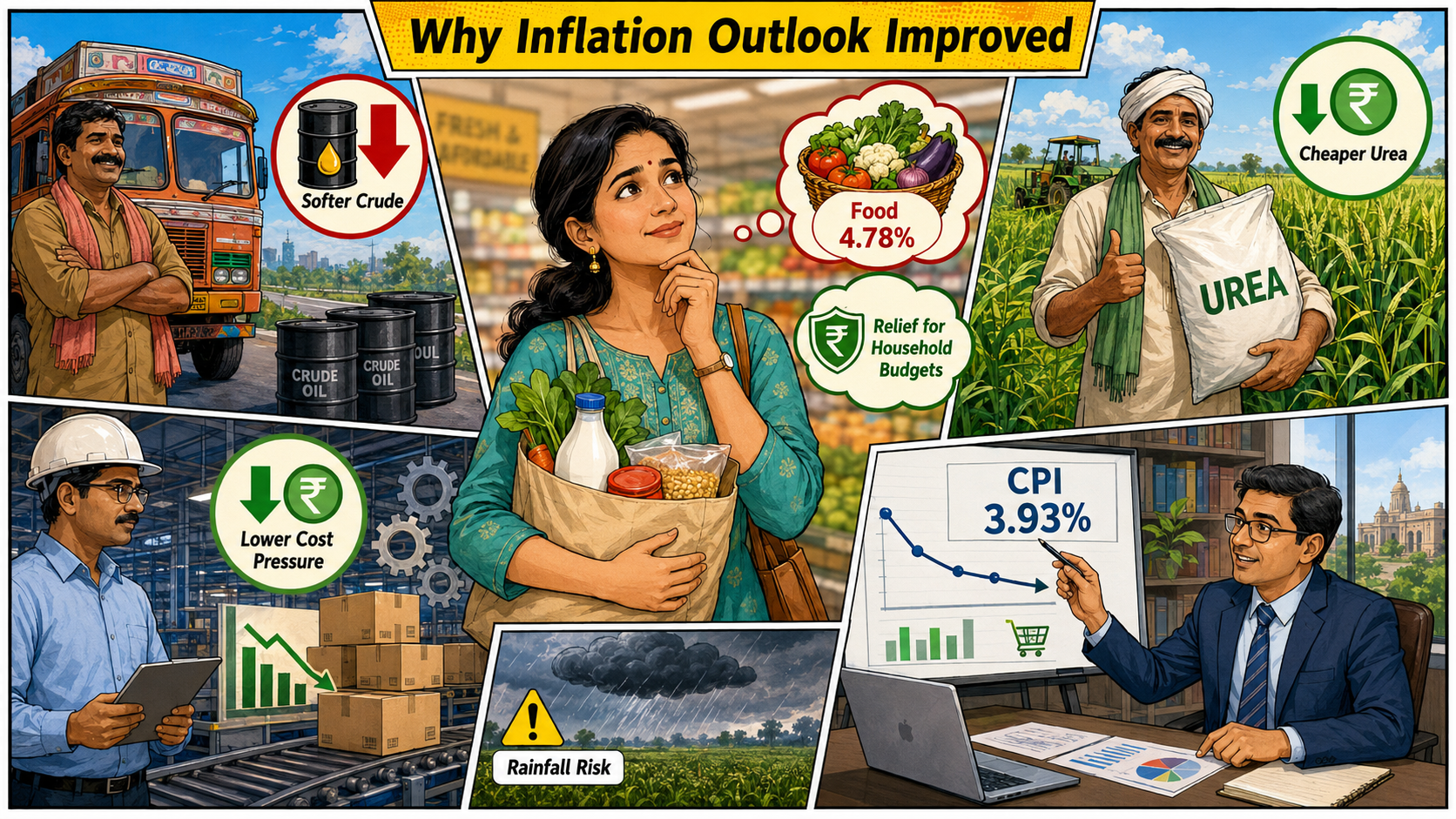
India’s retail inflation reached 3.93% in May 2026, compared with 3.48% in April, according to the Ministry of Statistics and Programme Implementation release dated June 12, 2026. Food inflation increased from 4.20% to 4.78%.
The Finance Ministry’s Monthly Economic Review for May 2026 said softer commodity prices could keep inflation relatively contained. Reuters reported the assessment on June 30, 2026. Lower crude oil and urea prices may reduce India’s imported cost pressure.
Rainfall and international energy prices remain major risks. Poor rainfall in crop-producing states could lift food prices, while geopolitical tension may push crude oil prices higher again.
The May data showed headline inflation below 4%, though food prices rose faster than the wider CPI figure.
The figure landed a little below the 4.00% estimate reported by a Reuters survey on June 8, 2026. Families who are still spending more on milk and vegetables or paying more for transportation may not perceive inflation to be abating.
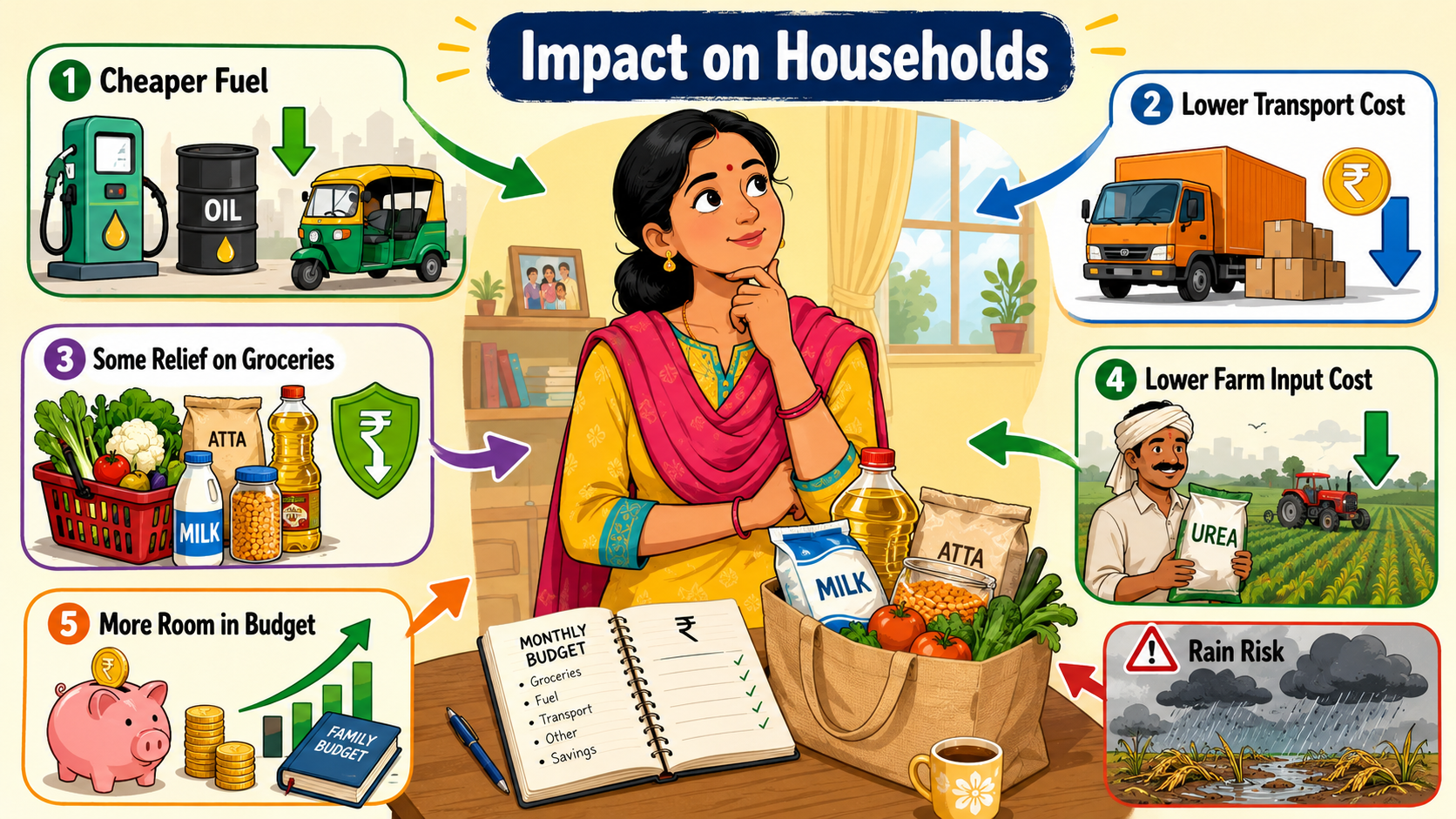
Lower crude oil prices can reduce fuel, freight and manufacturing expenses. Cheaper urea may also lower cultivation costs for farmers. These savings will help consumers only when businesses and retailers pass them through the supply chain.
4.20%
*T&C Apply
According to LoansJagat, inflation staying near 4% may reduce fresh pressure on lending rates. This could support personal loan, home loan and business loan borrowers.
LoansJagat reported on March 30, 2026, that India retained its 4% inflation target and 2% to 6% tolerance band until March 31, 2031.
The Finance Ministry said adequate food stocks and timely government action could contain supply-related price increases. Food stocks may need to reach markets faster when shortages appear. Fertiliser supplies must also remain available before major sowing periods.
Goldman Sachs reduced its 2026 India inflation projection by 20 basis points after crude prices fell, according to Reuters. A fresh oil-price rise could reverse part of this improvement.
Lower commodity prices have improved India’s inflation outlook, but food costs still require attention. Relief for households will depend on rainfall, crop supplies and whether lower business costs reach retail markets.
What Was India’s CPI Inflation In May 2026?
India’s CPI inflation was 3.93%, up from 3.48% in April 2026.
Why Could Inflation Remain Contained?
Cheaper crude oil, urea and other commodities may reduce farming, manufacturing and transport expenses.
Does India’s CPI Basket Reflect Current Household Spending?
Not completely. Spending habits have changed, while food still carries a large weight in the CPI basket.
What are the Effects of a Rapid Increase in CPI Inflation?
Inflation increases the cost of living, and increases in inflation may result in additional increases in interest rates, impacting loans and monthly EMIs.









.png&w=3840&q=75)



