By continuing, you agree to LoansJagat's Credit Report Terms of Use, Terms and Conditions, Privacy Policy, and authorize contact via Call, SMS, Email, or WhatsApp
Disclaimer: The information published on LoansJagat is intended for general informational and educational purposes only and should not be considered financial, legal, or investment advice. Interest rates, loan terms, statistics, and other data may change over time and may vary by lender or source. Please verify the latest information and consult a qualified financial advisor or the respective Bank/NBFC before making any financial decisions.
Subscribe Now
About the author

LoansJagat Team
‘Simplify Finance for Everyone.’ This is the common goal of our team, as we try to explain any topic with relatable examples. From personal to business finance, managing EMIs to becoming debt-free, we do extensive research on each and every parameter, so you don’t have to. Scroll up and have a look at what 15+ years of experience in the BFSI sector looks like.
Related News
Simplify All Your Loans Into One Affordable EMI

Customers Served

Debt Consolidated

1200+ Reviews

Locations in India
Club all Loans & Credit Card Bills into Single EMI

Quick Apply Loan
Consolidate your debts into one easy EMI.

Takes less than 2 minutes. No paperwork.

10 Lakhs+
Trusted Customers

2000 Cr+
Loans Disbursed

4.7/5
Google Reviews

50+
Banks & NBFCs Offers
Other services mentioned in this article
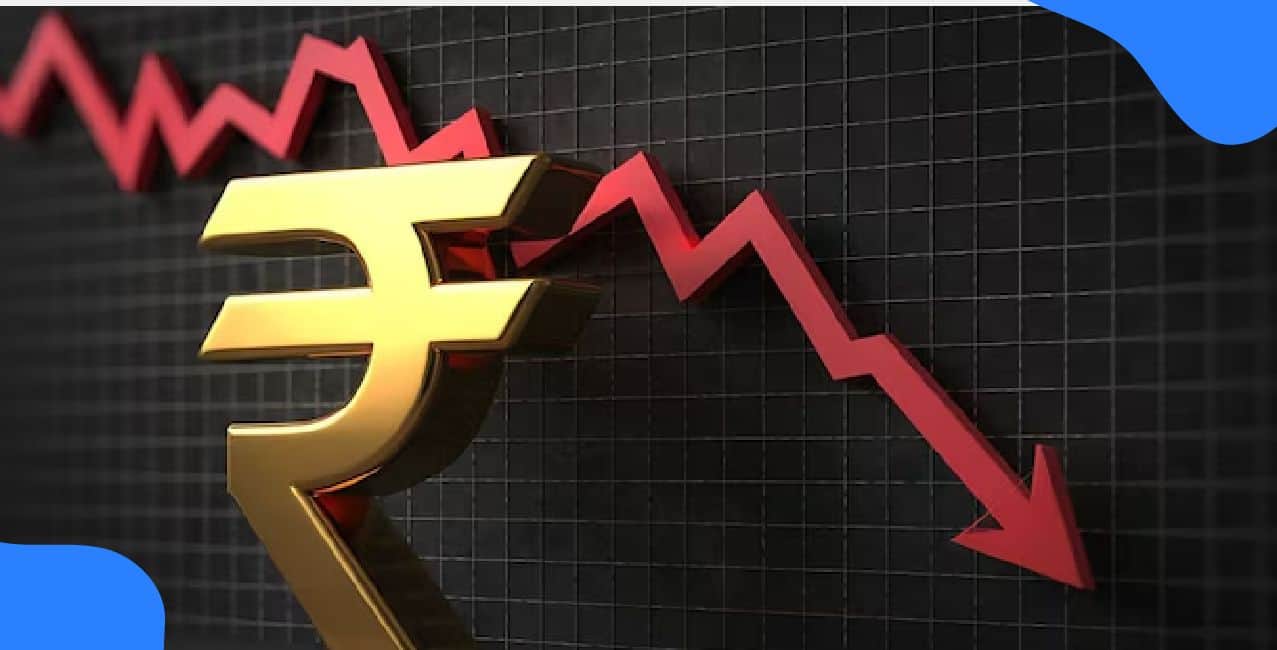
On January 29, 2026, the Indian rupee weakened to an unprecedented ₹92 against the US dollar, marking a historic low for the currency and triggering fresh debate about the forces shaping India’s external sector.
This decline has occurred despite India’s robust economic growth, raising questions about capital flows, trade balances and global conditions that influence exchange rates.
The recent slide of the rupee reflects both domestic and global developments. One of the key drivers is the sharp reduction in foreign capital entering India. Investors, particularly foreign portfolio investors (FPIs), have been withdrawing funds from Indian markets in search of higher returns elsewhere.
In January 2026 alone, FPIs sold equities worth around ₹36,500 crore, which meant converting rupees into dollars and adding pressure on the local currency.
Another important factor is the strength of the US dollar itself. With interest rates remaining relatively high in the United States, global investors find dollar-denominated assets more attractive. This trend pulls capital out of emerging markets and lifts demand for dollars, pushing the rupee lower.
India also runs a trade deficit, where the value of imports exceeds exports. Heavy import demand for crude oil, electronics and gold raises sustained demand for dollars, which adds to depreciation pressure. Wider trade gaps mean more Indian rupees are sold for dollars, further weakening the exchange rate.
At its core, a currency’s value is shaped by supply and demand for foreign exchange. India relies on foreign capital to balance its current account, which covers trade in goods and services. When capital inflows decline, as seen with FPI outflows and subdued foreign direct investment (FDI), the supply of dollars falls relative to demand. With robust import needs still in place, this imbalance tends to weaken the rupee.
Moreover, corporate behaviour has shifted: importers and firms with foreign exposure have increased forward hedging, attempting to lock in dollar prices ahead of time.
This behaviour reduces the supply of dollars available in the market, as exporters delay converting foreign earnings into rupees. Combined with a strong dollar, this dynamic intensifies downward pressure on the Indian unit.
The Reserve Bank of India has tools to temper extreme currency moves, such as selling US dollars from its reserves to support the rupee temporarily. Recent interventions appear to have kept the exchange rate from breaching key psychological levels, like the ₹92.20–₹92.50 zone identified by traders.
Still, RBI’s strategy seems measured rather than aggressive. With inflation relatively subdued and policymakers mindful of preserving foreign exchange reserves, the central bank has allowed market forces greater sway.
This approach helps prevent unnecessary depletion of reserves but lets the rupee adjust gradually to global realities.
A weaker rupee has mixed implications. It raises the cost of imports, which can feed into inflationary pressures for goods like fuel, electronics and foreign travel. Insurance, education abroad and imported consumer products become more expensive in rupee terms.
At the same time, exporters may benefit as they receive more rupees for each dollar earned abroad, potentially boosting competitiveness. Sectors such as information technology and business process outsourcing could find some relief in a depreciated currency. Analysts say this dual effect underscores why currency movements cannot be judged solely as negative or positive without context.
Markets have reacted to the rupee’s slide with caution. Indian stock indices dipped as sentiment wavered, and certain yield curves in fixed income markets have reflected nervousness about extended depreciation trends.
*T&C Apply
Importantly, analysts observe that downward moves in the exchange rate are not unique to India; other emerging market currencies have experienced similar pressures in response to global interest rate differentials and geopolitical risks.
The key determinants in the months ahead will likely include foreign appetite for Indian assets, oil price trajectories and diplomatic progress on trade obstacles.
The rupee’s slip to ₹92 against the US dollar is a reminder that currency values are complex and influenced by myriad factors—from capital flows and trade deficits to interest rate differentials and external investor sentiment.
While a weaker rupee presents challenges, particularly for import costs and inflation, it can also underwrite export competitiveness. What matters now is how policy, markets and external forces interact in shaping India’s external sector resilience in 2026 and beyond.









.png&w=3840&q=75)



