By continuing, you agree to LoansJagat's Credit Report Terms of Use, Terms and Conditions, Privacy Policy, and authorize contact via Call, SMS, Email, or WhatsApp
Disclaimer: The information published on LoansJagat is intended for general informational and educational purposes only and should not be considered financial, legal, or investment advice. Interest rates, loan terms, statistics, and other data may change over time and may vary by lender or source. Please verify the latest information and consult a qualified financial advisor or the respective Bank/NBFC before making any financial decisions.
Subscribe Now
About the author

LoansJagat Team
‘Simplify Finance for Everyone.’ This is the common goal of our team, as we try to explain any topic with relatable examples. From personal to business finance, managing EMIs to becoming debt-free, we do extensive research on each and every parameter, so you don’t have to. Scroll up and have a look at what 15+ years of experience in the BFSI sector looks like.
Related News
Simplify All Your Loans Into One Affordable EMI

Customers Served

Debt Consolidated

1200+ Reviews

Locations in India
Club all Loans & Credit Card Bills into Single EMI

Quick Apply Loan
Consolidate your debts into one easy EMI.

Takes less than 2 minutes. No paperwork.

10 Lakhs+
Trusted Customers

2000 Cr+
Loans Disbursed

4.7/5
Google Reviews

50+
Banks & NBFCs Offers
Other services mentioned in this article
Indian overseas travel spending fell sharply in March 2026, showing tighter household budgets, costlier foreign travel and pressure from rupee-linked concerns.
Key Takeaways
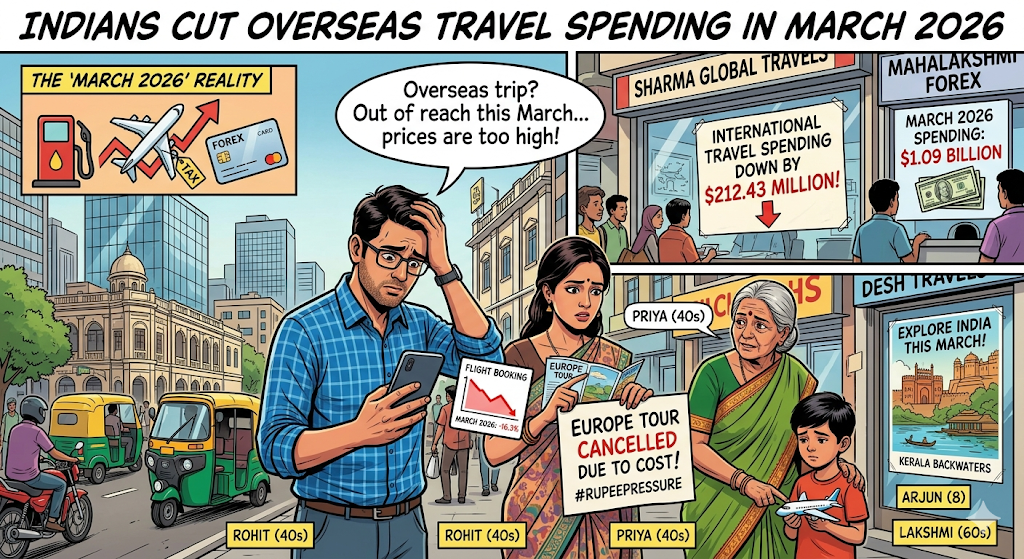
Indian residents reduced overseas travel spending in March 2026, including holiday trips and card-led foreign payments. The fall came at a time when West Asia tensions, higher travel costs and rupee pressure were already influencing foreign exchange usage.
In the short term, this can slow demand for foreign currency from travel bookings, forex cards and international card payments. In the long term, travel agents, airlines, overseas education service providers and forex dealers may see uneven demand if families continue cutting discretionary foreign expenses.
The data shows that foreign travel fell, but outward remittances did not collapse. Travel still remained the largest LRS category, at nearly 42% of March’s total remittance outflow.
For Indian families, the biggest impact is on foreign holidays, education travel and card spends abroad. Holiday trips and international credit card settlements formed the largest travel bucket at $623.05 million, almost 57% of the March travel total. Education-related travel, including fees and hostel expenses, stood at $450.16 million.
The positive side is lower foreign travel spending can reduce some pressure on dollar demand. But for students and families already committed to foreign education, the spending cut may not be easy because fees, rent and hostel costs are fixed in foreign currency.
Indians spent less on foreign trips in March 2026 as travel costs, rupee pressure and global tensions made families rethink overseas holidays, forex cards and card payments abroad.
*T&C Apply
This shift shows Indians cut travel but raised overseas financial investments. Property-related remittances, however, dropped from February.
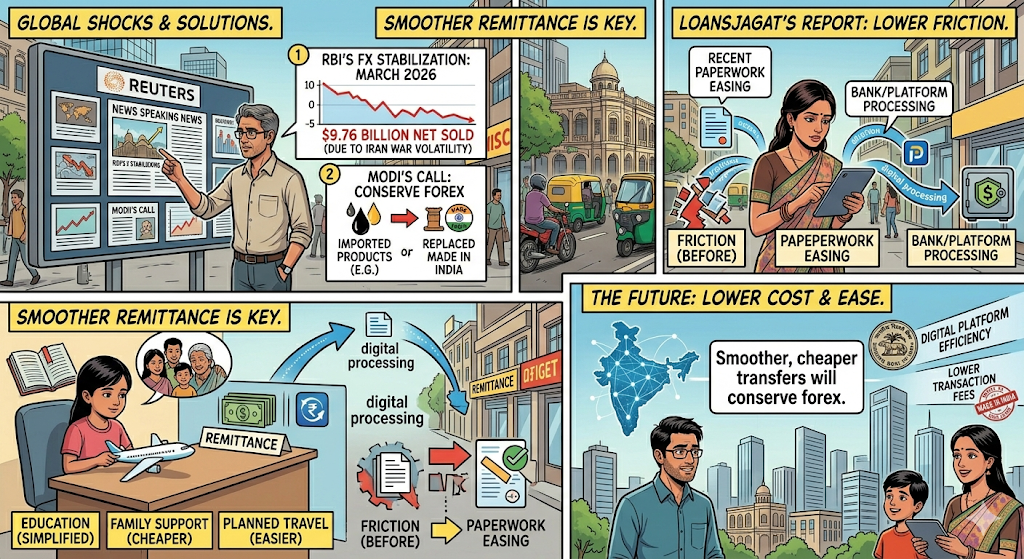
Reuters reported that India’s central bank sold a net $9.76 billion in March as the rupee came under pressure during the Iran war-linked volatility. Prime Minister Narendra Modi also urged citizens to save fuel and reduce foreign product usage to conserve forex during the West Asia crisis.
For users, the solution is smoother and cheaper remittance access, especially for education, family support and planned travel. LoansJagat reported that recent paperwork easing for overseas money transfers can help digital platforms and banks process outward remittances with lower friction.
March data shows Indians pulled back on foreign travel, but overseas remittances stayed active through investments. The next trend will depend on airfare, rupee movement, education payments and West Asia-linked oil pressure.
How Should Indians Pay While Travelling Abroad?
For Indians going abroad, using just 1 payment option is not the best idea. A forex card is useful because the exchange rate can be locked before the trip. A credit card also helps in hotels, online bookings and emergencies, but many banks add around 1% to 3.5% forex markup.
Some cash should be carried too, mainly for taxis, local shops or places where cards do not work. Too much cash is risky. The better option is to check charges before travel and use a forex card, 1 low-markup credit card and small cash.
How Much Extra Do Indians Pay When They Send Money Abroad?
Indians spend a lot overseas every year for travel, studies, family needs and investments. In FY26, the total outward remittance was around $29 billion, compared with $29.6 billion in FY25. The extra cost comes from bank fees, exchange-rate markup and card charges.
Some banks charge around ₹500 to ₹1,000 plus tax for an outward remittance, and the forex rate can also be higher than the live market rate. So the final cost changes from bank to bank. It is better to compare rates and fees before sending money abroad.









.png&w=3840&q=75)



