By continuing, you agree to LoansJagat's Credit Report Terms of Use, Terms and Conditions, Privacy Policy, and authorize contact via Call, SMS, Email, or WhatsApp
Disclaimer: The information published on LoansJagat is intended for general informational and educational purposes only and should not be considered financial, legal, or investment advice. Interest rates, loan terms, statistics, and other data may change over time and may vary by lender or source. Please verify the latest information and consult a qualified financial advisor or the respective Bank/NBFC before making any financial decisions.
Subscribe Now
About the author

LoansJagat Team
‘Simplify Finance for Everyone.’ This is the common goal of our team, as we try to explain any topic with relatable examples. From personal to business finance, managing EMIs to becoming debt-free, we do extensive research on each and every parameter, so you don’t have to. Scroll up and have a look at what 15+ years of experience in the BFSI sector looks like.
Related News
Simplify All Your Loans Into One Affordable EMI

Customers Served

Debt Consolidated

1200+ Reviews

Locations in India
Club all Loans & Credit Card Bills into Single EMI

Quick Apply Loan
Consolidate your debts into one easy EMI.

Takes less than 2 minutes. No paperwork.

10 Lakhs+
Trusted Customers

2000 Cr+
Loans Disbursed

4.7/5
Google Reviews

50+
Banks & NBFCs Offers
Other services mentioned in this article
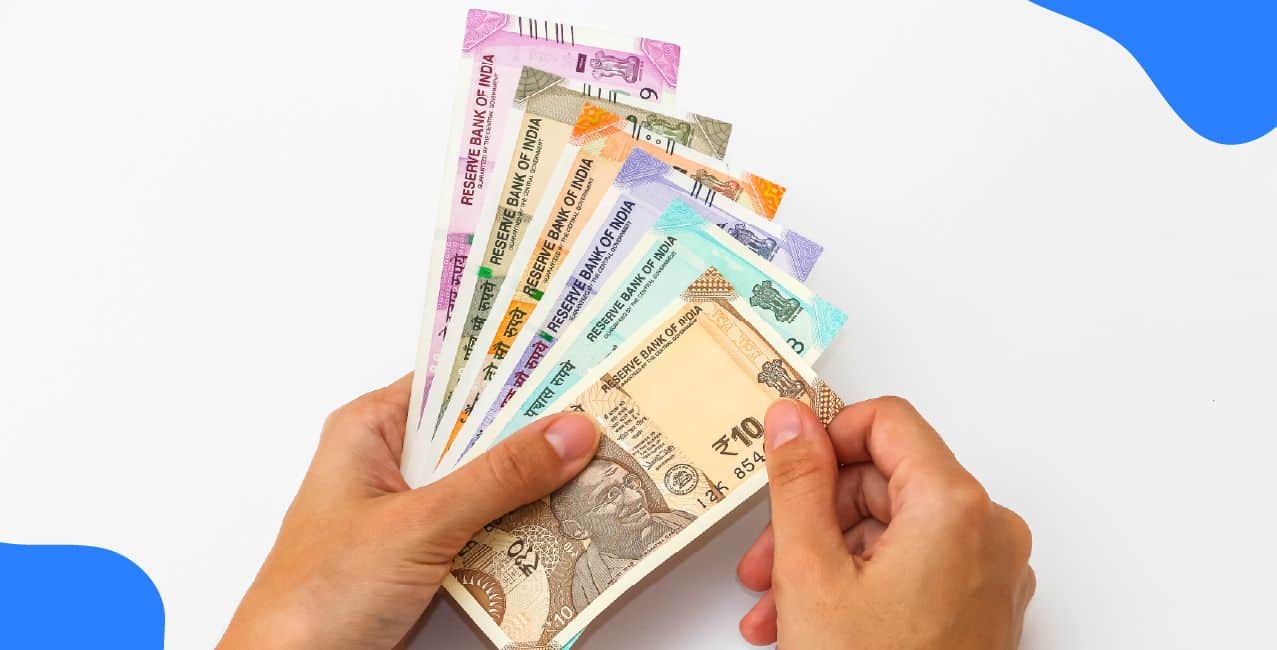
The Indian rupee has been under sustained pressure, sliding to record lows near ₹92 per US dollar. This depreciation against the greenback has drawn attention because it comes despite India’s relatively strong economic performance, and has forced the Reserve Bank of India (RBI) to step in to slow the slide as it approaches the psychologically significant ₹92 level.
Several factors have combined to weaken the rupee.
First, foreign portfolio outflows have been significant, with global investors pulling money out of Indian equities and debt. This pushes up demand for dollars and drags the rupee downward.
Second, heightened dollar demand from corporate hedging and importers, particularly for contracts tied to future deliveries or hedges, has intensified pressure on the currency.
A third element is global uncertainty. When investors seek safe-haven assets like the US dollar, emerging market currencies, India’s rupee included, often weaken. This dynamic has been seen even when India’s fundamentals remain solid.
Finally, the ongoing trade environment, including unresolved negotiations and the impact of elevated tariffs on exports, has influenced capital flows and confidence, indirectly putting further downward pressure on the rupee.
These forces, together, have moved the rupee to lows near 91.98–91.99 per dollar, close to breaching ₹92, a level that traders consider significant.
The RBI has not stood idle. As the rupee approached the ₹92 mark, evidence suggests the central bank intervened in the foreign exchange market to temper the decline.
This typically involves selling US dollars from reserves to meet excess dollar demand and support the rupee. Such action can prevent disorderly moves and limit the pace of currency weakness, but it also affects local liquidity and market pricing.
The RBI has stated it does not defend any fixed level for the currency, yet it actively works to prevent excessive volatility that could disrupt markets or financial stability.
Because every dollar sold to support the rupee reduces the supply of rupees in the banking system, this can inadvertently put upward pressure on domestic interest rates or impact bond yields, creating a delicate balance for monetary policy.
A weaker rupee has mixed effects on the Indian economy.
On the positive side, it can make exports more competitive because Indian goods are cheaper for foreign buyers. It can also benefit remittance inflows, as NRIs get more rupees for their dollar remittances.
But there are clear downsides. Imports become more expensive, which can push up costs for everything from crude oil to electronics. This, in turn, can have ripple effects on inflation and consumer prices if sustained over time.
Persistent weakness may also reflect structural pressures—like capital outflows or global risk aversion—that are not easily fixed by short-term market intervention.
Analysts expect the rupee to remain sensitive to external flows and global sentiment. Some forecasts suggest it could drift to levels like ₹93–₹94 if foreign investment remains subdued and dollar demand stays strong.
*T&C Apply
This projection does not require dramatic changes in fundamentals; rather it reflects the scale of current capital movements and the broader strength of the US dollar.
The rupee’s recent slide toward ₹92 per dollar is a symptom of broader macro-financial dynamics—external flows, global risk appetite, and hedging behaviour, rather than a direct reflection of India’s economic growth, which remains comparatively strong. The RBI’s interventions have so far helped cap extreme moves, but sustained weakness would require deeper shifts in capital flows or external demand conditions.
Managing this balance—supporting the currency without disrupting domestic liquidity, will remain a key challenge for India’s central bank in the months ahead.









.png&w=3840&q=75)



