
Disclaimer: The information published on LoansJagat is intended for general informational and educational purposes only and should not be considered financial, legal, or investment advice. Interest rates, loan terms, statistics, and other data may change over time and may vary by lender or source. Please verify the latest information and consult a qualified financial advisor or the respective Bank/NBFC before making any financial decisions.
Subscribe Now
About the author

Arshathul Afia is a journalism graduate and fintech content writer with 4+ years of experience in digital publishing and research-led writing. She has written 200+ articles covering personal finance, lending, banking, digital payments, credit, insurance, and major financial developments in India. At LoansJagat, she focuses on simplifying complex fintech news, RBI updates, loan-related changes, policy developments, and industry trends for everyday readers. Her journalism background helps her approach stories with research, context, and clarity, while her SEO experience ensures content remains discoverable and relevant. She aims to make financial news easier to understand, practical, and useful for readers across India.
Related News
Simplify All Your Loans Into One Affordable EMI

Customers Served

Debt Consolidated

1200+ Reviews

Locations in India
Club all Loans & Credit Card Bills into Single EMI

Quick Apply Loan
Consolidate your debts into one easy EMI.

Takes less than 2 minutes. No paperwork.

10 Lakhs+
Trusted Customers

2000 Cr+
Loans Disbursed

4.7/5
Google Reviews

50+
Banks & NBFCs Offers
In an interview published on 8 November 2026, CRIF’s CEO advised first-time borrowers in India to start with manageable credit and repay it on time.
Key Highlights
Lenders in India have less to go on when a first-time applicant has no repayments on file. Suresh Venkatesan, CEO of CRIF Credit Information Services, pointed to 2 ways to start building that record. His advice was to start with a small loan or a credit card limit the borrower could comfortably manage.
Each card or loan application may prompt a lender enquiry. Several enquiries close together may affect the CIBIL score. A borrower who has time before a planned loan can use a manageable account and build a record of payments by the due date.
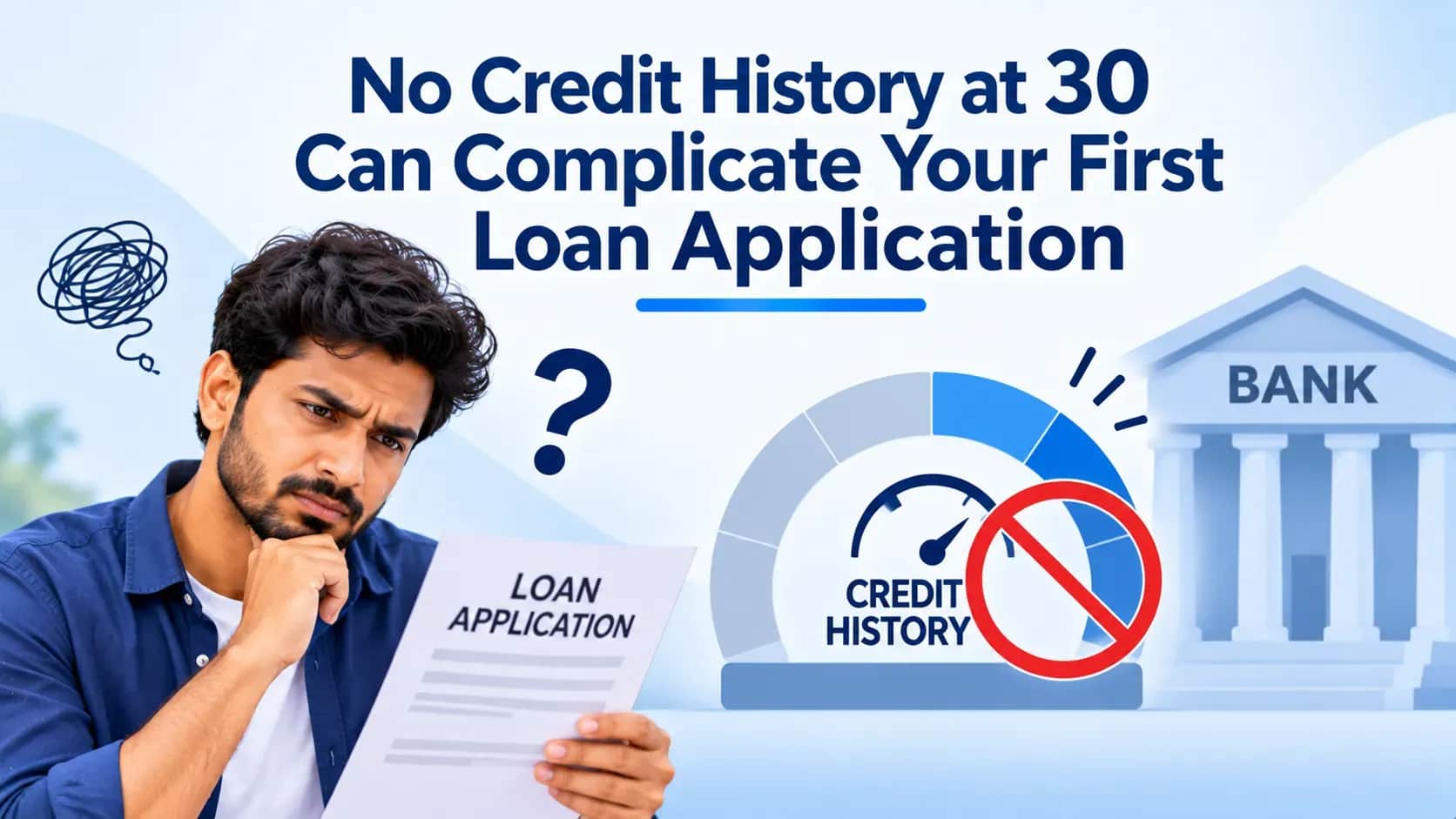
With little or no borrowing history on file, the CIBIL report may show NA or NH. A lender may still assess what the applicant earns and how steady the job is, alongside existing financial commitments. The weight given to each factor depends on the lender’s policy.
For borrowers with a fixed deposit (FD), a card secured against the deposit is another route into formal credit. IDFC FIRST Bank, for example, offers an FD-backed card to applicants without prior credit history. The bank places a lien on the deposit, so access to those funds is restricted while the lien is in place.
Venkatesan’s advice was to pick a loan amount or card limit that fits the borrower’s budget and make each payment on time. TransUnion CIBIL advises cardholders to use a small share of their limit and apply for new credit only when needed. The unpaid balance may still attract interest after a minimum payment.
CRIF’s April 2026 report, Bridging the Gap, assessed February 2026 scores for borrowers who took their first loans between March 2024 and February 2025. About 2 in 3 borrowers in the 5 loan categories studied fell into the low-risk or very-low-risk groups. The report measured credit risk. Each lender decides whether to approve a loan after reviewing the application.
When a loan is needed soon, proof of income and details of existing commitments give the lender something to assess immediately. If the application is further off, there is time to compare the cost of a credit account and see how repayments would fit the monthly budget.
The distinction is between preparing an application now and building evidence for a future lender. An extra EMI takes up part of the monthly budget immediately. The payments contribute to the borrower’s credit history only if the lender reports them to credit bureaus under the applicable reporting arrangements.
A Lok Sabha question raised the difficulties faced by first-time borrowers and informal-sector workers with limited credit histories. In his 10 February 2025 reply, Minister of State for Finance Pankaj Chaudhary said lenders consider credit reports when assessing applications and follow lending policies approved by their boards.
At 30, the first loan application starts with the lender’s eligibility rules and the income documents it asks for. For a later application, a modest credit account that stays within the monthly budget and gets paid on time gives the lender a repayment record to assess.
It is possible, subject to the lender’s policy and its assessment of the application. Some lenders look at how regularly a first-time borrower earns, their employment history and what they already have to pay. If the report shows NA or NH, the borrower may ask how the lender treats that entry before applying.
The score needed at a particular bank depends on the eligibility rules it sets for personal loans. A lender may also assess the applicant’s salary and other debt payments. A published score requirement is only part of the criteria for the loan.
Ordinary debit card spending draws on money in a bank account. CIBIL bases its score on credit activity, such as repayments on a loan or credit card. A borrower’s salary and account statements may still help a lender assess the ability to repay.
Checking one’s own score does not lower it. A lender enquiry is different. It can appear on the credit report when a person applies for a loan or credit card, and several such enquiries in a short period can affect the score.
It can, provided the issuer reports the card account to a credit bureau. The cardholder can check the issuer’s reporting arrangements and pay the full bill by the due date. The deposit serves as security for the card.
Start your journey today
Apply Now*T&C apply











