By continuing, you agree to LoansJagat's Credit Report Terms of Use, Terms and Conditions, Privacy Policy, and authorize contact via Call, SMS, Email, or WhatsApp
Disclaimer: The information published on LoansJagat is intended for general informational and educational purposes only and should not be considered financial, legal, or investment advice. Interest rates, loan terms, statistics, and other data may change over time and may vary by lender or source. Please verify the latest information and consult a qualified financial advisor or the respective Bank/NBFC before making any financial decisions.
Subscribe Now
About the author

Arshathul Afia is a journalism graduate and fintech content writer with 4+ years of experience in digital publishing and research-led writing. She has written 200+ articles covering personal finance, lending, banking, digital payments, credit, insurance, and major financial developments in India. At LoansJagat, she focuses on simplifying complex fintech news, RBI updates, loan-related changes, policy developments, and industry trends for everyday readers. Her journalism background helps her approach stories with research, context, and clarity, while her SEO experience ensures content remains discoverable and relevant. She aims to make financial news easier to understand, practical, and useful for readers across India.
Related News
Simplify All Your Loans Into One Affordable EMI

Customers Served

Debt Consolidated

1200+ Reviews

Locations in India
Club all Loans & Credit Card Bills into Single EMI

Quick Apply Loan
Consolidate your debts into one easy EMI.

Takes less than 2 minutes. No paperwork.

10 Lakhs+
Trusted Customers

2000 Cr+
Loans Disbursed

4.7/5
Google Reviews

50+
Banks & NBFCs Offers
Other services mentioned in this article
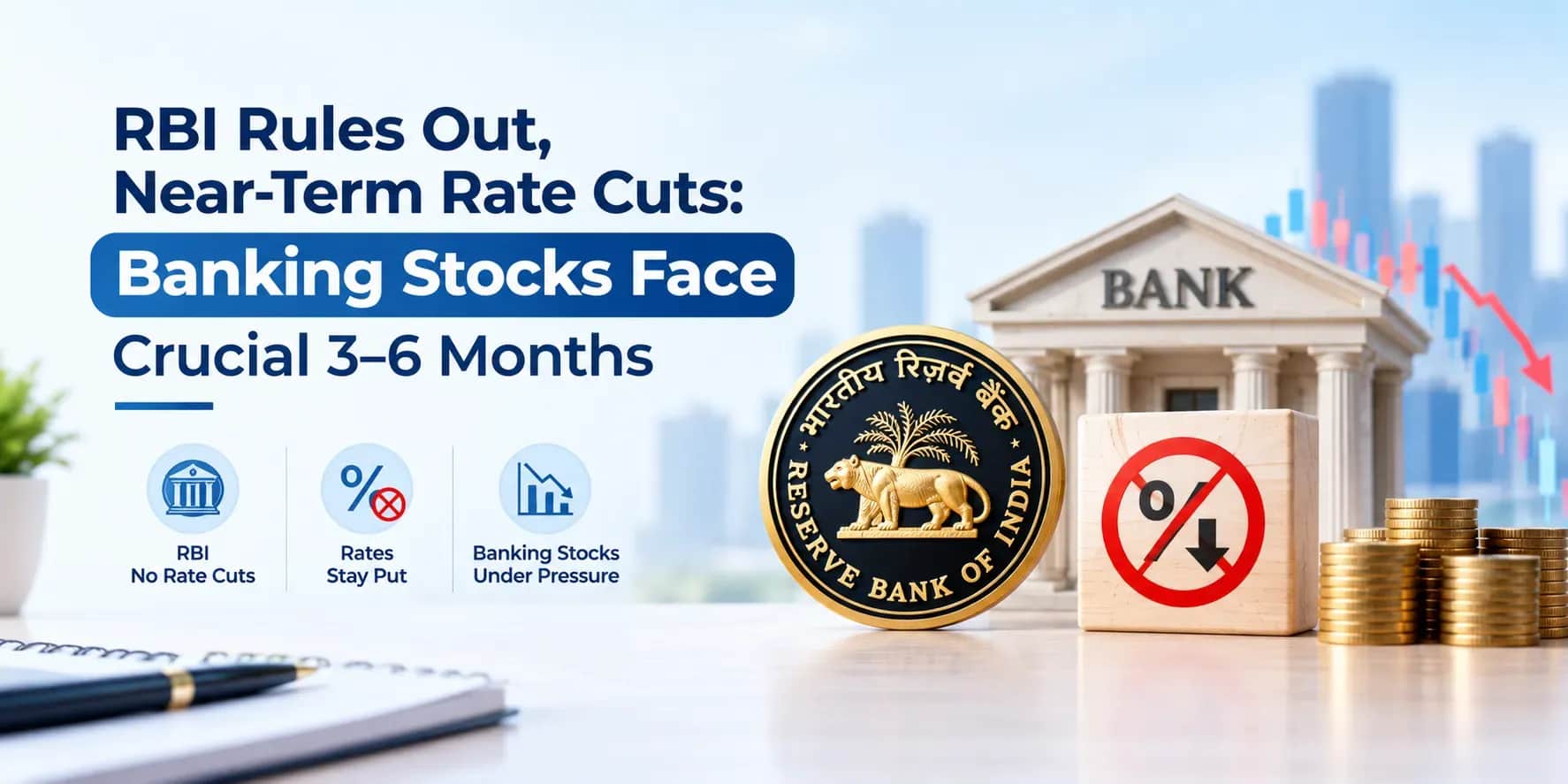
The RBI’s October rate hike leaves banking stocks facing 3–6 months of scrutiny, with loan repricing, deposit costs and earnings driving the outlook for investors.
Key Highlights
India’s economy remained strong, but the RBI raised the benchmark lending rate on 7 October 2026, to offset inflationary risks. The decision is recorded in the Monetary Policy Committee resolution dated 7 October 2026 and in Press Release 2026-2027/1264. Under the conditions described in that document, the next policy action could be a further increase or a pause. A near-term cut is excluded.
More interest collected on outstanding loans would help banks, but that gain has a cost attached. Banks may have to offer depositors better returns just as higher borrowing costs begin to discourage demand for new loans. The 7 October 2026 policy announcement therefore changes the earnings outlook without establishing that every lender will benefit. Analysts are comparing when banks start charging more on loans with when they must pay more for funding.
The reset date in a floating-rate loan agreement determines when the October increase reaches a household’s repayments. Depending on the contract, the adjustment could raise the EMI or extend the period over which the loan is repaid. An existing fixed-rate personal loan generally continues at the agreed interest rate. The distinction affects banks too: income from floating-rate lending adjusts differently from income on loans carrying fixed rates.
Our assessment is that an unchanged EMI deserves closer attention during a rate increase. A longer tenure can absorb the monthly adjustment while increasing the total interest payable. In reviewing home loan options, we would therefore compare the remaining repayment cost, including applicable charges. For banking-stock investors, rising interest income needs to be read alongside borrowers’ repayment performance, rather than treated as an automatic improvement in profitability.
Gaurav Garg, Head of Research at Lemonn, said in comments published on 9 October 2026 that large private lenders could hold up better than the broader market. Externally benchmarked loans reprice faster than existing term deposits, which move to new rates on renewal. That timing could give banks temporary margin support after the October increase.
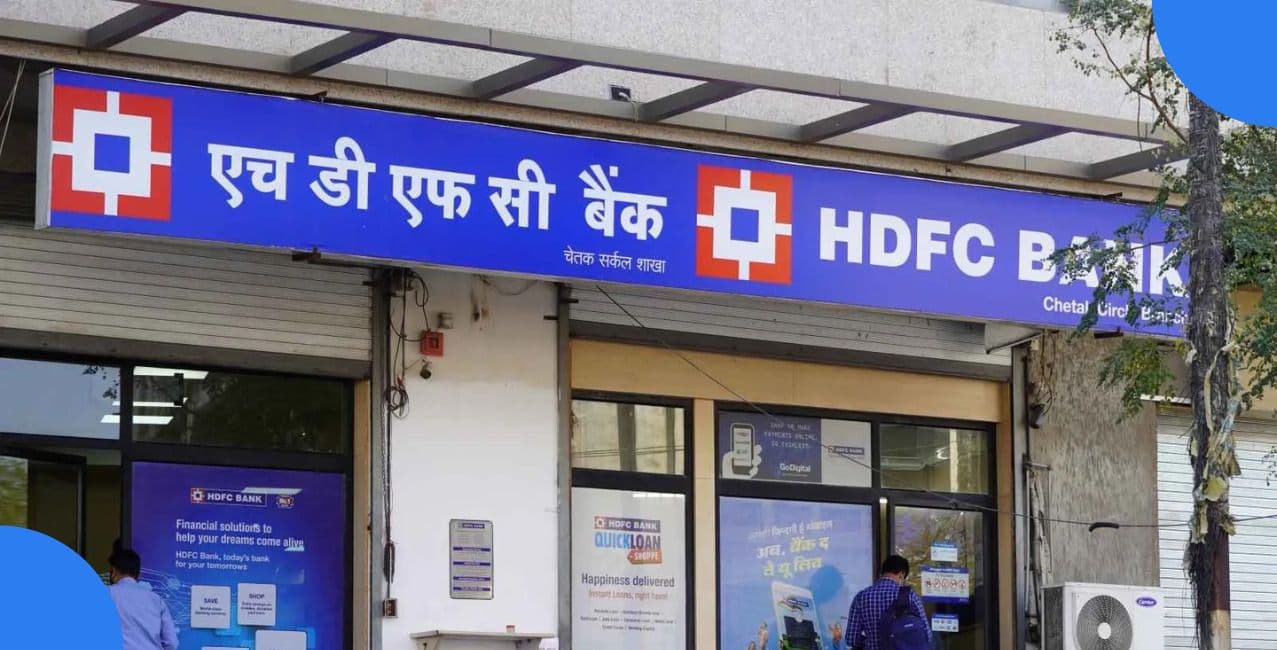
Paying more to attract deposits could erode margins, particularly if credit demand slows, warned Seema Srivastava, Senior Research Analyst at SMC Global Securities. HDFC Bank’s deposit franchise and relative stability were strengths in her assessment. Across banking stocks, however, she expected consolidation and selective valuation corrections. Her assessment favours examining individual lenders’ funding strength rather than assuming a sector-wide rally.
HDFC Bank’s exchange filing dated 4 October 2026 showed deposits growing faster than gross advances at September-end. The figures provide a business-volume comparison before the policy change.
These provisional figures do not measure profit growth or establish the cost of the deposits collected. HDFC Bank also stated that its September-end results would undergo a limited review by statutory auditors.
The dates impose a further boundary on interpretation. The reporting period closed on 30 September 2026, before the 7 October 2026 rate decision. Those figures cannot capture its subsequent earnings effect. We read them as evidence of business growth; any benefit from higher rates requires later lending-income and funding-cost figures.
The previous MPC meeting was held from 3 to 5 August 2026, with the repo rate at 5.25% and the stance retained at neutral. Coverage dated 19 August 2026 recorded Governor Sanjay Malhotra’s preference to wait for more evidence on inflation. He had nevertheless warned that persistent price pressures could require tightening. October’s increase followed that earlier warning.
The October decision puts loan repricing and deposit costs at the heart of the banking-stock outlook. Large private lenders have attracted favourable analyst attention, but September business growth alone cannot establish the profitability of lending at higher rates. Quarterly earnings will provide the relevant comparison.
The repo rate stands at 5.50%, following the 25-basis-point increase announced on 7 October 2026.
No. The October resolution ties its position to current conditions and the evolving economic outlook. It does not establish a permanent restriction.
HDFC Bank reported deposit growth exceeding advances growth. Srivastava also identified its deposit franchise and relative stability as strengths in the current environment.
Higher lending income may help, but funding costs and repayment performance also affect earnings. A rate increase alone does not determine share-price returns.
A falling price alone does not establish value. The October outlook requires examining the lender’s earnings, deposit costs and valuation together.