By continuing, you agree to LoansJagat's Credit Report Terms of Use, Terms and Conditions, Privacy Policy, and authorize contact via Call, SMS, Email, or WhatsApp
Disclaimer: The information published on LoansJagat is intended for general informational and educational purposes only and should not be considered financial, legal, or investment advice. Interest rates, loan terms, statistics, and other data may change over time and may vary by lender or source. Please verify the latest information and consult a qualified financial advisor or the respective Bank/NBFC before making any financial decisions.
Subscribe Now
About the author

Arshathul Afia is a journalism graduate and fintech content writer with 4+ years of experience in digital publishing and research-led writing. She has written 200+ articles covering personal finance, lending, banking, digital payments, credit, insurance, and major financial developments in India. At LoansJagat, she focuses on simplifying complex fintech news, RBI updates, loan-related changes, policy developments, and industry trends for everyday readers. Her journalism background helps her approach stories with research, context, and clarity, while her SEO experience ensures content remains discoverable and relevant. She aims to make financial news easier to understand, practical, and useful for readers across India.
Related News
Simplify All Your Loans Into One Affordable EMI

Customers Served

Debt Consolidated

1200+ Reviews

Locations in India
Club all Loans & Credit Card Bills into Single EMI

Quick Apply Loan
Consolidate your debts into one easy EMI.

Takes less than 2 minutes. No paperwork.

10 Lakhs+
Trusted Customers

2000 Cr+
Loans Disbursed

4.7/5
Google Reviews

50+
Banks & NBFCs Offers
Further rate hikes remain possible after October’s increase, but MPC members differ over the tightening path as households face higher borrowing costs and rising everyday living expenses.
Key Highlights
Governor Sanjay Malhotra said growth and inflation developments would determine the extent and duration of subsequent increases. Households face rising everyday prices alongside higher borrowing costs. The committee’s challenge is to contain inflation without raising rates so quickly that spending and economic activity weaken.
Deputy Governor Poonam Gupta pointed to weather disruptions and global oil and commodity prices as continuing inflation risks. Businesses passing more of those costs to customers could add to the pressure. Her statement supported keeping further tightening available.
The concern extends beyond the first increase in food or fuel prices. Policymakers are watching whether those costs spread into other prices and change businesses’ pricing decisions. Rainfall and oil availability remain beyond the reach of interest-rate policy. The aim is to curb the price pressures that follow those disruptions through the economy.
The Consumer Price Index release published on 12 October 2026 recorded provisional September retail inflation of 5.54%. Prices in September 2025 form the basis of that comparison. By the time the figures were published, the MPC had already announced its October rate decision.
For Nagesh Kumar and Ram Singh, an increase in the repo rate was compatible with keeping the stance neutral. Their position allowed action against inflation without signalling an extended tightening cycle. With supply costs driving much of the inflation pressure, Singh warned against a signal of prolonged tightening that could weaken demand.
Saugata Bhattacharya backed tightening, though he cautioned that growth could suffer if rates moved up too rapidly. His position recognised the need to respond to inflation while questioning how quickly rates should move.
Malhotra linked further action to evidence on growth, underlying inflation and the spread of price increases. The distinction between the rate vote and the stance is central to the minutes: members agreed on October’s increase but differed over the message about subsequent decisions.
The policy resolution published on 7 October 2026 announced both the increase and the change in stance. It also recorded Kumar’s and Singh’s preference for remaining neutral. The later minutes provided their individual explanations.
The comparison below separates the benchmark rate from the committee’s policy guidance.
The rate increase changed the benchmark immediately. The stance described the committee’s approach under prevailing conditions, with subsequent decisions dependent on economic developments. Publishing the minutes on 21 October 2026 explained the earlier decision rather than changing the repo rate again.
October’s rate increase and the debate over further tightening have different implications. A lender applies an existing benchmark change through the loan’s reset terms. A member’s preference for slower tightening does not reverse that adjustment. For borrowers reviewing their repayments, the rate applied to the account is separate from the debate about what policy should do next.
A floating-rate home loan may run for longer after a reset even if the monthly debit stays unchanged. The lender may revise the EMI, the remaining tenure, or both. The revised repayment schedule shows the effect, with the applicable rate and outstanding balance needed to assess the change. This background on repo-linked home loan repayments explains the distinction.
The RBI’s borrower guidance recognises adjustments to instalments and tenure when floating rates reset. Reading the minutes alongside an individual loan statement therefore serves different purposes: the minutes explain policy reasoning, while the statement shows the repayment effect.
The October minutes show agreement on raising the repo rate and differences over the tightening path. Inflation remains the committee’s concern, alongside the risk of restricting growth. At its next scheduled meeting, on 2–4 December 2026, the MPC will assess economic developments.
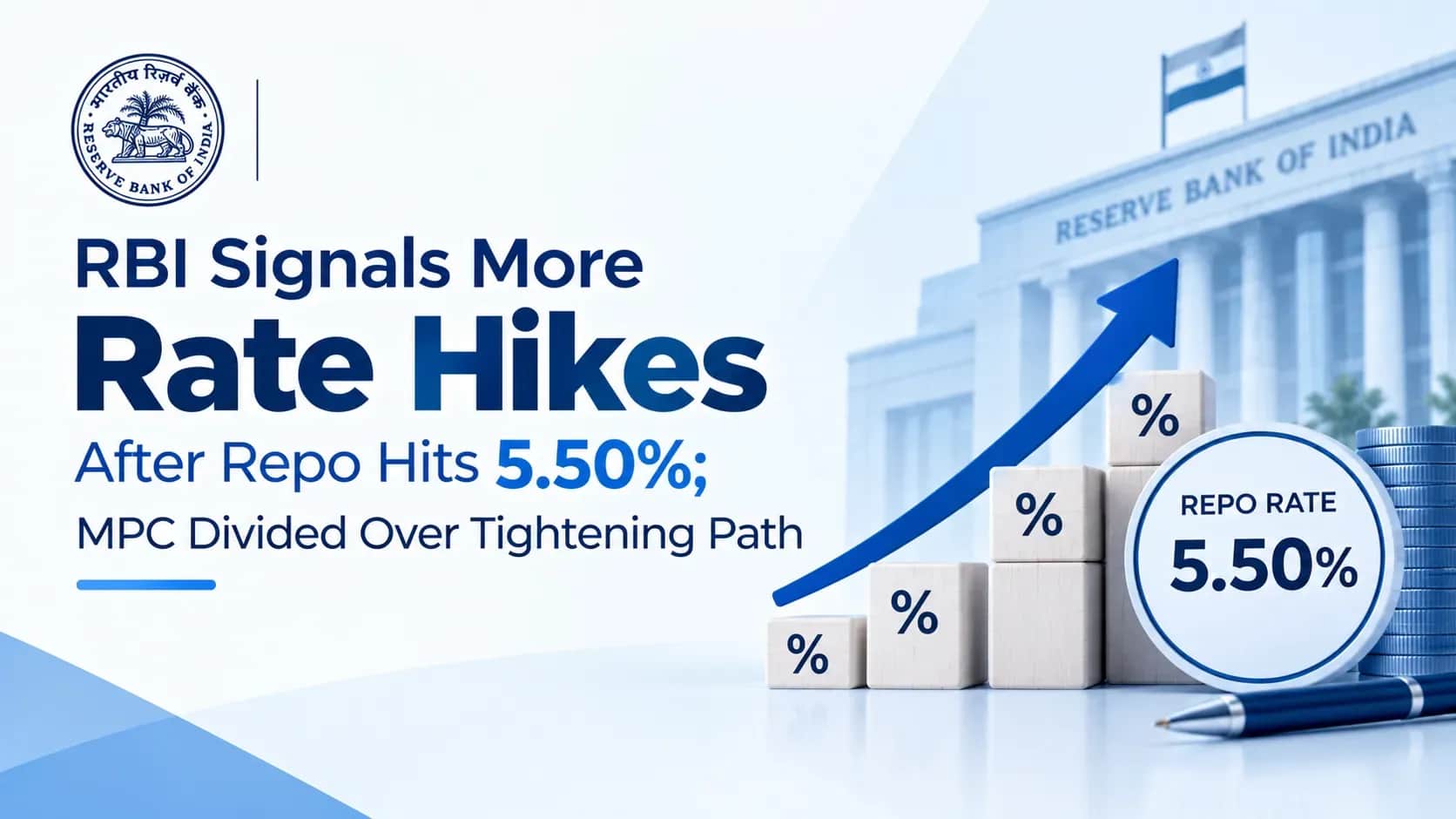
The 7 October 2026 announcement raised India’s repo rate by 25 basis points, taking it to 5.50%. The decision received the backing of all 6 MPC members.
Nagesh Kumar and Ram Singh preferred retaining a neutral stance. Both backed the immediate rate increase but differed from the decision to adopt calibrated tightening.
The October resolution allows an increase or a pause under prevailing conditions. The committee tied subsequent action to developments in inflation and growth.
Poor rainfall and limited oil supplies do not improve when interest rates rise. The policy targets the resulting pressure on other prices and on expectations of future inflation.
This question reflects a borrower concern raised on Reddit. The effective date, contractual reset terms and revised repayment schedule need to be checked together. The lender’s account statement establishes how the rate change applies to that loan.