By continuing, you agree to LoansJagat's Credit Report Terms of Use, Terms and Conditions, Privacy Policy, and authorize contact via Call, SMS, Email, or WhatsApp
Disclaimer: The information published on LoansJagat is intended for general informational and educational purposes only and should not be considered financial, legal, or investment advice. Interest rates, loan terms, statistics, and other data may change over time and may vary by lender or source. Please verify the latest information and consult a qualified financial advisor or the respective Bank/NBFC before making any financial decisions.
Subscribe Now
About the author

Arshathul Afia is a journalism graduate and fintech content writer with 4+ years of experience in digital publishing and research-led writing. She has written 200+ articles covering personal finance, lending, banking, digital payments, credit, insurance, and major financial developments in India. At LoansJagat, she focuses on simplifying complex fintech news, RBI updates, loan-related changes, policy developments, and industry trends for everyday readers. Her journalism background helps her approach stories with research, context, and clarity, while her SEO experience ensures content remains discoverable and relevant. She aims to make financial news easier to understand, practical, and useful for readers across India.
Related News
Simplify All Your Loans Into One Affordable EMI

Customers Served

Debt Consolidated

1200+ Reviews

Locations in India
Club all Loans & Credit Card Bills into Single EMI

Quick Apply Loan
Consolidate your debts into one easy EMI.

Takes less than 2 minutes. No paperwork.

10 Lakhs+
Trusted Customers

2000 Cr+
Loans Disbursed

4.7/5
Google Reviews

50+
Banks & NBFCs Offers
Other services mentioned in this article
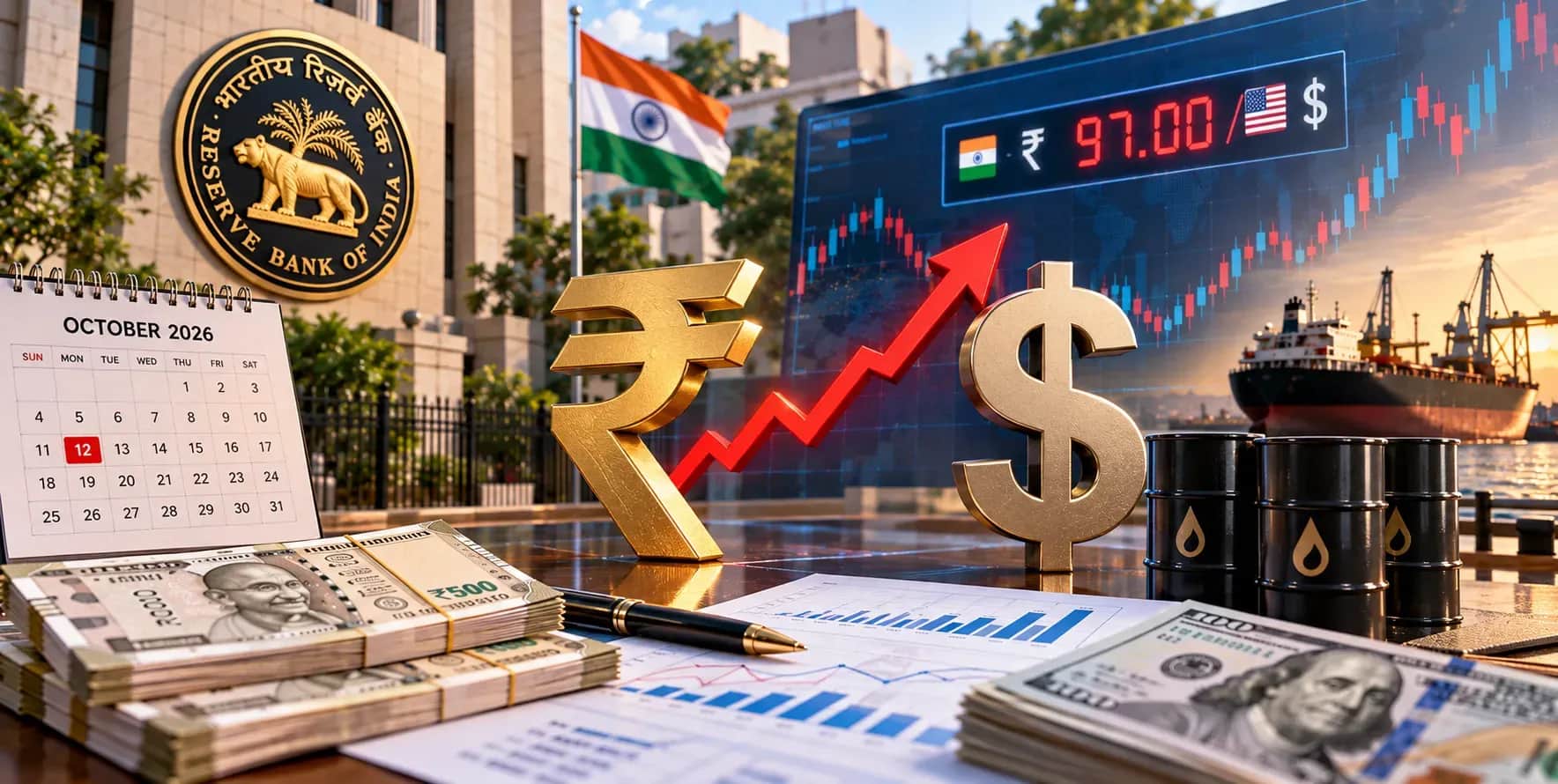
RBI will provide dollars to 3 state-run oil companies from October 12, 2026, easing spot-market demand as the rupee approaches ₹97 against the US dollar.
Starting October 12, dollar purchases for Indian Oil Corporation, Hindustan Petroleum Corporation and Bharat Petroleum Corporation will be routed through designated banks. The Reserve Bank of India introduced this facility in Press Release 2026-2027/1306, dated October 10, 2026.
By October 10, the rupee had shed more than 7% of its value against the US dollar since the beginning of 2026. Costlier crude oil imports have added to demand for the US currency, alongside uncertainty in global markets. The arrangement may relieve pressure on the regular foreign exchange market, but dollar sales will draw on reserves and do not guarantee a stronger rupee.
Most crude oil imported into India is paid for in US dollars. If each dollar becomes more expensive in rupees, oil companies end up paying more in Indian currency, even when the dollar value of the bill stays unchanged. The new facility shifts their dollar purchases to a dedicated arrangement through designated banks. This reduces a major source of demand in the regular currency market and could help limit sudden exchange-rate movements.
For households, the effect is indirect. Delhi’s petrol and diesel prices remained at ₹102.12 and ₹95.20 per litre, respectively, on October 9, 2026. The government’s petroleum price records also show these rates. The dollar window does not change retail fuel prices directly.
Dhiraj Nim, foreign exchange strategist at ANZ Bank in Mumbai, said on October 10, 2026, that meeting oil companies’ dollar requirements separately would remove a major source of demand from the foreign exchange market. He expected the arrangement to reduce volatility but warned that supplying dollars from reserves would affect the country’s foreign exchange holdings. Nim also identified oil prices and capital flows as continuing pressures on the rupee.
Our April 8 analysis of earlier rupee support measures examined how temporary forex restrictions were being used to limit sharp currency movements rather than defend a fixed exchange rate. The October 12 facility addresses a more specific problem: daily dollar purchases by major oil importers.
The central bank’s October 10 announcement established the following arrangements for the special dollar window.
The arrangement applies specifically to the 3 named public sector oil marketing companies. The central bank will continue providing the facility until further notice.
By the close of trading on October 9, 2026, $1 cost roughly ₹96.73. In May, the rupee had fallen to ₹96.96 per dollar, its weakest level on record. Rising international crude oil prices have increased foreign currency requirements for Indian importers, particularly oil companies.
Pressure has also come from global bond yields and foreign capital movements. The central bank had already intervened in currency markets before the October 10 announcement.
On August 28, 2013, RBI opened a foreign exchange swap window to meet the entire daily dollar requirements of the same 3 public sector oil marketing companies. That earlier arrangement involved dollar-rupee swaps through designated banks. The October 2026 facility specifies dollar sales instead.
The October 12 dollar window gives India’s 3 major public sector oil companies a separate channel for meeting their daily foreign currency requirements. The decision comes as the rupee trades close to ₹97 against the US dollar. Its actual effect on currency movements will become evident after implementation.
The facility will begin on Monday, October 12, 2026. It was announced on October 10 and will remain operational until further notice.
Indian Oil Corporation, Hindustan Petroleum Corporation and Bharat Petroleum Corporation will receive their entire daily dollar requirements through designated banks.
No immediate price reduction has been announced. Retail fuel prices depend on international crude costs, taxes and pricing decisions, not solely on the dollar supply arrangement.
Higher demand for dollars, rising crude oil import costs and foreign capital movements have pressured the rupee. It closed near ₹96.73 on October 9, 2026.
Dollar sales can reduce immediate market pressure, but they use foreign exchange resources. Oil prices, capital flows and broader currency demand continue influencing the exchange rate.