By continuing, you agree to LoansJagat's Credit Report Terms of Use, Terms and Conditions, Privacy Policy, and authorize contact via Call, SMS, Email, or WhatsApp
Disclaimer: The information published on LoansJagat is intended for general informational and educational purposes only and should not be considered financial, legal, or investment advice. Interest rates, loan terms, statistics, and other data may change over time and may vary by lender or source. Please verify the latest information and consult a qualified financial advisor or the respective Bank/NBFC before making any financial decisions.
Subscribe Now
About the author

LoansJagat Team
‘Simplify Finance for Everyone.’ This is the common goal of our team, as we try to explain any topic with relatable examples. From personal to business finance, managing EMIs to becoming debt-free, we do extensive research on each and every parameter, so you don’t have to. Scroll up and have a look at what 15+ years of experience in the BFSI sector looks like.
Related Blog Post
Simplify All Your Loans Into One Affordable EMI

Customers Served

Debt Consolidated

1200+ Reviews

Locations in India
Club all Loans & Credit Card Bills into Single EMI

Quick Apply Loan
Consolidate your debts into one easy EMI.

Takes less than 2 minutes. No paperwork.

10 Lakhs+
Trusted Customers

2000 Cr+
Loans Disbursed

4.7/5
Google Reviews

50+
Banks & NBFCs Offers
Other services mentioned in this article
Key Takeaways
The Reserve Bank of India is not worried right now, but it is watching the situation carefully.
India looks safe for now. The RBI expects the conflict to settle in a few months, after which supply chains and demand should become normal again.
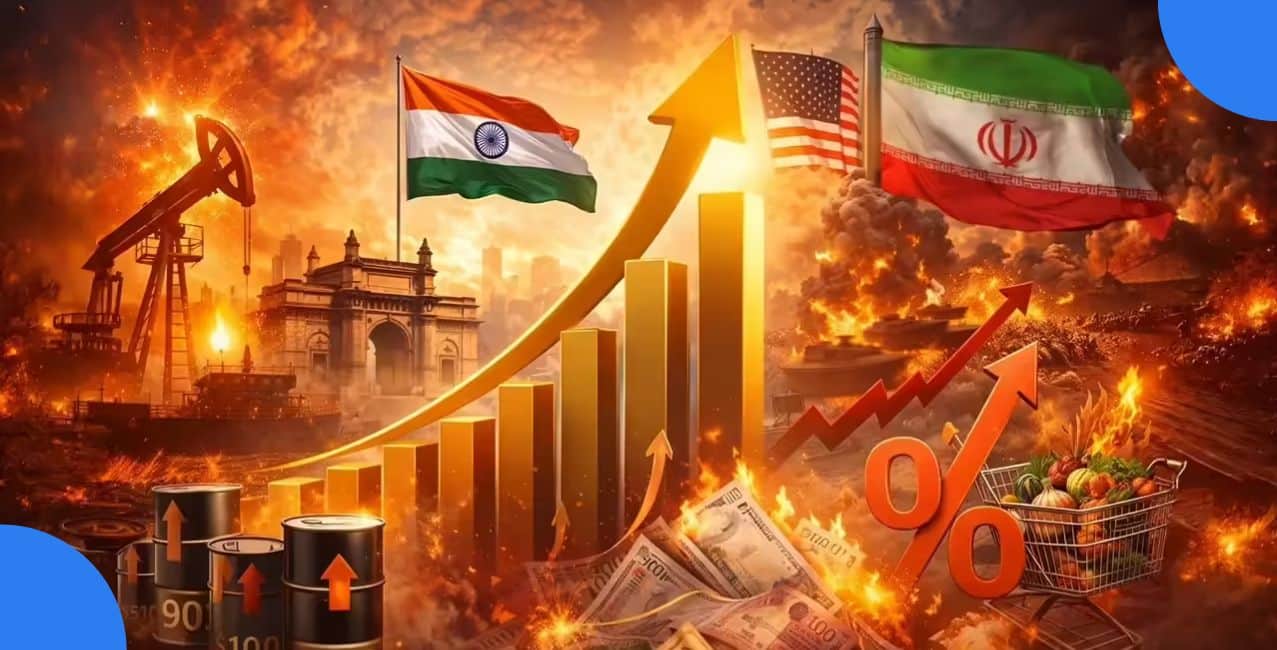
But if the war lasts longer, it can create problems. Higher oil prices and transport costs may increase the prices of daily goods for people in India.
RBI Governor Sanjay Malhotra said the West Asia conflict can create problems for India. It may affect exports, supply of important goods, increase energy prices, impact remittances, and create uncertainty, which can slow down global demand.
India has enough foreign exchange reserves to pay for about 11 months of imports. This gives a safety cushion if energy prices rise for a long time and the trade deficit increases.
Economist Samiran Chakraborty said the Reserve Bank of India is staying calm because the economy is stable, but it is also careful about risks to growth and rising inflation. So, it is following a wait-and-watch approach.
RBI Executive Director Indranil Bhattacharyya said acting too early on policy may slow down economic growth and may not reduce inflation much, as long as inflation expectations are under control.
Deputy Governor Poonam Gupta said there is some good news. Better coordination between monetary and fiscal policies has helped manage inflation better.
She also said El Niño is not likely to hurt agriculture much now, as the sector has become stronger. This is important because food prices play a big role in India’s inflation.
India is in a careful but stable position right now. The Reserve Bank of India is not changing interest rates yet. The MPC believes it is better to “wait and watch” because the current problem is due to supply issues, not demand. So, changing rates now may not help much.
People in India may face higher fuel and food prices if the Middle East situation gets worse. The RBI is staying stable for now.
1. How is the Middle East war affecting inflation and people in India right now?
The rising tensions can increase oil and transport costs. This makes fuel and food more expensive. People may feel higher daily expenses, but for now, the impact is limited and being closely monitored.
2. Will the Middle East conflict make the Reserve Bank of India change interest rates in 2026?
The RBI is not changing rates yet, as per current updates. It is following a wait-and-watch approach because the inflation pressure is mainly due to supply issues, where rate changes may not help immediately.
Related Finance News | |||
4.4%
*T&C Apply









.png&w=3840&q=75)



