By continuing, you agree to LoansJagat's Credit Report Terms of Use, Terms and Conditions, Privacy Policy, and authorize contact via Call, SMS, Email, or WhatsApp
Disclaimer: The information published on LoansJagat is intended for general informational and educational purposes only and should not be considered financial, legal, or investment advice. Interest rates, loan terms, statistics, and other data may change over time and may vary by lender or source. Please verify the latest information and consult a qualified financial advisor or the respective Bank/NBFC before making any financial decisions.
Subscribe Now
About the author

LoansJagat Team
‘Simplify Finance for Everyone.’ This is the common goal of our team, as we try to explain any topic with relatable examples. From personal to business finance, managing EMIs to becoming debt-free, we do extensive research on each and every parameter, so you don’t have to. Scroll up and have a look at what 15+ years of experience in the BFSI sector looks like.
Related News
Simplify All Your Loans Into One Affordable EMI

Customers Served

Debt Consolidated

1200+ Reviews

Locations in India
Club all Loans & Credit Card Bills into Single EMI

Quick Apply Loan
Consolidate your debts into one easy EMI.

Takes less than 2 minutes. No paperwork.

10 Lakhs+
Trusted Customers

2000 Cr+
Loans Disbursed

4.7/5
Google Reviews

50+
Banks & NBFCs Offers
Other services mentioned in this article
Key Takeaways
The rupee opened at 96.19 at the interbank foreign exchange market on Monday. It quickly slid to 96.25, a new all-time low. This was a fall of 44 paise from Friday’s close of 95.81.
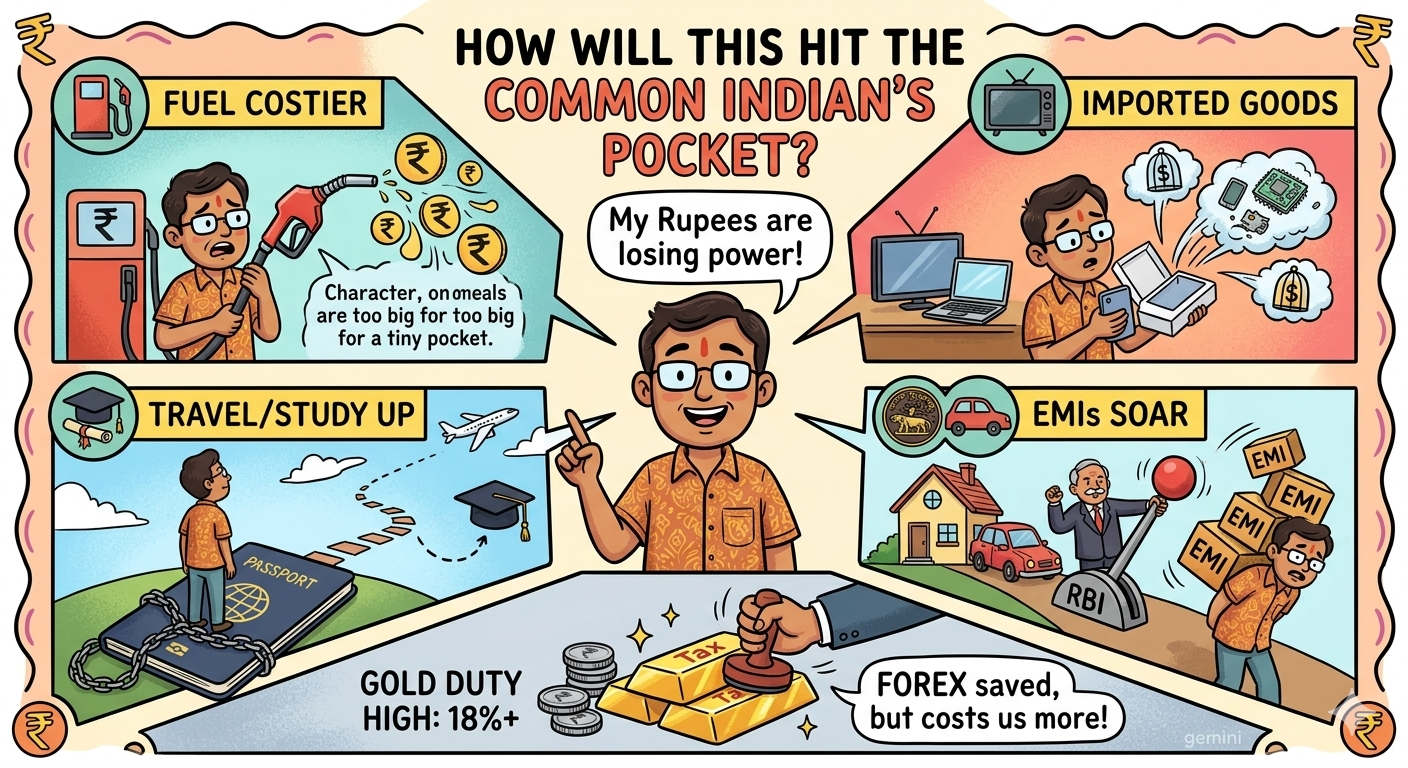
The same day, Brent crude oil was up 1.83% at $111.26 a barrel. A weaker rupee means India will pay more for its oil imports. This directly raises fuel prices and transport costs for everyday citizens.
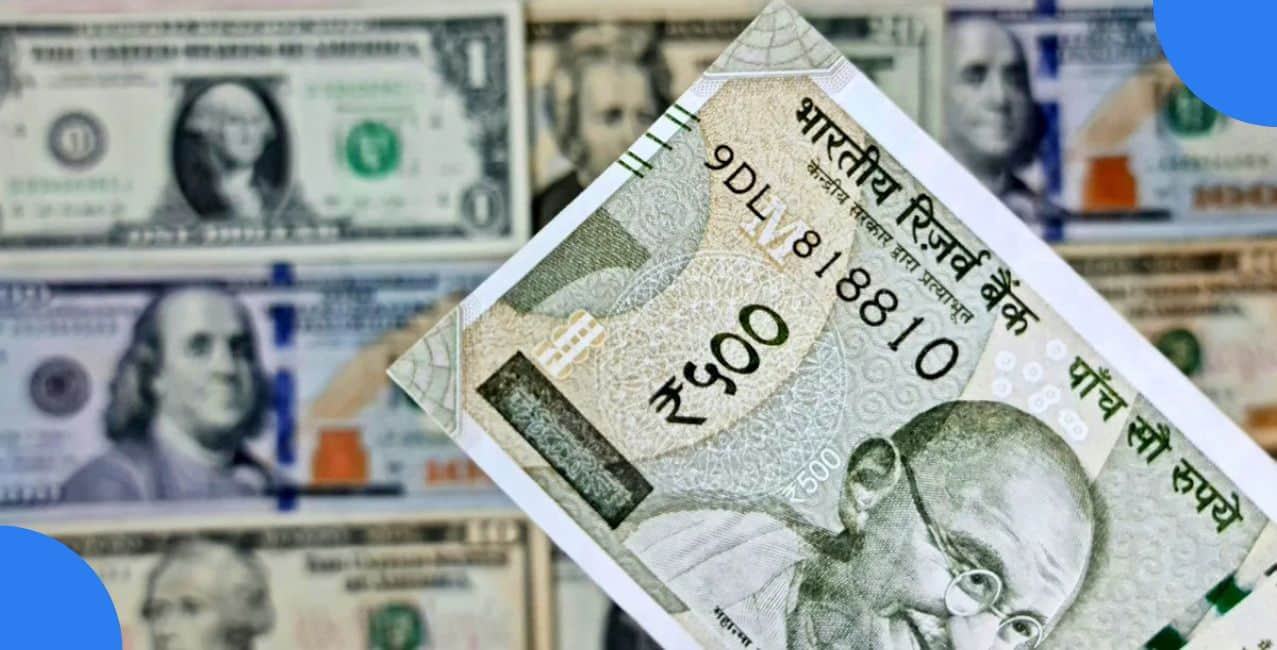
Read More - Rupee Crashes Below 96 Against Dollar
The government raised import duty on gold and silver from 6% to 15% on May 13 to control forex outflows. The effective duty, including IGST, now crosses 18%. Silver has also been placed under a licensed import regime.
India’s foreign exchange reserves rose $6.295 billion to $696.988 billion in the week ended May 8. That provides some cushion, but it may not be sufficient if oil prices remain high.
CR Forex Advisors MD Amit Pabari said, “Elevated crude oil prices, global uncertainty, and a stronger dollar continue to remain key risks for the rupee. However, the encouraging sign is that both the government and the RBI have already started taking proactive measures.”
Pabari also noted that 94.80 to 95.10 is a key support zone for USD/INR. The 96.00 to 96.50 range acts as strong resistance in the near term.
Anil Kumar Bhansali, Head of Treasury and Executive Director at Finrex Treasury Advisors LLP, pointed out, “With oil prices beyond $111.50 per barrel, the rupee will be affected the most as rising oil prices increase the outflows of US dollars.”
Bhansali further warned, “Only stoppage of war and reopening of the Strait of Hormuz can bring lower demand on the dollar-rupee pair, else 100 seems to be on the card if RBI does not announce any schemes to increase dollar inflow.”
*T&C Apply
The rupee is under serious pressure from multiple sides: high oil prices, a strong dollar, and global tension. Experts believe the RBI must act more decisively, while government steps like higher import duties show intent. The ₹100 mark against the dollar may not remain a distant possibility if oil stays above $111 and geopolitical tensions continue.
Q1. Why did the rupee fall to a record low of 96.25 against the US dollar?
The rupee weakened because crude oil prices crossed $111 per barrel, the US dollar became stronger globally, and investors moved money to safer assets due to global tensions. Since India imports most of its oil, higher oil prices increase demand for dollars and put pressure on the rupee.
Q2. Why are people saying the rupee is “carrying the India trade” right now?
Many traders believe the weak rupee is helping India’s exports stay competitive even when global markets are under pressure. But at the same time, it is making imports, fuel, foreign travel, and overseas education more expensive for Indians.









.png&w=3840&q=75)



