By continuing, you agree to LoansJagat's Credit Report Terms of Use, Terms and Conditions, Privacy Policy, and authorize contact via Call, SMS, Email, or WhatsApp
Disclaimer: The information published on LoansJagat is intended for general informational and educational purposes only and should not be considered financial, legal, or investment advice. Interest rates, loan terms, statistics, and other data may change over time and may vary by lender or source. Please verify the latest information and consult a qualified financial advisor or the respective Bank/NBFC before making any financial decisions.
Subscribe Now
About the author

LoansJagat Team
‘Simplify Finance for Everyone.’ This is the common goal of our team, as we try to explain any topic with relatable examples. From personal to business finance, managing EMIs to becoming debt-free, we do extensive research on each and every parameter, so you don’t have to. Scroll up and have a look at what 15+ years of experience in the BFSI sector looks like.
Related Blog Post
Simplify All Your Loans Into One Affordable EMI

Customers Served

Debt Consolidated

1200+ Reviews

Locations in India
Club all Loans & Credit Card Bills into Single EMI

Quick Apply Loan
Consolidate your debts into one easy EMI.

Takes less than 2 minutes. No paperwork.

10 Lakhs+
Trusted Customers

2000 Cr+
Loans Disbursed

4.7/5
Google Reviews

50+
Banks & NBFCs Offers
Other services mentioned in this article
India’s rupee is under pressure again as costly crude oil, dollar buying and weak foreign flows raise fresh inflation fears.
Key Takeaways
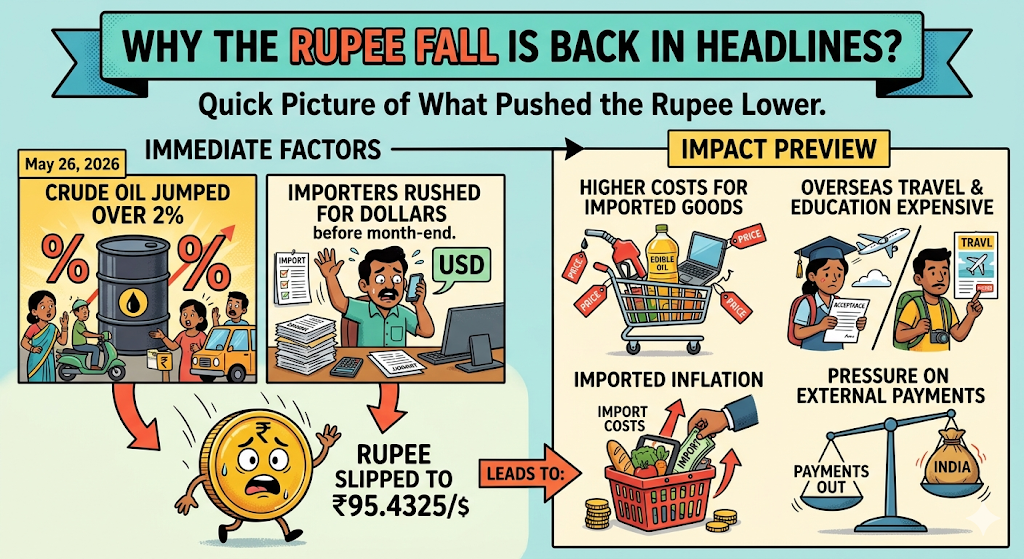
The Indian rupee slipped to ₹95.4325 per US dollar on May 26, 2026, down 0.2% from its previous close of ₹95.26/$, Reuters reported. The fall broke a 3-day recovery as crude oil jumped over 2% and importers rushed for dollars before month-end.
In the short term, this can raise costs for fuel, edible oil, electronics, travel and overseas education. In the long term, a weak rupee can push imported inflation, widen corporate currency losses and increase pressure on India’s external payments.
Before looking at the wider impact, here is the quick picture of what pushed the rupee lower.
This table shows that the latest fall was not only about the dollar.
Oil, importer demand and global risk hit the rupee at the same time.
A weaker rupee directly hurts India because the country imports a large part of its crude oil. When oil prices rise, oil companies need more dollars. This lifts dollar demand and weakens the rupee further. Reuters linked the latest pressure to fading Middle East peace hopes and energy concerns after US action related to Iran.
For households, the pressure can show up through petrol, diesel, LPG-linked costs and transport bills. Students paying foreign university fees and travellers booking dollar-linked expenses also face higher outgo. Exporters may gain from better rupee earnings, but import-heavy sectors such as aviation, chemicals and electronics face tighter margins.
The pressure had been building before May 26. The rupee had already touched record-low levels earlier in the month.
*T&C Apply
LoansJagat also noted that a weaker rupee can increase India’s import bill, lift inflation and add pressure on policy action if the currency moves closer to ₹100/$.
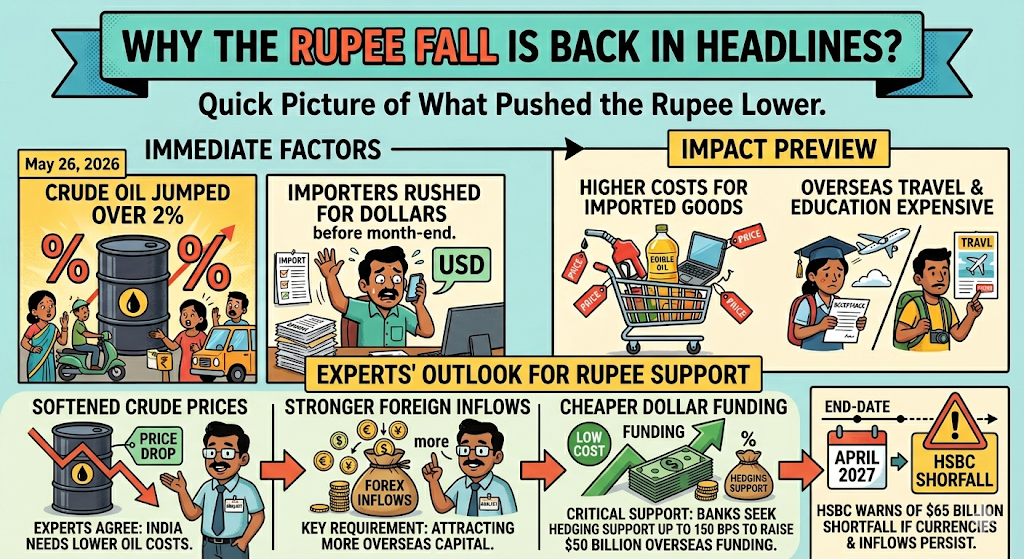
Market analysts cited by Reuters said the pressure came from crude oil, non-deliverable forwards and routine month-end dollar demand. State-run banks were seen selling dollars, which helped limit the fall on May 26.
The solution is not one step. India needs softer crude prices, stronger foreign inflows and cheaper dollar funding. Reuters reported on May 25, 2026 that Indian banks sought support on hedging costs of up to 150 basis points to help raise overseas funding of up to $50 billion.
HSBC also projected a $65 billion balance of payments shortfall by April 2027 if energy prices and weak inflows persist.
The rupee’s fall is now a pocketbook story, not just a forex market update. Oil prices, foreign flows and dollar supply will decide how far the pressure goes next.
Why Has The Rupee Become Weak Against The Dollar?
The rupee usually falls when India has to pay out more dollars than it earns. Crude oil is a big part of this. India buys a lot of oil from other countries, and oil bills are mostly paid in dollars. When crude becomes expensive, oil companies and importers need more dollars. That extra demand hurts the rupee.
Foreign investors can also add pressure. When they sell Indian stocks or bonds, they take money out in dollars. A large trade gap makes the problem bigger. For people, it can mean higher fuel prices, costlier imported phones, dearer foreign trips and higher fees for students studying abroad. Exporters and people earning in dollars may get some benefit.
Why Do Most Countries Use The US Dollar?
The US dollar is used widely because global trade has been built around it for decades. Many big payments, including oil, gold, loans and imports, are done in dollars. So companies, banks and governments keep holding dollars.
The US also has a very large economy. Its government bonds are easy to buy and sell, and many investors trust them. That is why, during global trouble, money often moves into dollar assets. This keeps demand for the dollar high. For India, a strong dollar makes crude oil, imported goods, foreign travel and overseas education more expensive. It also puts pressure on the rupee.









.png&w=3840&q=75)



