By continuing, you agree to LoansJagat's Credit Report Terms of Use, Terms and Conditions, Privacy Policy, and authorize contact via Call, SMS, Email, or WhatsApp
Disclaimer: The information published on LoansJagat is intended for general informational and educational purposes only and should not be considered financial, legal, or investment advice. Interest rates, loan terms, statistics, and other data may change over time and may vary by lender or source. Please verify the latest information and consult a qualified financial advisor or the respective Bank/NBFC before making any financial decisions.
Subscribe Now
About the author

Arshathul Afia is a journalism graduate and fintech content writer with 4+ years of experience in digital publishing and research-led writing. She has written 200+ articles covering personal finance, lending, banking, digital payments, credit, insurance, and major financial developments in India. At LoansJagat, she focuses on simplifying complex fintech news, RBI updates, loan-related changes, policy developments, and industry trends for everyday readers. Her journalism background helps her approach stories with research, context, and clarity, while her SEO experience ensures content remains discoverable and relevant. She aims to make financial news easier to understand, practical, and useful for readers across India.
Related News
Simplify All Your Loans Into One Affordable EMI

Customers Served

Debt Consolidated

1200+ Reviews

Locations in India
Club all Loans & Credit Card Bills into Single EMI

Quick Apply Loan
Consolidate your debts into one easy EMI.

Takes less than 2 minutes. No paperwork.

10 Lakhs+
Trusted Customers

2000 Cr+
Loans Disbursed

4.7/5
Google Reviews

50+
Banks & NBFCs Offers
Other services mentioned in this article
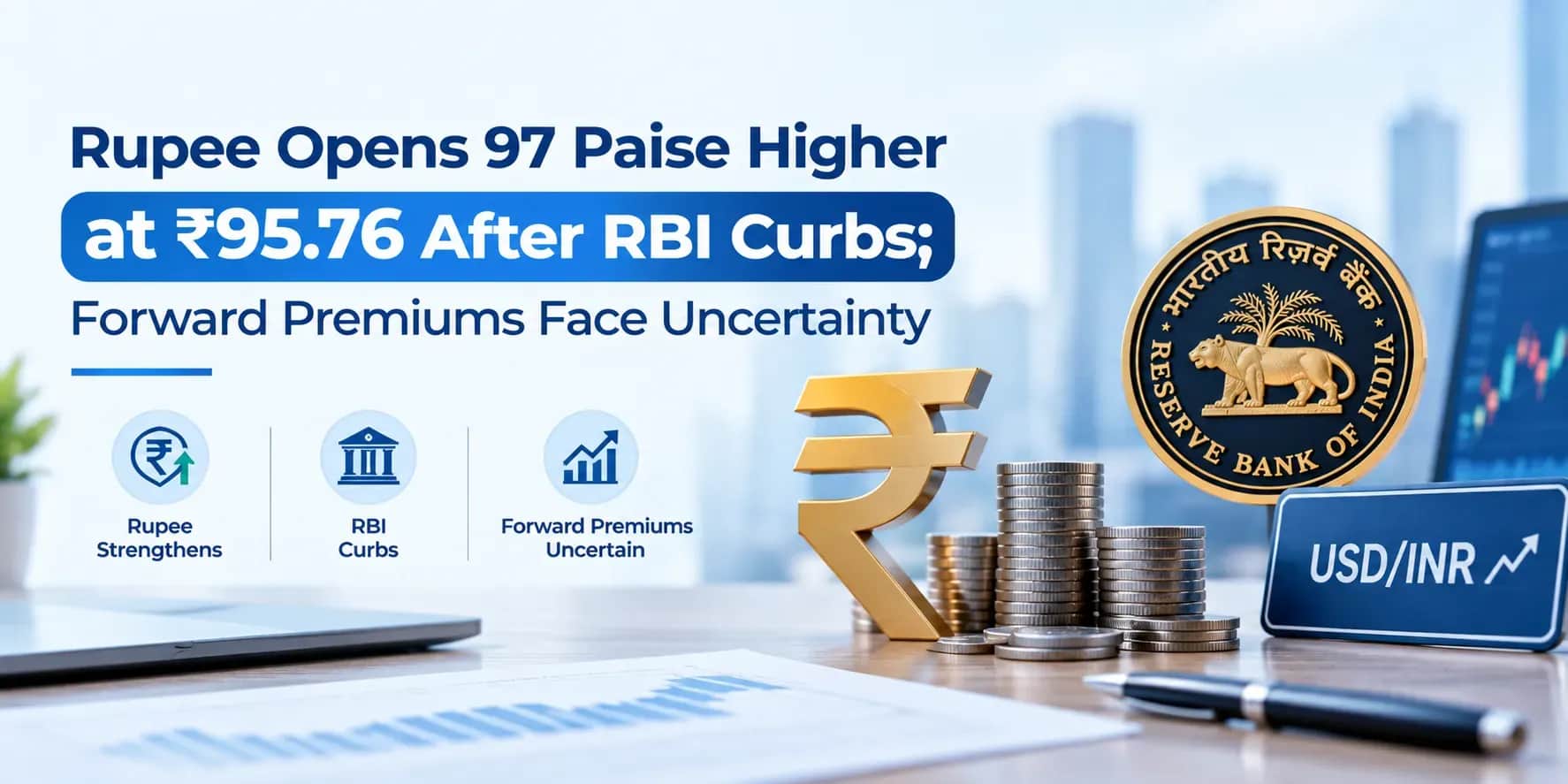
The rupee recovered after fresh forex restrictions, but businesses face uncertainty over hedging costs as banks adjust to tighter rules on buying dollars for imports.
Key Highlights
The recovery eases the rupee cost of immediate dollar payments. For payments due later, businesses seeking protection from currency losses could face higher hedging charges because banks now have to set aside cash against qualifying contracts. Economists expect the measures to support the rupee in the near term. Their longer-term outlook remains weighed down by oil prices and weak capital flows.
A stronger rupee may reduce the cost of overseas tuition payments and dollar-denominated business invoices. The actual savings depend on the exchange rate offered by the bank or payment provider and any applicable charges. How much the payer saves depends on the bank or payment provider’s exchange rate and fees. Exporters converting dollar receipts receive fewer rupees after appreciation, unless an existing hedge fixes their rate.
The assessment is that the immediate exchange-rate saving and the cost of protecting a future payment need separate attention. A business may receive a better spot rate while facing a higher charge for its next hedge. For readers following loan and borrowing updates, the distinction also applies to dollar obligations: a currency gain reduces the conversion cost of an unhedged payment, without changing the contractual dollar amount due.
A forward premium reflects the difference between the rate agreed for a future currency exchange and the spot rate. Mitul Kotecha, Barclays’ head of FX and emerging-markets macro strategy for Asia, said in comments reported on 12 October that reduced importer demand could lower premiums. Higher bank costs, thinner liquidity and the RBI’s management of its forward positions could pull pricing upwards.
In assessments reported on 11 October 2026, Kotak Mahindra Bank linked its forecast of lower forward premiums to an expected easing in importer hedging demand. IDFC FIRST Bank saw near-term support for the rupee, though its outlook remained subject to pressure from oil prices and foreign capital flows. These remain forecasts. For importers, the practical comparison is the complete bank quotation, including additional charges, rather than the interbank premium alone.
The weekend measures restrict rebooking of cancelled contracts and tighten checks on underlying exposures. They also introduce a Foreign Exchange Risk Reserve for qualifying transactions.
The government news update dated 11 October 2026 sets out the main requirements.
The reserve covers current-account hedges where customers purchase foreign currency against rupees. Dealers must maintain it until the contract ends. The 20% requirement is a bank reserve obligation, not a blanket tax on importers. Customers cannot split transactions to avoid it.
The RBI announced the package on 10 October 2026, after the rupee closed at ₹96.73 on 9 October. Its special dollar-window announcement covers the entire daily dollar requirements of Indian Oil Corporation, Hindustan Petroleum Corporation and Bharat Petroleum Corporation through designated banks. The facility began on 12 October and continues until further notice.
Moving these purchases away from the regular market changes the route through which oil companies obtain dollars. Their import-payment obligations continue. Kotecha retained an orderly-depreciation outlook despite the expected immediate support.
The stronger opening gives dollar buyers immediate exchange-rate relief. Future hedging costs face competing pressures: reduced demand for forward dollars could soften premiums, while banks’ reserve costs could raise customer charges. The opening gain alone cannot establish which effect will dominate.
The opening followed measures to restrain speculative dollar demand, tighten derivative transactions and supply dollars separately to public-sector oil companies.
No. Authorised dealers must maintain the reserve against qualifying currency contracts. Banks may pass associated costs to customers through pricing.
Rollovers at maturity remain permitted under the applicable rules. The new restriction concerns rebooking cancelled INR-linked derivative contracts.
Dollar-denominated imports create demand for dollars. Exchange rates also respond to capital flows and other currency demand, so import payments alone do not explain every movement.
Import-dependent businesses may pay less in rupees for dollar purchases, while exporters receive fewer rupees when converting unhedged dollar earnings. Individual companies’ exposure and existing hedges determine the effect.