
By continuing, you agree to LoansJagat's Credit Report Terms of Use, Terms and Conditions, Privacy Policy, and authorize contact via Call, SMS, Email, or WhatsApp
Disclaimer: The information published on LoansJagat is intended for general informational and educational purposes only and should not be considered financial, legal, or investment advice. Interest rates, loan terms, statistics, and other data may change over time and may vary by lender or source. Please verify the latest information and consult a qualified financial advisor or the respective Bank/NBFC before making any financial decisions.
Subscribe Now
About the author

LoansJagat Team
‘Simplify Finance for Everyone.’ This is the common goal of our team, as we try to explain any topic with relatable examples. From personal to business finance, managing EMIs to becoming debt-free, we do extensive research on each and every parameter, so you don’t have to. Scroll up and have a look at what 15+ years of experience in the BFSI sector looks like.
Related News
Simplify All Your Loans Into One Affordable EMI

Customers Served

Debt Consolidated

1200+ Reviews

Locations in India
Club all Loans & Credit Card Bills into Single EMI

Quick Apply Loan
Consolidate your debts into one easy EMI.

Takes less than 2 minutes. No paperwork.

10 Lakhs+
Trusted Customers

2000 Cr+
Loans Disbursed

4.7/5
Google Reviews

50+
Banks & NBFCs Offers
Other services mentioned in this article
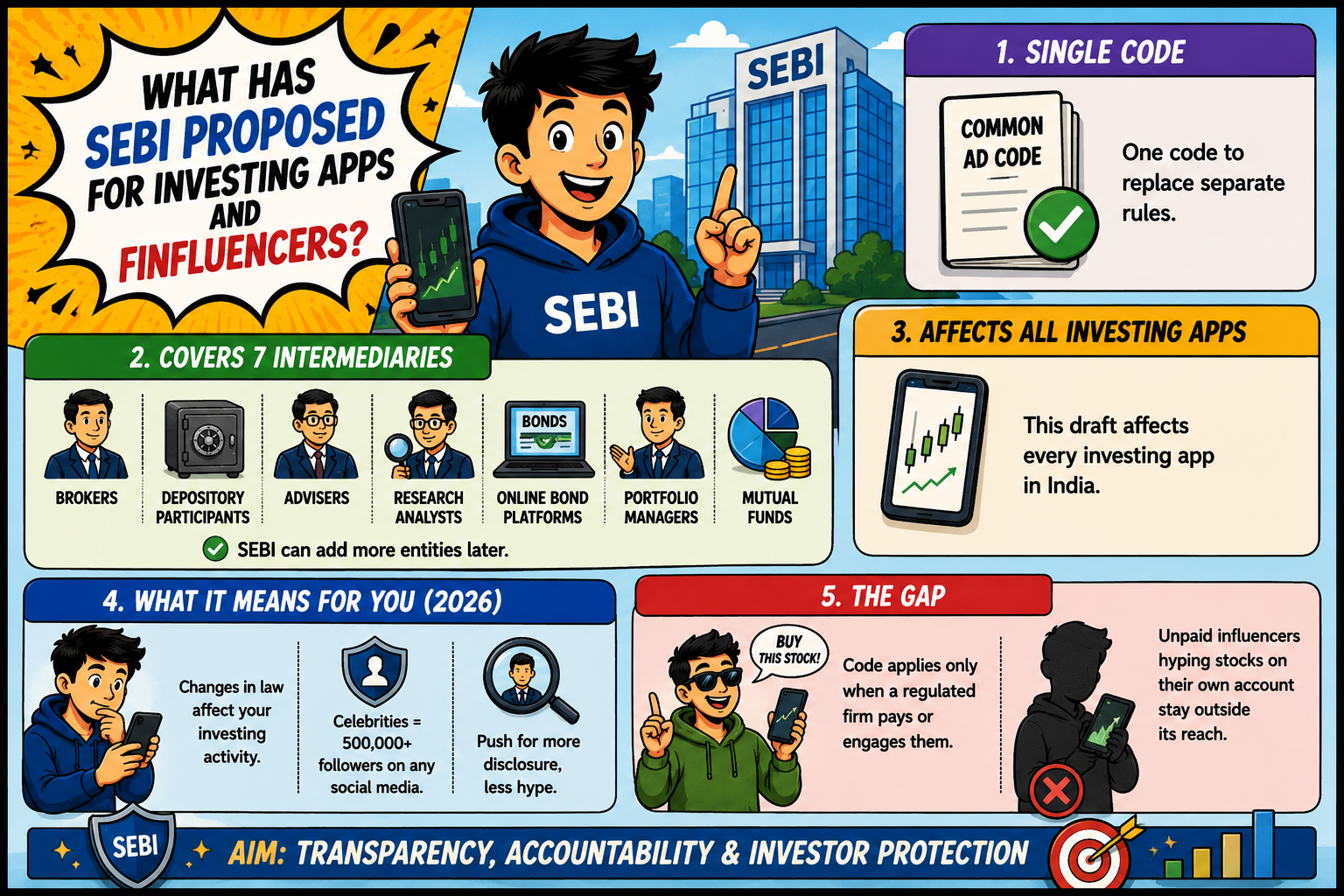
The Securities and Exchange Board of India released a consultation paper on June 23, 2026, proposing a single Common Advertisement Code. This code replaces separate advertising rules that currently bind seven types of market intermediaries. Public comments on the draft close on July 14, 2026.
The code covers stock brokers, depository participants, investment advisers, research analysts, online bond platforms, portfolio managers and mutual funds. SEBI can add more entities to this list later. This draft directly affects every investing app operating in India today, since most run on one of these seven licences.
However, in 2026, when you are about to purchase shares using an app and will require assistance in doing so, you should be sure that the changes in law will affect your activity directly. The draft indicates that those who have more than 500,000 followers on at least one social media site are celebrities.
In the long term, it may push genuine advisers toward more disclosure and less hype. The gap flagged by commentators is that the code only catches a finfluencer when a regulated firm pays for or engages them, so an unpaid influencer hyping a stock on their own account stays outside its reach.
India’s investor base has grown far faster than its pool of qualified advisers. There are currently only 932 SEBI-registered Investment Advisers serving more than 18 crore demat account holders in the country. This gap explains why unregistered advice inside investing apps and social media groups has spread so fast since 2023. For a first-time investor in Delhi, Mumbai or a Tier-2 town, this means the “expert” behind a stock tip may carry no accountability at all.
The scale of this risk became visible on December 4, 2025. SEBI barred finfluencer Avadhut Sathe and his trading academy from the market, alleging they misled over three lakh investors through an unregistered advisory scheme. SEBI ordered Sathe and his academy to disgorge ₹546.16 crore in unlawful gains, the largest such sum impounded from a finfluencer in India. The positive side is that enforcement is now visible and fast. A retail investor today gets a clearer signal than even a year ago, since a SEBI order can freeze accounts within months, not years.
Product leaders at Indian investing platforms argue that today’s serious apps should do more than execute trades. Vedant Gupte, Co-founder and CEO of Trackk, has said such apps have moved well past a simple buy-and-sell function, though many older platforms still operate that way. Ankit Jain, Chief Product Officer at Choice Equity Broking, frames the real test differently. Jain asks whether an app helps a user make a better financial decision, or just adds information without direction.
Both experts point to the same checklist for investors this year. First, check the SEBI registration number for advisory separately from the broking registration, since these are two different licences. Second, check whether a stock call comes from a named, SEBI-registered analyst or from an unnamed model. Third, read the full fee structure, not just a headline zero-brokerage claim, since account charges and subscriptions add up over time. Gupte’s advice is direct. Treat the app as a tool, not a decision-maker.
The same principle applies to new investors. LoansJagat’s beginner’s guide to the share market recommends learning through SEBI-regulated brokers, relying on trusted financial sources and avoiding blind dependence on stock tips shared online. These practices complement the checks highlighted in SEBI's proposed advertisement code.
*T&C Apply
SEBI’s June 23, 2026 draft is a direct response to years of unregulated advice reaching millions through investing apps and social media. The December 2025 action against Avadhut Sathe, with its ₹546.16 crore disgorgement order, shows regulators will act on scale, not just intent. For an investor in Delhi or anywhere else in India, the choice of app this year should rest on a five-minute check. Look for a SEBI registration number, a named analyst and a fee structure read in full. However, the importance of pricing has diminished significantly; there are other questions that should be asked.
How will the Common Advertisement Code issued by SEBI in June 2026 impact finfluencers?
The common advertisement code that was issued on June 23, 2026 is applicable only in case where the regulated entity such as the broker or mutual fund has paid to the finfluencer. The finfluencer with more than 5 lakh followers will fall into the category of celebrity, who requires prior clearance before posting. It does not touch unpaid personal posts, which is a gap several commentators have flagged.
How can a SEBI-registered brokerage give investment advice while unregistered finfluencers cannot?
A brokerage offering advice must hold a separate Investment Adviser registration from its broking licence, under Regulation 22 rules on segregating advisory and distribution activities. It must disclose fees, avoid conflicts and file records for five years. Finfluencers like Sathe skipped all of this, giving trade calls under the cover of stock market training, which SEBI ruled was unregistered advisory in disguise.









.png&w=3840&q=75)



