By continuing, you agree to LoansJagat's Credit Report Terms of Use, Terms and Conditions, Privacy Policy, and authorize contact via Call, SMS, Email, or WhatsApp
Disclaimer: The information published on LoansJagat is intended for general informational and educational purposes only and should not be considered financial, legal, or investment advice. Interest rates, loan terms, statistics, and other data may change over time and may vary by lender or source. Please verify the latest information and consult a qualified financial advisor or the respective Bank/NBFC before making any financial decisions.
Subscribe Now
About the author

LoansJagat Team
‘Simplify Finance for Everyone.’ This is the common goal of our team, as we try to explain any topic with relatable examples. From personal to business finance, managing EMIs to becoming debt-free, we do extensive research on each and every parameter, so you don’t have to. Scroll up and have a look at what 15+ years of experience in the BFSI sector looks like.
Related News
Simplify All Your Loans Into One Affordable EMI

Customers Served

Debt Consolidated

1200+ Reviews

Locations in India
Club all Loans & Credit Card Bills into Single EMI

Quick Apply Loan
Consolidate your debts into one easy EMI.

Takes less than 2 minutes. No paperwork.

10 Lakhs+
Trusted Customers

2000 Cr+
Loans Disbursed

4.7/5
Google Reviews

50+
Banks & NBFCs Offers
Other services mentioned in this article
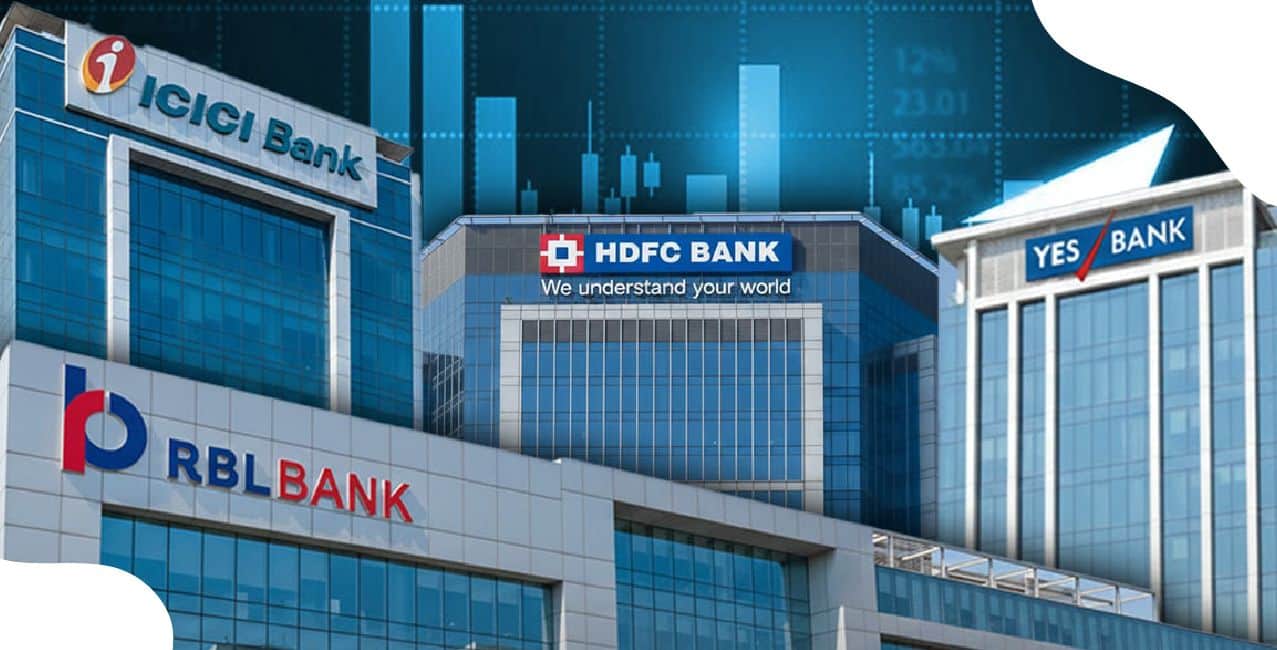
Shares of several private sector banks in India, including ICICI Bank, YES Bank and RBL Bank, fell sharply in recent trading sessions as investors reacted to a mix of financial results and broader market pressures. The downturn was part of a wider slide in private bank stocks that also saw pressure on peers such as Bandhan Bank and IDFC First Bank.
The primary driver of the recent sell-off was earnings performance that fell short of investor expectations, especially for ICICI Bank. While the bank did report growth in net interest income, its net profit declined about 4% year-on-year in the December quarter. The drop was linked in part to higher provisioning for agricultural loans and the impact of new labour laws, which weighed on profitability.
When a major bank’s profits weaken, confidence across the sector can wobble. In this case, ICICI Bank’s share price slumped by as much as 3.6% intraday, contributing significant downward pressure on the NSE’s private bank index. As a key component of the index, moves in ICICI Bank ripple through investor sentiment and can trigger broader selling in financial stocks.
Read More - RBI Steps In as Rupee Weakens After Budget Reaction
Performance of YES Bank and RBL Bank
The pressure extended to other lenders even where results were not outright negative. YES Bank’s quarterly results showed a strong profit increase — over 55% year-on-year — but total interest income was subdued compared with the prior year. That seemingly mixed performance failed to reassure traders, and the stock slid roughly 3.2%.
RBL Bank’s shares were especially volatile, dropping over 8% at one point. Despite reporting a sizable increase in quarterly profit and improving asset quality ratios, analysts flagged concerns around higher credit costs and potential risks in the loan book. Such concerns tend to weigh more heavily on smaller lenders whose balance sheets are typically seen as less diversified than those of larger banks.
This downward trend in private bank stocks was not isolated. On the same day, the broader financial markets were under pressure, with benchmark indices like the Sensex and Nifty 50 trading lower amid risk-off sentiment. Global trade headlines, including discussions about additional tariffs from the United States, also contributed to cautious positioning among investors, spreading anxiety beyond the banking sector.
Sector-wide weakness in banks can be amplified by concerns about credit growth and profitability. In recent periods, credit expansion in India’s banking industry has slowed compared with earlier post-pandemic rebounds, prompting traders to scrutinise earnings more closely and temper valuations. This environment has made banking stocks more sensitive to quarterly results and macroeconomic news alike.
Also Read - India Set to Lead Global Growth Despite Global Headwinds
What This Means for Investors
The recent sell-off highlights how earnings surprises, even modest ones, can significantly affect market valuations in a sensitive sector like banking
*T&C Apply
It’s also a reminder that perceptions of risk matter as much as fundamentals. Even with some banks reporting improvements in asset quality or strong profit growth, broader worries about credit conditions, regulations, and economic uncertainty can suppress demand for financial stocks.
While quarterly earnings will continue to influence sentiment, private bank valuations may also be shaped by broader trends such as regulatory developments, credit growth forecasts and macroeconomic indicators. The interplay of these forces means that short-term price fluctuations may not always reflect long-term fundamentals, but they do reflect market psychology and risk tolerance at a given moment.
In conclusion, the recent drop in bank stocks was driven by a combination of earnings disappointment, sector sentiment and macroeconomic risk factors. Whether this proves a temporary correction or the start of a longer trend will depend on upcoming results and how lenders navigate evolving economic conditions. Investors watching this space may want to focus on both operational performance and the external environment that shapes bank profitability.









.png&w=3840&q=75)



