By continuing, you agree to LoansJagat's Credit Report Terms of Use, Terms and Conditions, Privacy Policy, and authorize contact via Call, SMS, Email, or WhatsApp
Disclaimer: The information published on LoansJagat is intended for general informational and educational purposes only and should not be considered financial, legal, or investment advice. Interest rates, loan terms, statistics, and other data may change over time and may vary by lender or source. Please verify the latest information and consult a qualified financial advisor or the respective Bank/NBFC before making any financial decisions.
Subscribe Now
About the author

LoansJagat Team
‘Simplify Finance for Everyone.’ This is the common goal of our team, as we try to explain any topic with relatable examples. From personal to business finance, managing EMIs to becoming debt-free, we do extensive research on each and every parameter, so you don’t have to. Scroll up and have a look at what 15+ years of experience in the BFSI sector looks like.
Related News
Simplify All Your Loans Into One Affordable EMI

Customers Served

Debt Consolidated

1200+ Reviews

Locations in India
Club all Loans & Credit Card Bills into Single EMI

Quick Apply Loan
Consolidate your debts into one easy EMI.

Takes less than 2 minutes. No paperwork.

10 Lakhs+
Trusted Customers

2000 Cr+
Loans Disbursed

4.7/5
Google Reviews

50+
Banks & NBFCs Offers
Other services mentioned in this article
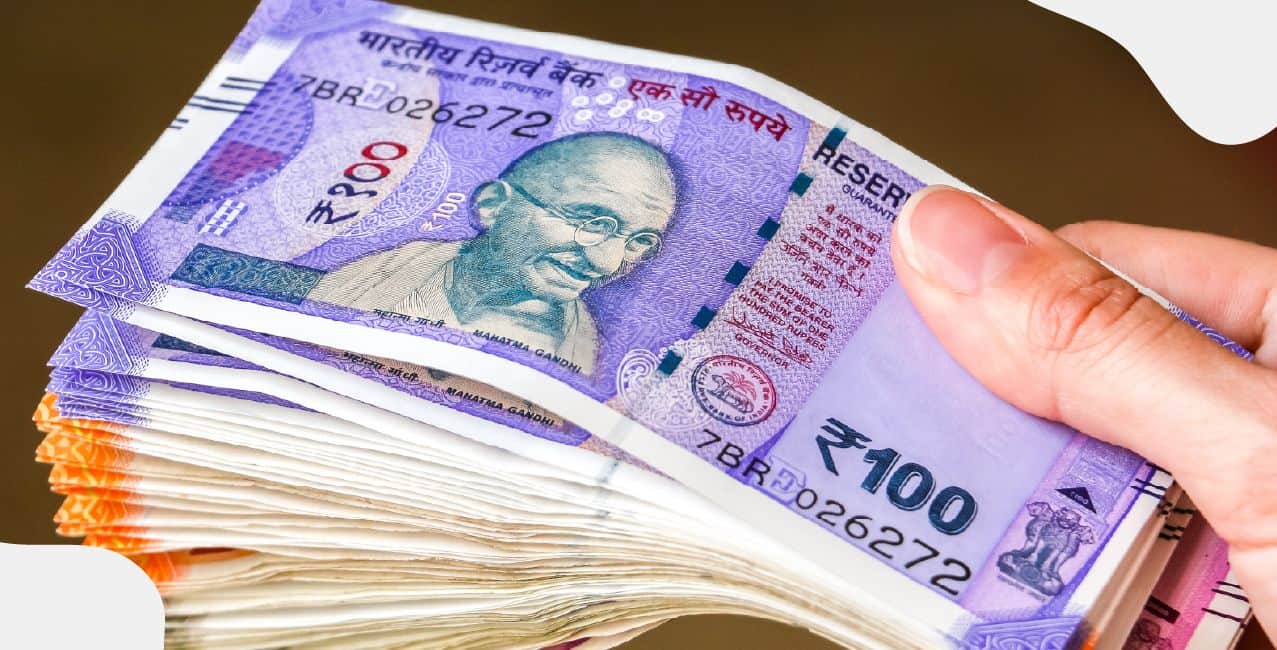
India’s central bank moved to support the rupee in early February, as the currency came under pressure following investor disappointment over the federal budget for 2026–27. Markets were shaken by a heavier-than-expected borrowing plan, lack of major reform announcements and higher taxes on certain transactions, which dented confidence in both bonds and equities. The Reserve Bank of India’s action helped halt the rupee’s slide near record lows and stabilise market sentiment.
In the immediate aftermath of the budget announcement, the Indian rupee was trading close to an all-time low of ₹91.9875 per US dollar on Friday. Without central-bank support, the currency looked set to breach psychological thresholds and add to investor unease. On Monday, coordinated operations in the foreign exchange market helped lift the rupee to around ₹91.60, a modest but meaningful improvement in the context of recent depreciation.
This type of intervention typically involves the RBI selling foreign currency reserves (often US dollars) and buying rupees in the market. Doing so increases demand for the rupee and slows or reverses sharp downward pressure. Traders noted such operations before market opening, reinforcing the central bank’s intent to prevent the currency from sliding further below key technical levels.
Read More - Rupee Hits Record Low of 96.25
How the Budget Hurt Market Confidence
The recently presented federal budget for the 2026–27 fiscal year prioritised manufacturing and infrastructure but lacked bold reforms that investors had hoped would boost growth prospects. Markets responded negatively when the government outlined a gross borrowing target of about ₹17.2 trillion, heavier than expectations, raising concerns over supply of government securities and crowding out of private credit.
In bond markets, yields on the 10-year benchmark climbed to levels not seen since early 2025, reflecting both increased supply and persistent risk aversion. Equities saw sharp swings in a special weekend session, with major indexes down sharply before rebounding slightly on Monday.
Central-bank FX intervention is not a long-term fix for structural weakness, but it does serve several purposes:
Yet analysts remain cautious. Some forecasts see the rupee underperforming over the remainder of 2026, with local interest rates trending higher amid mixed domestic and global signals.
*T&C Apply
With central-bank policy meetings and key economic data on the horizon, investors will be watching for signals on future rate settings, liquidity conditions, and how fiscal policy evolves to attract stable capital. If upcoming indicators show strengthening macro fundamentals, that may ease some pressure on the rupee. If not, both markets and policymakers may face renewed tension between managing currency stability and supporting broader growth objectives.
The RBI’s action to shore up the rupee indicates how finely balanced India’s financial markets are following the 2026 budget’s reception. While the currency avoided a fresh lows breach, underlying vulnerabilities tied to fiscal strategy, capital flows, and global risk sentiment remain. How these dynamics evolve will shape the rupee’s path and broader confidence in India’s macroeconomic trajectory through 2026.









.png&w=3840&q=75)



