By continuing, you agree to LoansJagat's Credit Report Terms of Use, Terms and Conditions, Privacy Policy, and authorize contact via Call, SMS, Email, or WhatsApp
Disclaimer: The information published on LoansJagat is intended for general informational and educational purposes only and should not be considered financial, legal, or investment advice. Interest rates, loan terms, statistics, and other data may change over time and may vary by lender or source. Please verify the latest information and consult a qualified financial advisor or the respective Bank/NBFC before making any financial decisions.
Apply for Loans Fast and Hassle-Free
Subscribe Now
About the author

LoansJagat Team
‘Simplify Finance for Everyone.’ This is the common goal of our team, as we try to explain any topic with relatable examples. From personal to business finance, managing EMIs to becoming debt-free, we do extensive research on each and every parameter, so you don’t have to. Scroll up and have a look at what 15+ years of experience in the BFSI sector looks like.
Related Blog Post
Simplify All Your Loans Into One Affordable EMI

Customers Served

Debt Consolidated

1200+ Reviews

Locations in India
Club all Loans & Credit Card Bills into Single EMI

Quick Apply Loan
Consolidate your debts into one easy EMI.

Takes less than 2 minutes. No paperwork.

10 Lakhs+
Trusted Customers

2000 Cr+
Loans Disbursed

4.7/5
Google Reviews

50+
Banks & NBFCs Offers
Other services mentioned in this article
Key Takeaways:
Bonus tip: In India, RBI makes banks keep enough safe stuff like bonds to cover 30 days of bad cash outflow. This LCR rule at 100% keeps your money extra safe.
Have you ever wondered about this? When you put money in the bank, the bank lends it out to lots of people. But if you want all your money back at once, how does the bank still have enough cash?
This is possible because Asset liability management (ALM) is used by banks. It allows them to repay your money when you demand, makes money off loans, and leaves them out of trouble. This blog describes the meaning of ALM and how it functions in a normal banking environment.
Bank assets are:
Together, these assets help banks earn income and stay stable while serving customers and businesses.
Read More : What Are Assets in Accounting?
What Are Bank Liabilities?
Bank liabilities are:
These are the funds a bank must repay to customers and other lenders over time.
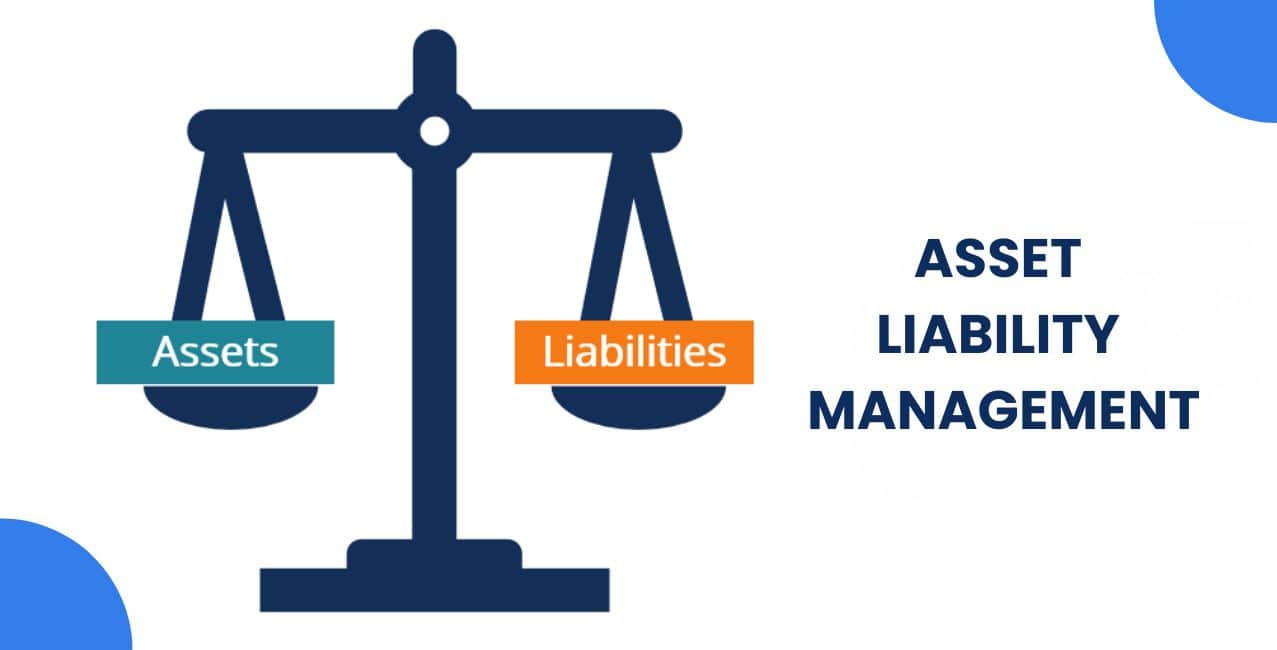
Asset liability management is the plan banks use to balance what they own and what they owe. The aim is simple. Your deposits stay safe and available, and the bank earns money without taking big risks.
This plan checks when cash comes in and goes out. It looks at how interest rate changes hit earnings and value. It runs simple tests for tough times.
ALM mainly handles interest rate risk and liquidity risk. It watches currency risk if the bank deals in foreign currencies. Credit risk goes to other teams, but ALM sees how bad loans can hurt the whole bank.
Banks use tools like gap analysis, duration models, and cash flow forecasts. For interest rate issues, they use swaps. For cash needs, they keep credit lines, liquid assets, and varied funding. These make asset liabilities management in banks work well.
Banks face a few key risks in their daily work. ALM helps manage these main ones:
*T&C Apply
Interest Rate Risk
Interest rate risk is when the rates the bank earns don't match the rates it pays. Banks test how changes affect short-term earnings and long-term value (economic value of equity). RBI requires shock tests on both net interest income and long-term value.
Liquidity Risk
Liquidity risk means not having enough quick cash if many customers want money at once. Banks hold cash, short government securities, and backup lines. They test for sudden pressure.
Credit Impact
Credit teams keep an eye on how good the loans are and set the rules for giving them out. ALM takes that info and figures out what happens to the bank's cash or strength if too many loans don't get paid back. It doesn't watch every loan
every day, but it uses the details to plan ahead and keep the bank from getting hurt.
Also Read : What is an Asset?
How Banks Protect Your Deposits
Matching loan and deposit timelines
Banks try to match when loans get paid back with when deposits might be taken out. They cannot match everything perfectly because giving longer loans than deposit periods is how banks make a profit. So ALM does not fix the mismatch completely. It just keeps the gap small and safe. This careful step is a big part of liability management in banking.
Keeping cash reserves
Banks hold some money as cash or very easy-to-sell assets for daily withdrawals. They keep money with the central bank and short-term government papers. Banks also keep extra amounts above what is required.
Following central bank rules
In India, the RBI makes rules to protect cash flow. In India, RBI sets strict rules to make sure banks always have enough cash on hand. Things like CRR mean banks have to park some cash directly with RBI. SLR means they hold a certain amount in government bonds.
RBI also keeps an eye on LCR, which tests if the bank can survive a 30-day cash emergency situation, and NSFR, which checks for steady funding over a full year. Banks regularly send RBI reports showing maturity gaps and risk levels. They follow RBI circulars and guidelines. The Board sets risk limits and policies. ALCO handles daily work inside those limits.
Monitoring through ALCO
The asset liability management committee, or ALCO, meets often to look at ALM reports. It checks interest rate risk, liquidity risk, and currency risk. It approves plans for funding and protection. ALCO works with the Board and risk teams. It follows guidance from the asset and liability management handbook. This teamwork keeps asset liabilities management in banks strong.
Asset liabilities management in banks is how a bank keeps safety and profit in balance. It pays attention to rate risk and liquidity risk, watches currency changes, and uses data and rules to protect deposits. Clear RBI rules, Board watch, and regular work by the asset liability management committee make it work well. If you want more info, check the asset liability management rbi circular, the asset and liability management handbook, or ask your bank how they do liability management in banking.
What is Asset Liability Management (ALM) in banks?
ALM is how banks match their loans and cash with your deposits. It keeps your money safe and ready while the bank makes profit without big trouble.
What is the role and importance of assets and liability management in the banking industry?
It keeps your money safe, stops the bank from running out of cash, handles rate change problems, and helps the bank stay strong and earn money for years.
Is Asset Management really a good career for long-term career growth and success?
It's safe but grows slowly, feels boring for most, and usually stays as a support job not a big career climb.
What happens if interest rates suddenly go up or down?
Rates go up: bank pays more on deposits, but old loans earn same, so profit drops quick. Rates go down: loans earn less, deposits cost less, it can help or hurt.
Is Asset Management and Financial Advisor the same?
No, asset management handles investments, while a financial advisor gives personal money advice.
Why asset liability management is key to the success of a bank?
It keeps deposits safe, controls risks, avoids cash shortages, and helps the bank earn profit in the long term.