Check AI Loan Optimisation Plans to Reduce Your EMI

Disclaimer: The information published on LoansJagat is intended for general informational and educational purposes only and should not be considered financial, legal, or investment advice. Interest rates, loan terms, statistics, and other data may change over time and may vary by lender or source. Please verify the latest information and consult a qualified financial advisor or the respective Bank/NBFC before making any financial decisions.
Subscribe Now
About the author

Anishka Bhadly is a content writer with a finance and business background. She has completed her bachelor's degree with a specialisation in finance and is currently pursuing an MBA in the finance field too. The knowledge she has gained from her studies and experience working with EdTech companies helped her combine theoretical knowledge with practical industry insight. Her expertise lies in creating well-researched, informative, and reader-friendly content in various banking, personal finance, loans, insurance, and investment-related topics.
Related Blog Post
Simplify All Your Loans Into One Affordable EMI

Customers Served

Debt Consolidated

1200+ Reviews

Locations in India
Club all Loans & Credit Card Bills into Single EMI

Quick Apply Loan
Consolidate your debts into one easy EMI.

Takes less than 2 minutes. No paperwork.

10 Lakhs+
Trusted Customers

2000 Cr+
Loans Disbursed

4.7/5
Google Reviews

50+
Banks & NBFCs Offers
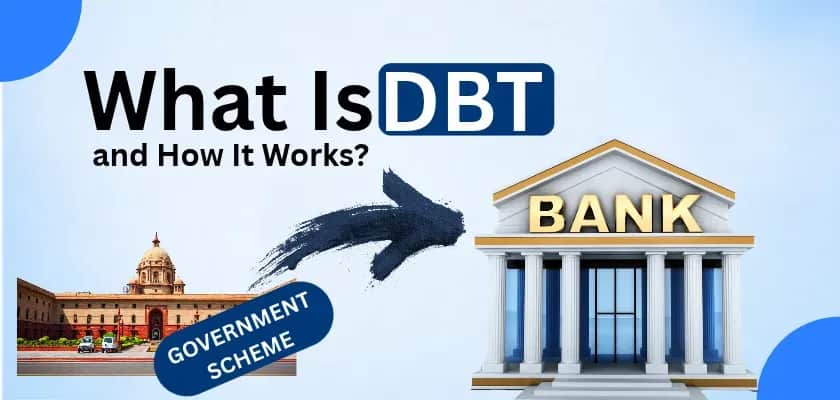
Government assistance can make a meaningful difference, but it matters just as much that support reaches the people it is meant for. Direct Benefit Transfer (DBT) helps the Government of India deliver eligible welfare benefits through more direct and trackable channels. Launched on 1 January 2013, it covers support such as subsidies, pensions and scholarships, depending on the scheme. Direct Benefit Transfer aims to make welfare payments more transparent, reduce delays and ensure eligible beneficiaries receive financial assistance directly in their bank accounts.
Key Takeaways
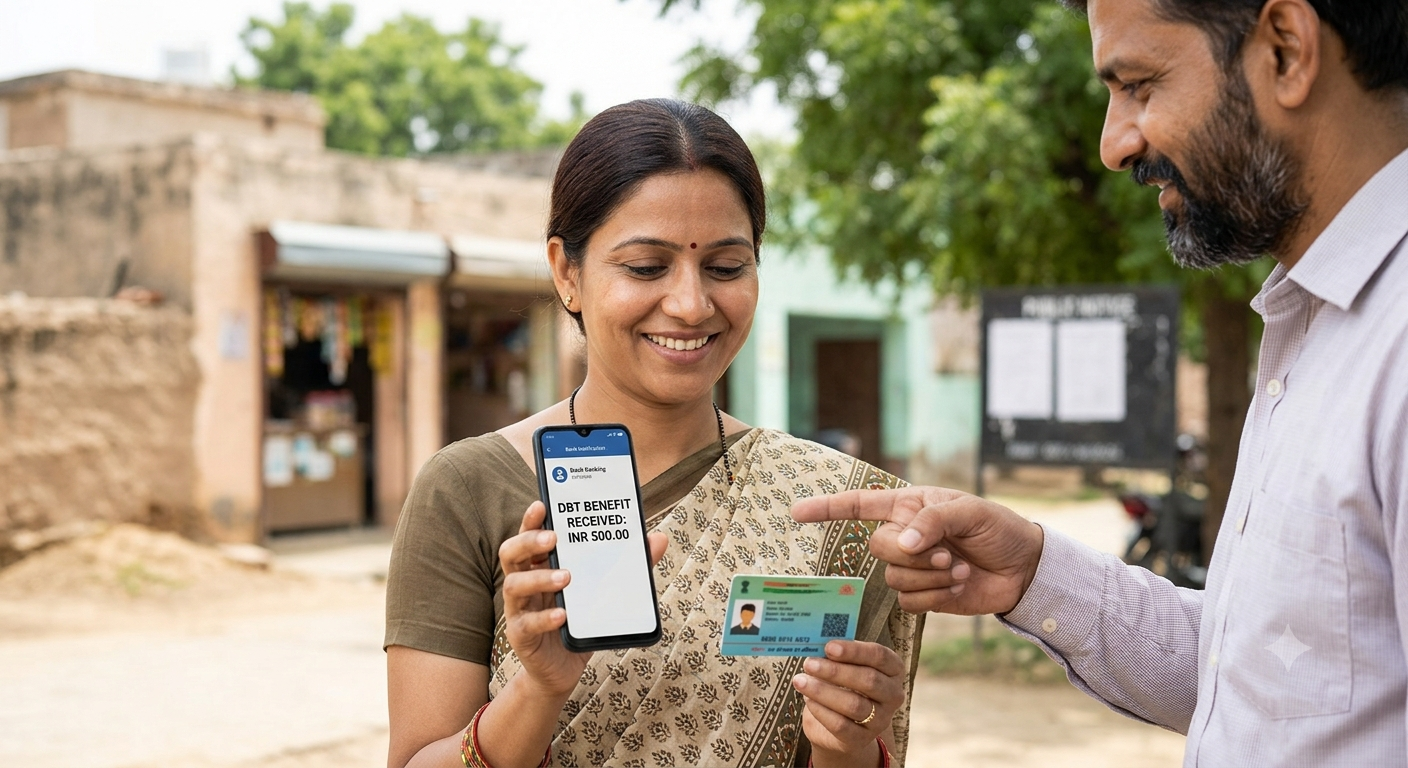
Direct Benefit Transfer (DBT) is a scheme initiated by the Government of India. It was launched on 1st January 2013. DBT (Direct Benefit Transfer) is a government mechanism designed to transfer welfare benefits and subsidies directly to beneficiaries' bank accounts. It aims to improve transparency, reduce delays and minimise leakages in the delivery of government assistance.
Under the Direct Benefit Transfer (DBT) scheme, government benefits reach beneficiaries directly. These include cash transfers, such as pensions, subsidies and scholarships, as well as in-kind benefits, such as food grains distributed through the Public Distribution System (PDS). This scheme reduces delays, limits middlemen, and reduces the risk of duplicate and fraudulent payments.
The Direct Benefit Transfer (DBT) process ensures that the government transfers funds to the rightful beneficiary. This process involves identifying the beneficiary, validating their information, allocating funds and transferring funds. The general process is as follows:
The Government Departments will identify individuals who fit the criteria of the scheme and create a list of beneficiaries.
Once the information has been provided, it will be validated. At this stage, the beneficiary may be required to use their Aadhaar to identify themselves.
Funds for the scheme will be allocated by the appropriate ministry/department.
The funds will be transferred to the beneficiary’s bank account of choice.
The Government Departments will monitor the transfer of funds via the appropriate systems.
The beneficiary can view their bank statement, SMS and/or payment portal to confirm the transfer.
Overall, the process has made paying for welfare easier by reducing the number of people involved and increasing transparency.
The Government of India provides financial assistance to beneficiaries using the concept of DBT. The schemes are meant for different purposes like agriculture, education, food & social welfare. Some of them are as follows:
These schemes help in providing benefits to various sectors using the DBT concept and assist eligible beneficiaries to receive financial assistance from the government.
The DBT Scheme was launched to improve government aid by providing a more streamlined, transparent and accountable method. The main objectives of the scheme are as follows:
This will improve government aid and ensure welfare schemes are more effective.
The DBT scheme makes use of digital infrastructure and banking systems to ensure efficient distribution of government benefits. The key features of the scheme are:
This allows for a digital system to be put into place to manage welfare payments.
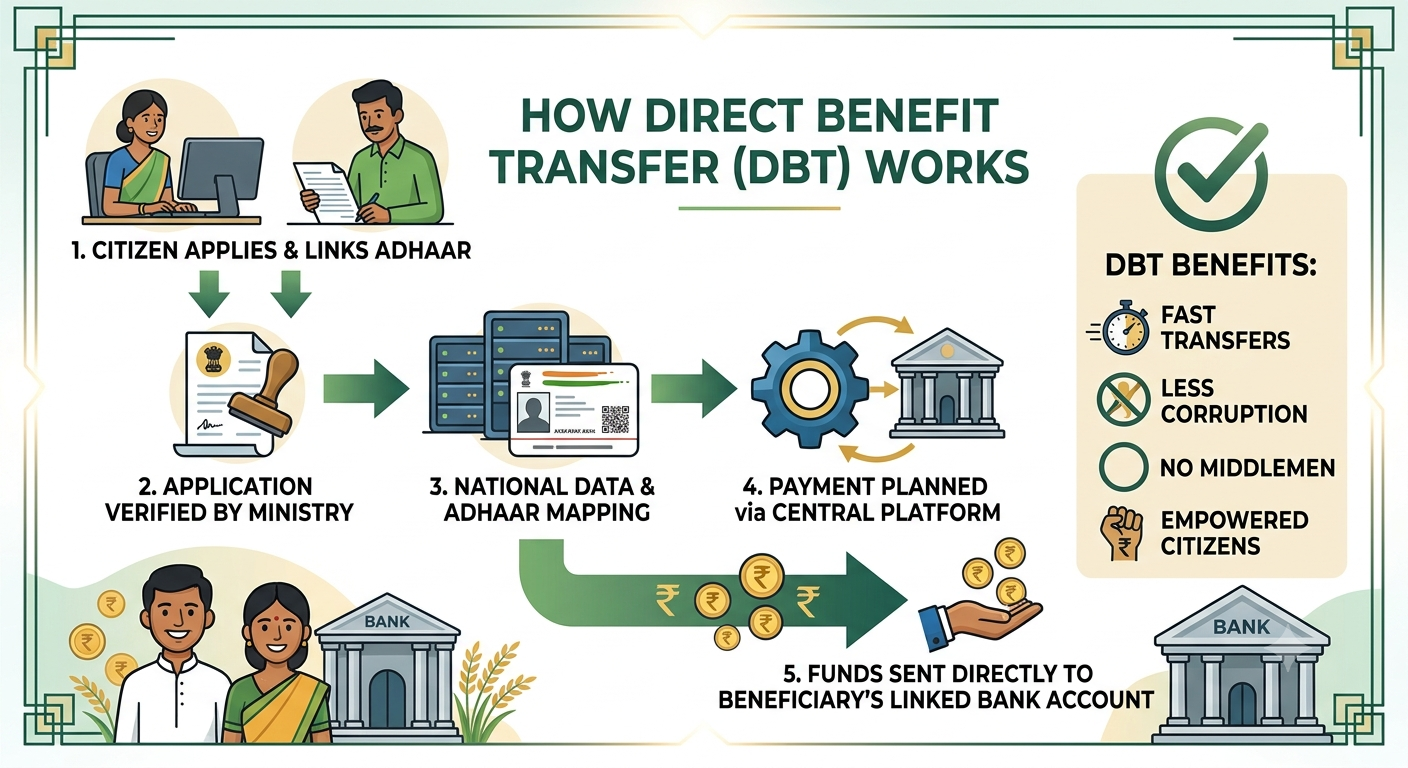
Direct Benefit Transfer is a system used within government assistance to ensure that those who are entitled to receive benefits get them quicker. This can be done by using digital payment methods and ensuring there is a secure record of beneficiaries. This results in several benefits:
This ensures more efficient benefit delivery through transparent payments and accurate identification of beneficiaries. It also makes government funding easier to access.
Despite the improvements in providing government benefits to beneficiaries via Direct Benefit Transfer, there are some issues that can cause problems.
Improving digital awareness, banking access and technical support can help to overcome the issues with implementing Direct Benefit Transfer.
Direct Benefit Transfer (DBT) was initiated on 1st January 2013 to improve the delivery of the welfare schemes of the government. The main aim of the scheme is to make the process of transferring the money easy, identify the beneficiary, and eliminate duplicate payments and fraud.
It has gone through various phases:
Overall, the DBT seeks to improve transparency, efficiency, and accountability in the distribution of benefits by the government.
Direct Benefit Transfer has improved how government welfare assistance reaches eligible beneficiaries by making payments more transparent and easier to track. However, understanding the eligibility conditions and payment process is equally important to access these benefits. For more information on managing your finances and exploring borrowing options, visit LoansJagat to read useful financial guides and make informed decisions about your financial needs.
The full form of DBT is Direct Benefit Transfer. It is a scheme launched by the Government of India to transfer the welfare benefits directly to the beneficiary.
DBT was launched on 1st Jan 2013 to help with efficient delivery of government welfare schemes.
No, it is not compulsory for all DBT schemes. There might be schemes that may ask you to link Aadhaar.
You can visit the official PFMS site and choose 'Know Your Payment'. Enter the required details.
If you are receiving cash-based DBT benefits, you need an eligible bank or post office account to receive the amount. However, some other DBT benefits can be accessed through alternative delivery methods, depending on the scheme.
Aadhaar, Bank Account Details, Proof of Identity, Income Certificate and Scheme Documents are commonly asked for. This will depend on what government scheme you are applying for.
There are many schemes that use DBT, such as PM-KISAN, PAHAL, NSAP (National Social Assistance Programme) and Scholarship Schemes. Different benefits will be available depending on the scheme.
There is no set time frame for when you will receive your DBT. It will depend on the payment schedule for the scheme.
Check your payment status using the relevant scheme or PFMS (if applicable). Make sure your bank details are correct. If you have linked your Aadhaar, make sure it is correctly mapped. Contact your bank or relevant department.
Yes, you can get DBT from multiple schemes if you are eligible. Each scheme will have its own application process, verification and payment.
Start your journey today
Apply Now*T&C apply
Lack of Banking Facilities