By continuing, you agree to LoansJagat's Credit Report Terms of Use, Terms and Conditions, Privacy Policy, and authorize contact via Call, SMS, Email, or WhatsApp
Disclaimer: The information published on LoansJagat is intended for general informational and educational purposes only and should not be considered financial, legal, or investment advice. Interest rates, loan terms, statistics, and other data may change over time and may vary by lender or source. Please verify the latest information and consult a qualified financial advisor or the respective Bank/NBFC before making any financial decisions.
Subscribe Now
About the author

Darshana Patel
Darshana Patel is a finance and tech writer with a strong background in journalism, financial economics, and political science, working with Loans Jagat. She has immense experience writing content through her previous work in fintech and edtech companies. Her contribution at Loans Jagat is to simplify finance-backed content and academically powered content for the readers.
Related Blog Post
Simplify All Your Loans Into One Affordable EMI

Customers Served

Debt Consolidated

1200+ Reviews

Locations in India
Club all Loans & Credit Card Bills into Single EMI

Quick Apply Loan
Consolidate your debts into one easy EMI.

Takes less than 2 minutes. No paperwork.

10 Lakhs+
Trusted Customers

2000 Cr+
Loans Disbursed

4.7/5
Google Reviews

50+
Banks & NBFCs Offers
Other services mentioned in this article
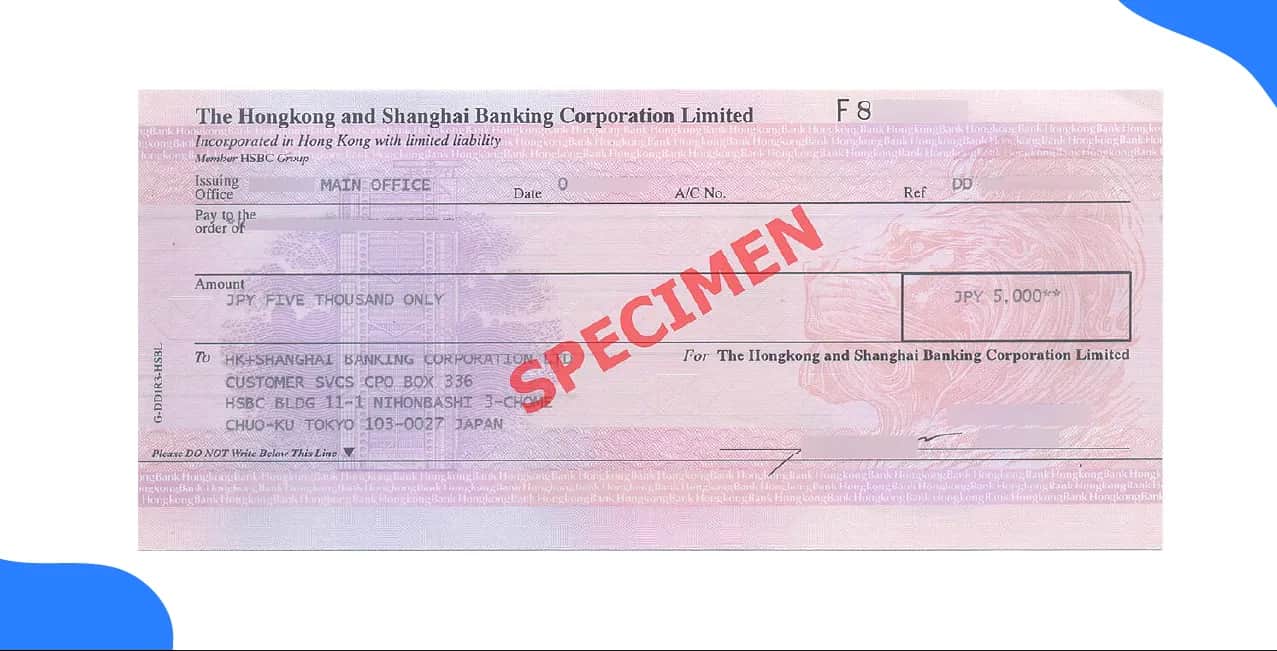
A demand draft is a bank-issued payment that is used to make a payment to a named payee. Demand drafts are used for various payment amounts and are often required when a bank-issued payment instrument is needed. Several banks in India offer demand drafts to assure payments to the beneficiary. Demand drafts are legally practised in India, and yet many people are unaware of them. This is a very important concept that people must know in banking; this is why LoansJagat brings well-researched and expert-verified blogs to bridge this gap.
There are several features of the demand draft in terms of security, drafting amount, etc.
Here are the features of a demand draft:
Hence, these are the main features of the demand draft.
Demand drafts can be classified based on features such as whether they are local or outstation and whether they are crossed or uncrossed. Other classifications include local demand drafts, outstation demand drafts, crossed demand drafts, and uncrossed demand drafts.
Here are the types of demand drafts with their meaning:
Hence, these are the types of demand drafts followed by the financial institutions in India.
A demand draft is a highly secure form of transaction done through a financial institution, but there are certain drawbacks also in terms of amount, charges, etc.
Here are the advantages and disadvantages of the demand draft:
Hence, these are the advantages and disadvantages of the demand draft in banking.
Payable within the same city where the draft is issued.
*T&C Apply
Every bank has its own process to issue a demand draft. Here, we will understand the steps for issuing a demand draft through IndusInd Bank as an example.
Here are the steps required for the issuance of a demand draft in IndusInd Bank:
Hence, these are the steps taken for the demand draft issuance.
A demand draft is a financial tool used by several financial institutions in India. It is a form of secured transaction directly from one bank account to the other through a physical paper instrument. One needs to pay the amount to the bank equivalent to the amount needed to transfer, with additional charges. It is not for the small and frequent payments. Many people might find it confusing in the practical world; this is why LoansJagat tries to resolve such confusion through its well-researched, expert-verified, and accurate blogs and articles.
A demand draft is a financial instrument for transferring money from one bank account to another through physical paper drafts issued by several financial institutions in India.
Yes, demand drafts can be considered a secured form of payment.
The advantages of a demand draft include that it is widely accepted in colleges, offices, etc., and provides better protection than facilities like cheques or cash payments.
The major disadvantages of the demand draft include that it is charged by many banks in India to perform, and you need to physically deliver the demand draft to the payee to proceed with the transfer.
A demand draft may offer certain payment-security advantages, but it is not immune to fraud or misuse.
A demand draft is generally issued against funds received by the bank, along with applicable charges.
Sight demand draft and time demand draft are the two primary types of demand draft.
There is no requirement for the signature from the buyer, as the draft is signed by the bank officials already.
‘DD’ is the abbreviation used for the demand draft by many financial institutions.
DDs are generally issued against funds received by the bank before issuance, which reduces the risk of non-payment due to insufficient funds in the purchaser’s account. Payment remains subject to applicable banking rules and circumstances.