Check AI Loan Optimisation Plans to Reduce Your EMI

Disclaimer: The information published on LoansJagat is intended for general informational and educational purposes only and should not be considered financial, legal, or investment advice. Interest rates, loan terms, statistics, and other data may change over time and may vary by lender or source. Please verify the latest information and consult a qualified financial advisor or the respective Bank/NBFC before making any financial decisions.
Subscribe Now
About the author

Vidhi Chauhan is a copywriter and content writer with extensive experience creating high-quality, SEO-driven content across multiple industries, with a strong focus on fintech. She has written extensively on GST, banking, personal loans, business loans, credit cards, income tax, insurance, and other financial topics, helping Indian readers understand complex concepts through clear, accurate, and engaging content.
Related Blog Post

Pay Less EMI Every Month

1Cr+
Loans analysed by our AI

50Lacs+
Customers served

10,000+
Pincodes served

₹1,000Cr+
EMI savings delivered

1,400+ Google reviews

Quick Apply Loan
Consolidate your debts into one easy EMI.

Takes less than 2 minutes. No paperwork.

10 Lakhs+
Trusted Customers

2000 Cr+
Loans Disbursed

4.7/5
Google Reviews

50+
Banks & NBFCs Offers
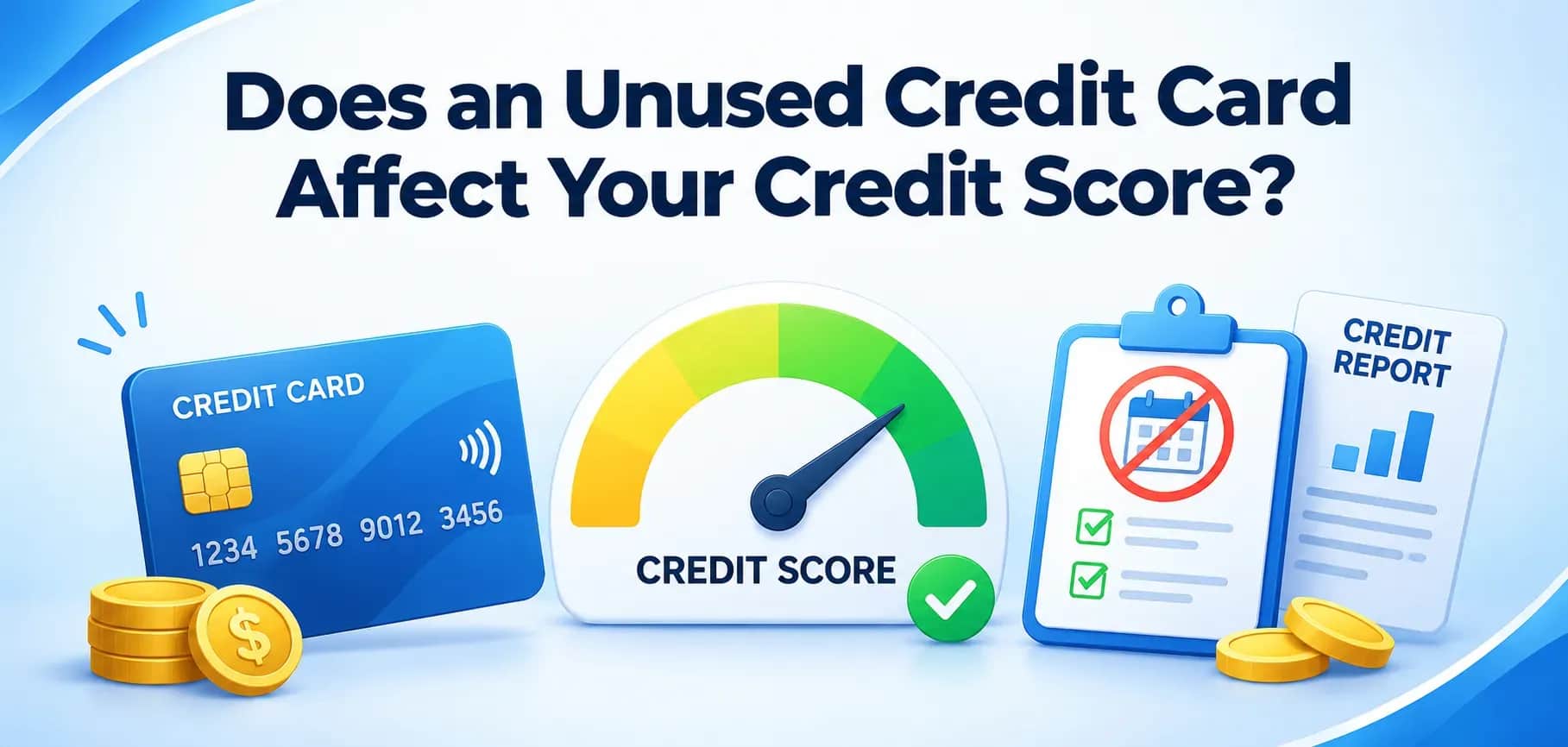
An unused credit card does not automatically lower your CIBIL score. However, closing it may affect your total credit limit and credit utilisation. The impact depends on your credit history and spending habits.
Before closing an unused card, understand how it affects your credit score. Learn when issuers may close inactive cards and how to manage them responsibly.
Key Takeaways
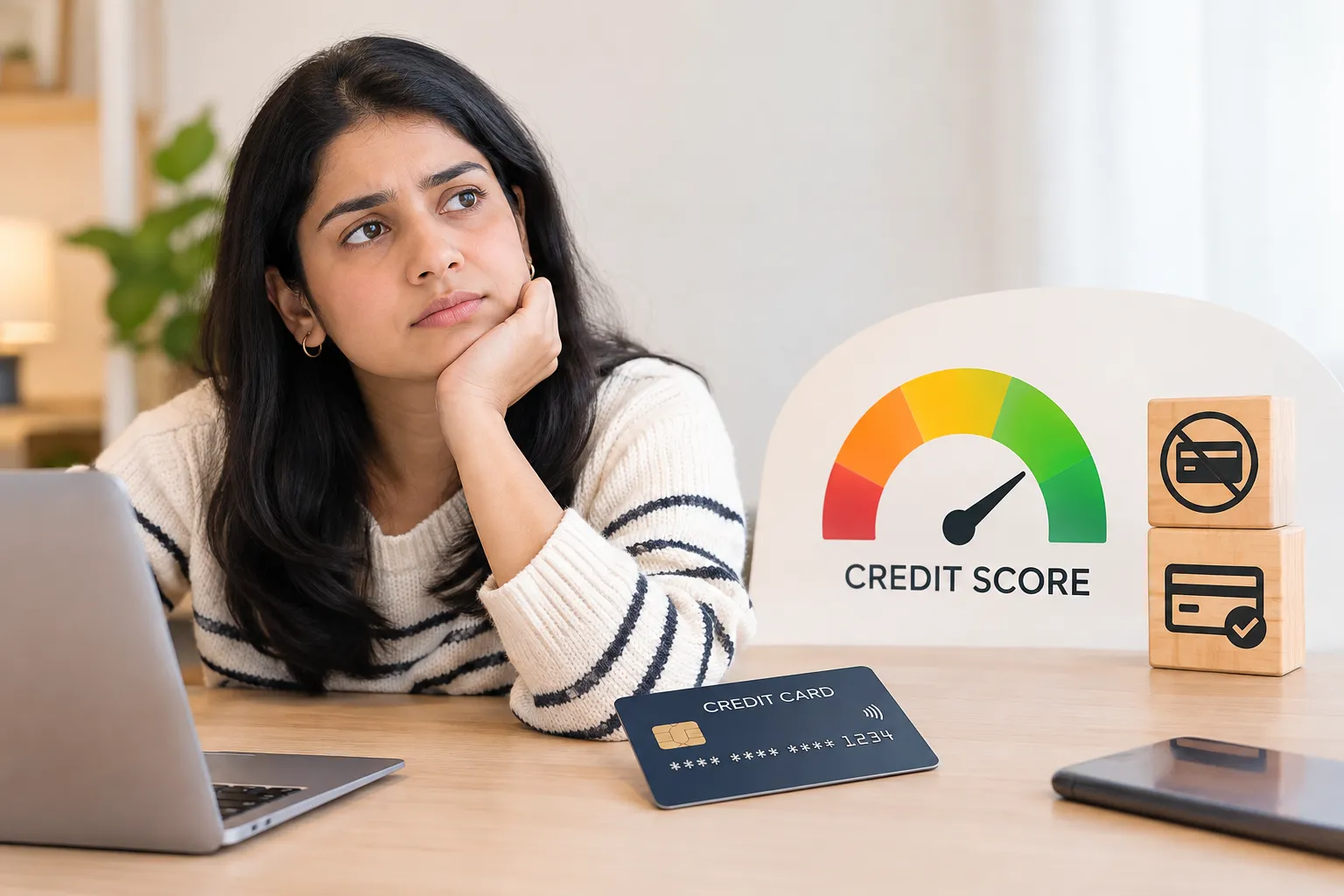
An unused credit card usually does not lower your credit score if it remains open and you pay your dues on time. If a credit card remains unused for more than one year, the issuer must initiate the closure process after informing the cardholder. If no response is received within 30 days, the issuer must close the account, subject to payment of all outstanding dues.
Closing a credit card may reduce your total credit limit. This can increase your credit utilisation ratio and affect your score. Closing an old card may also affect your credit history.
Use your card for a small purchase occasionally and repay the amount on time to keep it active.
An inactive credit card does not lower your CIBIL score simply because you are not using it. CIBIL calculates your score from the credit behaviour recorded in your credit report, especially payment history and credit utilisation.
Inactivity can indirectly affect your score. Under RBI directions, if a credit card remains unused for more than one year, the issuer must initiate the closure process after informing the cardholder. If no response is received within 30 days, the issuer must close the account, subject to payment of all outstanding dues.
If the card is closed, your total available credit limit falls. This can increase your credit utilisation ratio, how much credit you use relative to your limit, which CIBIL notes may negatively affect your score.
Tip to Keep Your Credit Card Active: Use the card occasionally for a small purchase and repay the full bill on time to maintain account activity. Keep outstanding balances low to manage your credit utilisation ratio.
Credit utilisation is the extent to which one uses their revolving credit capacity. It can be determined through the formula:
Credit Utilisation = (Total Credit Card Outstanding ÷ Total Credit Limit) × 100
In case your credit limit is ₹1,00,000 and your outstanding amount is ₹20,000, then your credit utilisation will be 20%.
An unused card that has some credit capacity left can be counted within your total credit limit if the card account is active.
For example:
This is the reason why the cancellation of your unused credit card can have an unexpected impact on your credit history.
There is no hard-and-fast rule that any unused credit card needs to be maintained. It all depends on the various factors associated with the card.
It makes more sense to keep an unused card open if:
Alternatively, you might want to close it if it charges too many fees, offers little value, and becomes difficult to juggle along with other credit cards.
When planning to close a credit card, one must take into account its effects on the total credit limit and credit utilisation ratio.
Closing an unused credit card may affect your CIBIL score, but the impact depends on your credit history and how much credit you use. According to TransUnion CIBIL, factors such as payment history, credit utilisation, and the age of your credit accounts influence your score.
Before closing a card, check its annual fees, credit limit, and age. Keeping an old card open may help maintain a lower credit utilisation ratio, provided you manage it responsibly.
If you decide to close the card, clear all outstanding dues and confirm the closure with your card issuer. You can then check your CIBIL report to ensure the account status is updated correctly.
If you never use your credit card, your CIBIL score does not automatically decrease. Keeping a card unused for a long time may lead to its closure. Not using your credit card does not automatically lower your CIBIL score. Your payment history, credit usage and credit history also matter.
Tip: Use your card occasionally for a small purchase and pay the bill on time. This can help you keep the card active and manage your credit utilisation.
For the card you don’t use much, a couple of things could come in handy:
An unused credit card does not automatically lower your CIBIL score. However, closing it may reduce your total available credit limit. This can increase your credit utilisation and affect your score.
Before closing a card, check its fees, credit limit, and age. Review your statements regularly to identify any unexpected charges. Avoid unnecessary purchases just to keep your card active. Always pay outstanding dues on time to maintain a healthy credit history.
Under RBI directions, if a credit card remains unused for more than one year, the issuer must initiate the closure process after informing the cardholder. If no response is received within 30 days, the account must be closed, subject to payment of outstanding dues.
One may receive a statement even with an inactive card because of any fees, charges, and refund operations. It all depends on the terms provided by the credit card issuer.
Yes, an open credit card can be one of the means of paying in an emergency situation. It is necessary to make sure the card works and that there are no restrictions concerning its use.
Yes, going through account statements and transaction notices may be useful in detecting suspicious activity that you may not be aware of.
Yes, the unused physical credit cards will still have an expiry date despite the account being open. The process by which the card can be renewed or replaced once it expires is different depending on the issuer.
Issuers can enable their customers to change their products and cards, but there are certain criteria and fees.
There is a possibility that even the unused card has a balance because some charges or interest have been added to the card account. It is possible to check the statement in order to understand why the amount is required.
It is possible to ask for a reduction of the credit limit depending on the policy of the credit card company. As lowering the credit limit affects the total amount of the credit limit, think about this issue.
Usually, the reward points have been earned on the basis of eligible transactions and not through maintaining an active credit card account. The specific rules for earning reward points would depend upon the reward program of the credit card.
One should consider pending transactions, subscription details, dues, etc., before cancelling the card.
Start your journey today
Apply Now*T&C apply