Check AI Loan Optimisation Plans to Reduce Your EMI

Disclaimer: The information published on LoansJagat is intended for general informational and educational purposes only and should not be considered financial, legal, or investment advice. Interest rates, loan terms, statistics, and other data may change over time and may vary by lender or source. Please verify the latest information and consult a qualified financial advisor or the respective Bank/NBFC before making any financial decisions.
Subscribe Now
About the author

Anishka Bhadly is a content writer with a finance and business background. She has completed her bachelor's degree with a specialisation in finance and is currently pursuing an MBA in the finance field too. The knowledge she has gained from her studies and experience working with EdTech companies helped her combine theoretical knowledge with practical industry insight. Her expertise lies in creating well-researched, informative, and reader-friendly content in various banking, personal finance, loans, insurance, and investment-related topics.
Related Blog Post
Simplify All Your Loans Into One Affordable EMI

Customers Served

Debt Consolidated

1200+ Reviews

Locations in India
Club all Loans & Credit Card Bills into Single EMI

Quick Apply Loan
Consolidate your debts into one easy EMI.

Takes less than 2 minutes. No paperwork.

10 Lakhs+
Trusted Customers

2000 Cr+
Loans Disbursed

4.7/5
Google Reviews

50+
Banks & NBFCs Offers
The responsible use of a credit card begins with knowing its features and terms of credit. It is important to understand a credit card’s interest rates, late payment fees, annual fees, and other related charges. Understanding the details of your credit limit and payment schedule plays an important role in card management. It will help you keep track of your spending and the amount you have to pay back to stay within the limit and avoid paying excessive interest. In this blog, we will learn more about the useful tips to manage your credit card.
Key Takeaways:
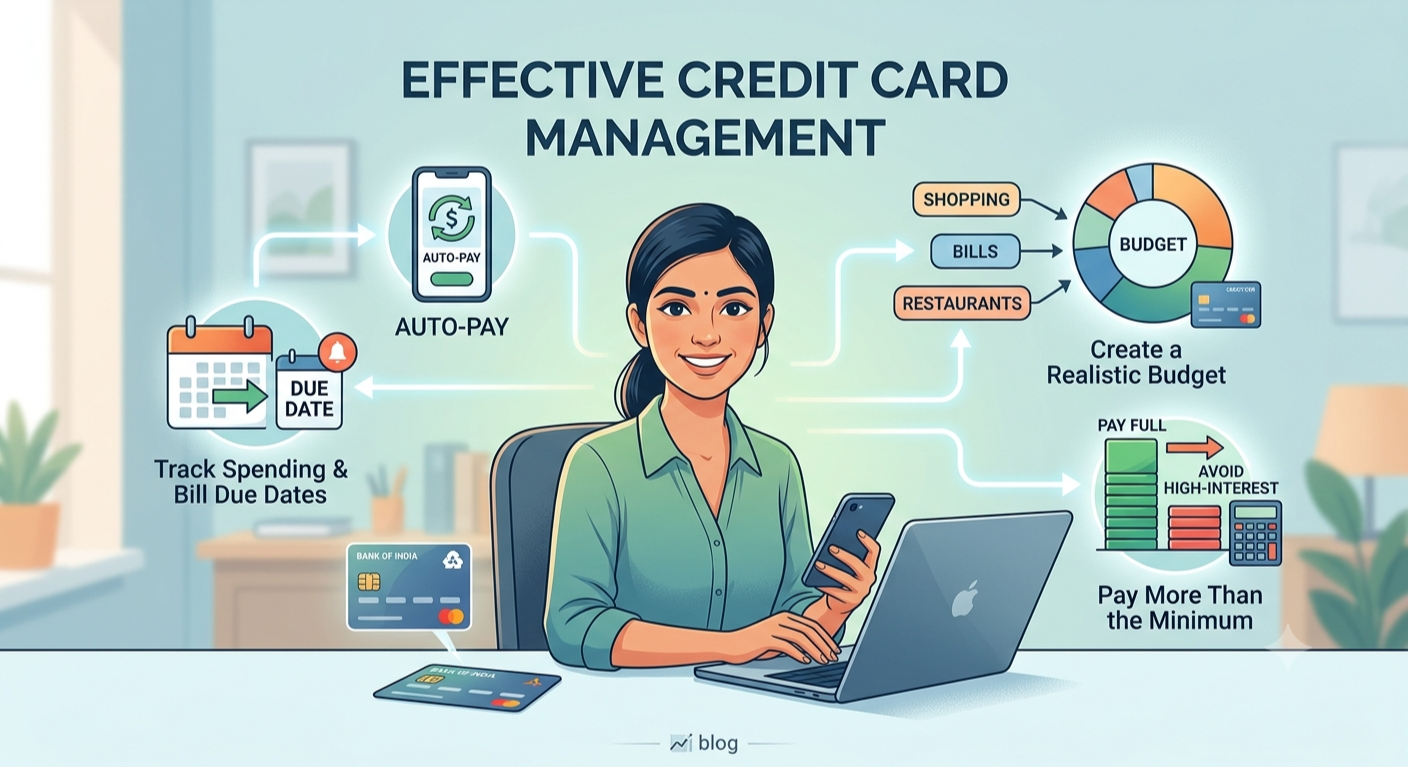
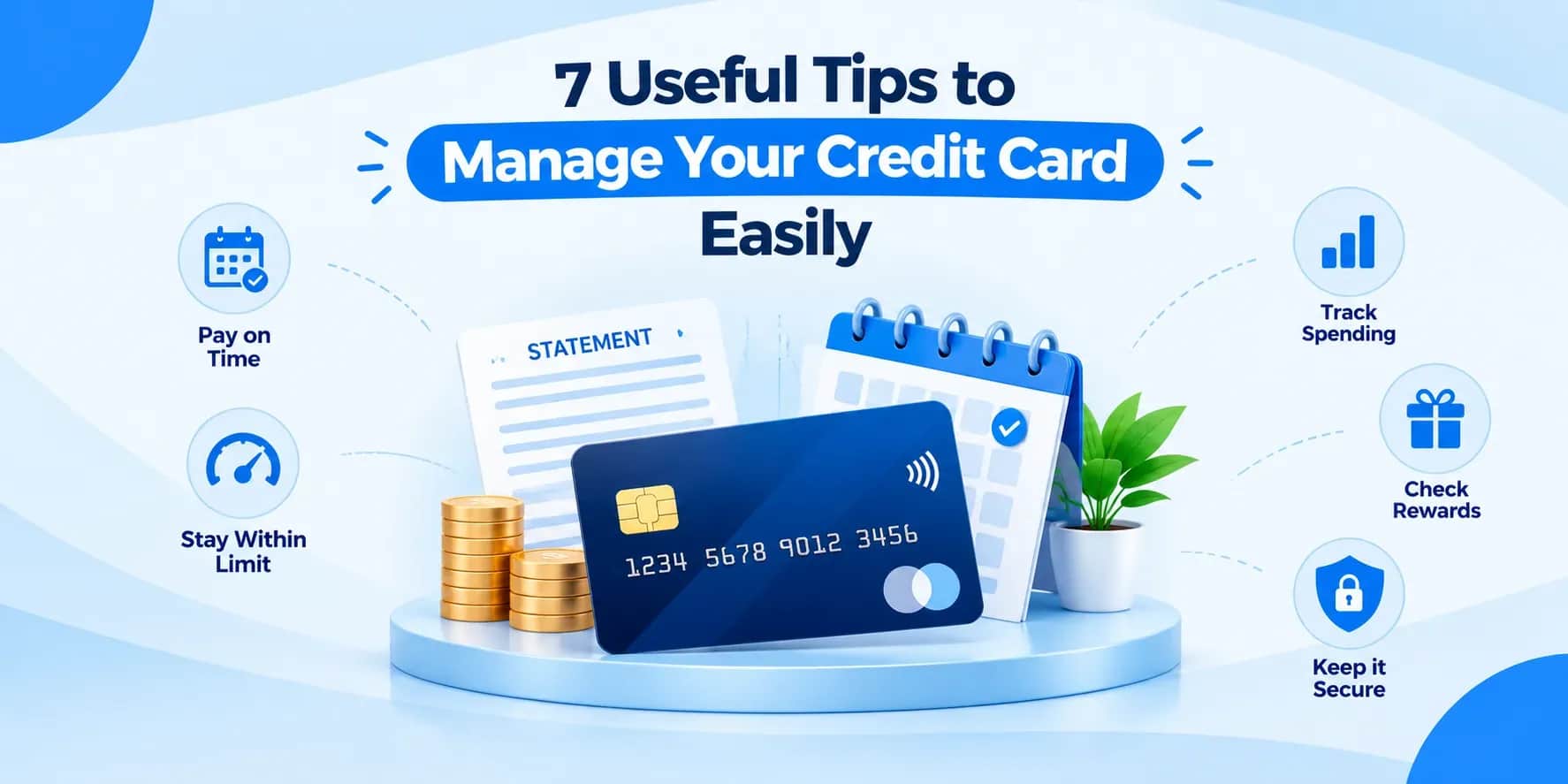
Managing your credit card dues properly will save you a lot of headaches. In order to do that, one needs to pay their credit card dues on time, budget their money and be aware of the costs that come with using a credit card. These are some helpful tips that will help you manage your credit card effortlessly:
Paying your credit card bill on time helps you avoid late fees and other charges that may apply in each case. It is advised as a best practice to pay off the credit card bill in full, if possible, on or before the due date to avoid having late payment interest on qualifying purchases. The applicable interest rate may vary depending on the credit card issuer and the terms and conditions outlined in the card agreement. In addition, timely payment of bills will allow you to establish a good history of repayment and creditworthiness.
A tight schedule may lead to missing the due date of one’s credit card bill. To avoid this, you can set an alarm or a reminder on your phone or calendar a few days before it is due. You can also connect with your bank and set up automatic credit card payments to avoid late fees. Just make sure there's enough money in your account and the payment goes through okay.
Credit cards are convenient to use, but large amounts of purchases can cause confusion about where your money went. Review your credit card statements regularly through your bank’s website or mobile app. Review your transactions against your personal budget. This way, nothing will get past you, and your finances will stay healthy.
Your credit utilisation ratio depicts how much of your total available credit is currently being used up. For example, if on a credit card of ₹1,00,000 you have an outstanding amount of ₹30,000, your credit utilisation ratio would be 30%. The advisable credit utilisation ratio tends to be less because any significant utilisation can bring down your credit score. There is no exact percentage that will ensure a good credit score, so it can be best to have a low outstanding balance compared to the available credit limit.
Consider that each credit card application can result in a hard inquiry on your credit report, potentially lowering your credit score. In addition, applying for multiple credit cards can give the impression to lenders that you are a higher-risk borrower. It is best to wait before applying for another credit card and to evaluate if you truly need one as per your spending patterns and financial needs.
Before applying for a credit card, it is essential to research the joining fee, annual fee, late payment fine, interest rates, and other charges. It is also important to check spending targets and check whether there are additional fees that apply to specific purchases. One may compare the credit card with similar cards in the market to see how its features and benefits are different. It will allow one to know all the charges that apply to the card and avoid them in the future.
Credit cards can offer cashback, reward points, discounts, and special deals that help reduce spending costs and maximise savings. However, the use of such cards should not lead to irrational purchases or to spending which one cannot afford. Cardholders should also assess the terms and conditions of the credit card companies, validity, and spending limits for each promotion. It is essential to estimate the value of an offer and compare it with the amount spent before deciding to use it.
One should be able to comprehend the main credit card management strategies. First of all, a person should be aware of his/her spending habits and level of repayment. Secondly, it is crucial to set a priority budget and track all the debts. Finally, one should pay the bills on time.
Managing multiple credit cards can make it difficult to keep track of different due dates. Keeping a record of each billing cycle and payment deadline can help you pay your bills on time every month. The following are some methods to manage multiple credit cards:
Using several credit cards means that one needs to keep track of all the expenses and payments. Nevertheless, by thoroughly monitoring the balances and paying the amounts on time, it will be possible to minimise the amount of debt and expenses.
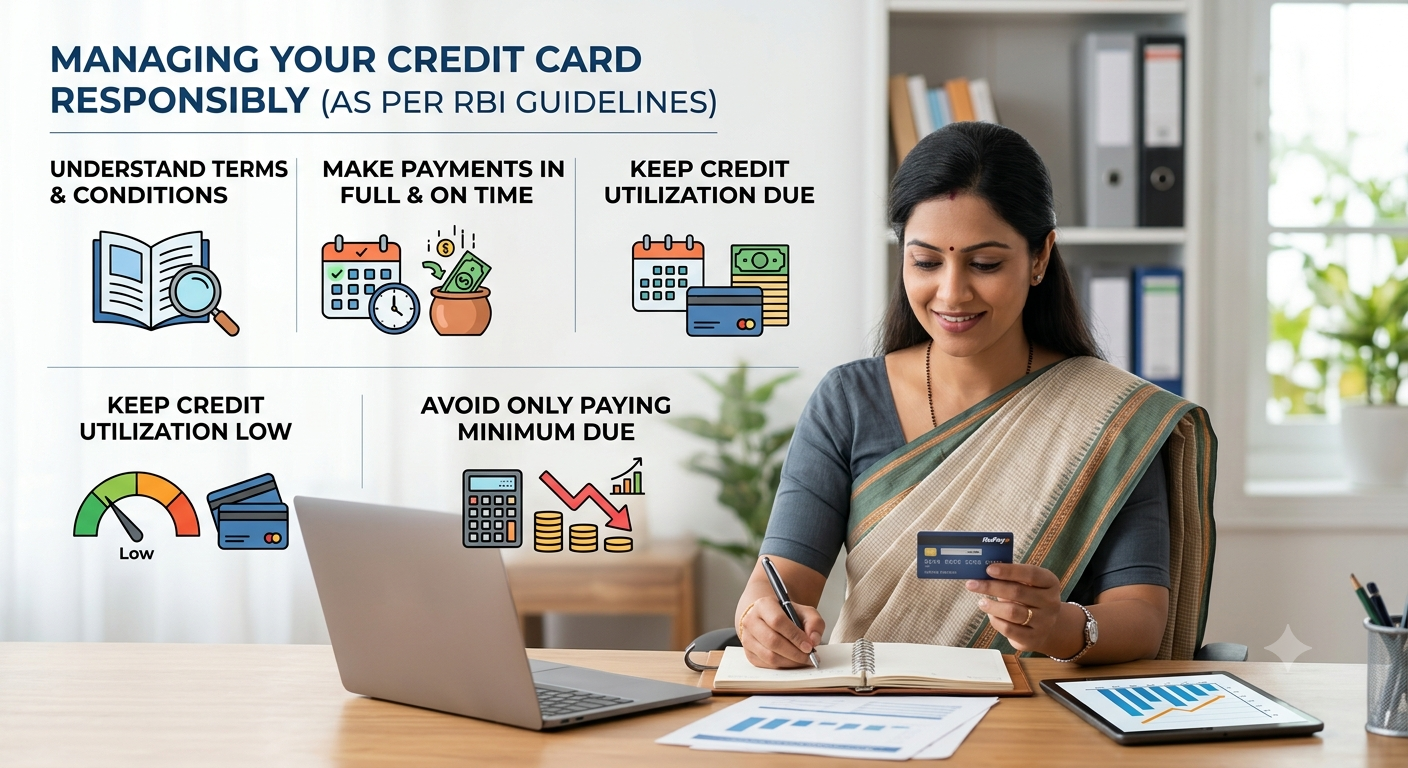
The RBI has laid down guidelines to safeguard the interests of credit card users and also lays down their terms and conditions. The Reserve Bank of India (RBI) instructions include payment terms and conditions related to billing cycles and over-limit charges.
The following are the RBI guidelines for responsible credit card usage:
RBI’s guidelines offer consumers important directions with respect to credit card payments, limits, billing, and complaints. It is beneficial for cardholders to understand these regulations to tackle credit card problems and familiarise themselves with the remedies available to them.
Responsible credit card use involves keeping spending within budget and tracking outstanding balances to ensure payments are made on time. It allows reducing late payment fees and minimising additional interest. This approach is also beneficial for maintaining a healthy credit utilisation ratio and ensuring that outstanding payments will not become overwhelming.
Reviewing the statements carefully and frequently enough helps one avoid fraudulent charges and billing mistakes. Timely credit card payments can help you develop a positive credit history. A credit card can establish a credit file and show you are a responsible borrower to creditors. Set a personal spending limit, less than your available credit limit, to avoid debt. By tracking your spending, and using your credit card wisely, you will stay out of debt.
The credit card usage advice is to ensure the proper use of cards and avoid late payments. People should pay their balances on time and study the statement. Moreover, it is necessary to track expenses and maintain them within the budget. It is also advisable to try to pay the entire amount rather than the minimum bill. Finally, one should check the latest terms and conditions of the bank to avoid additional fees.
You should keep track of your expenses, repay your debts on time and stay informed about your card’s fees, interest rates and repayment terms. Reviewing your credit card statements regularly can also help you spot errors and understand your spending habits.
Yes, paying your credit card bill in full by the due date helps you avoid interest on regular purchases, subject to your card's terms and conditions.
Set payment reminders on your phone or enable automatic payments through your bank, where available. Keep track of your billing cycle and payment due date.
Maintain a list of your credit cards, outstanding balances, credit limits, due dates and applicable fees. This helps you track payments and manage your spending more easily.
No, use only the cards that suit your needs and spending habits. Avoid unnecessary purchases just to earn reward points, and make sure you can repay what you spend.
Credit utilisation is the percentage of your total available credit limit that you are currently using. For example, if your credit limit is ₹1 lakh and your outstanding balance is ₹30,000, your credit utilisation is 30%. A lower utilisation rate might benefit your credit score.
It can, if you don't manage your accounts responsibly. Things such as your payment history, credit utilisation and new credit applications can affect your score.
It depends; before you close a credit card, make sure you know what fees you'll be charged, what benefits you get from having the card and what its credit limit is.
Read the credit card’s terms and conditions carefully. Check for annual fees, late payment fees, interest rates and other charges. Review your statements regularly to spot any incorrect charges.
LoansJagat helps you compare credit card features and fees. It also offers guidance on repayments to help you manage your card wisely.
Start your journey today
Apply Now*T&C apply