By continuing, you agree to LoansJagat's Credit Report Terms of Use, Terms and Conditions, Privacy Policy, and authorize contact via Call, SMS, Email, or WhatsApp
Disclaimer: The information published on LoansJagat is intended for general informational and educational purposes only and should not be considered financial, legal, or investment advice. Interest rates, loan terms, statistics, and other data may change over time and may vary by lender or source. Please verify the latest information and consult a qualified financial advisor or the respective Bank/NBFC before making any financial decisions.
Subscribe Now
About the author

Vidhi Chauhan
Vidhi Chauhan is a copywriter and content writer with extensive experience creating high-quality, SEO-driven content across multiple industries, with a strong focus on fintech. She has written extensively on GST, banking, personal loans, business loans, credit cards, income tax, insurance, and other financial topics, helping Indian readers understand complex concepts through clear, accurate, and engaging content.
Related Blog Post
Simplify All Your Loans Into One Affordable EMI

Customers Served

Debt Consolidated

1200+ Reviews

Locations in India
Club all Loans & Credit Card Bills into Single EMI

Quick Apply Loan
Consolidate your debts into one easy EMI.

Takes less than 2 minutes. No paperwork.

10 Lakhs+
Trusted Customers

2000 Cr+
Loans Disbursed

4.7/5
Google Reviews

50+
Banks & NBFCs Offers
The debt management plan and the debt settlement approach are both effective means of coping with excessive debts, yet they have distinct uses. While the debt management plan (DMP) allows the debtor to pay back the debt in full, the debt settlement approach aims at reducing the amount of debt owed.
It is essential to distinguish between these two methods since one could lead to better finances and help improve the CIBIL score. A debt management program is a solution for those who can pay their debts but need a little modification, whereas debt settlement can be used when the borrower faces serious money issues.An understanding of the two processes and their pros and cons will allow you to take an informed financial decision. This article covers debt management plan and debt settlement, the differences between them and the scenarios when each process can apply.
Debt Management Plan (DMP): The DMP refers to the repayment strategy which assists borrowers in managing their repayment process. Debt management in India refers to negotiating with the banks, NBFCs, or the financial advisor to come up with a suitable repayment option.
The various methods available for debt management include:
The process followed by the debt management plan includes:
Thus, an effective DMP minimises the financial distress of the borrowers along with the risk of default.
Also Read: Top 5 NBFCs for Debt Consolidation Loans in India
Debt settlement is an act where the debtor engages with the creditor to agree to settle the total debt at a lower amount than the full amount payable. In such negotiations, the debtor and the creditor come up with a reduced amount to pay rather than the total debt owed. Debt settlement may also be referred to as debt reduction or debt negotiation.
Debt settlement mostly involves:
Secured debts like mortgage and auto loans are rarely eligible for debt settlement since the asset is used to secure the loan.
How does debt settlement take place?
As per the article, there are times when the creditors agree to accept less since getting some money is always better than not getting anything at all in case of bankruptcy. Traditionally, settlements have been in the range of 25% to 65% of the total balance owing, though this amount depends on the individual case.
Also Read: Debt Consolidation Loan: How It Works, Eligibility, Interest Rates & Benefits
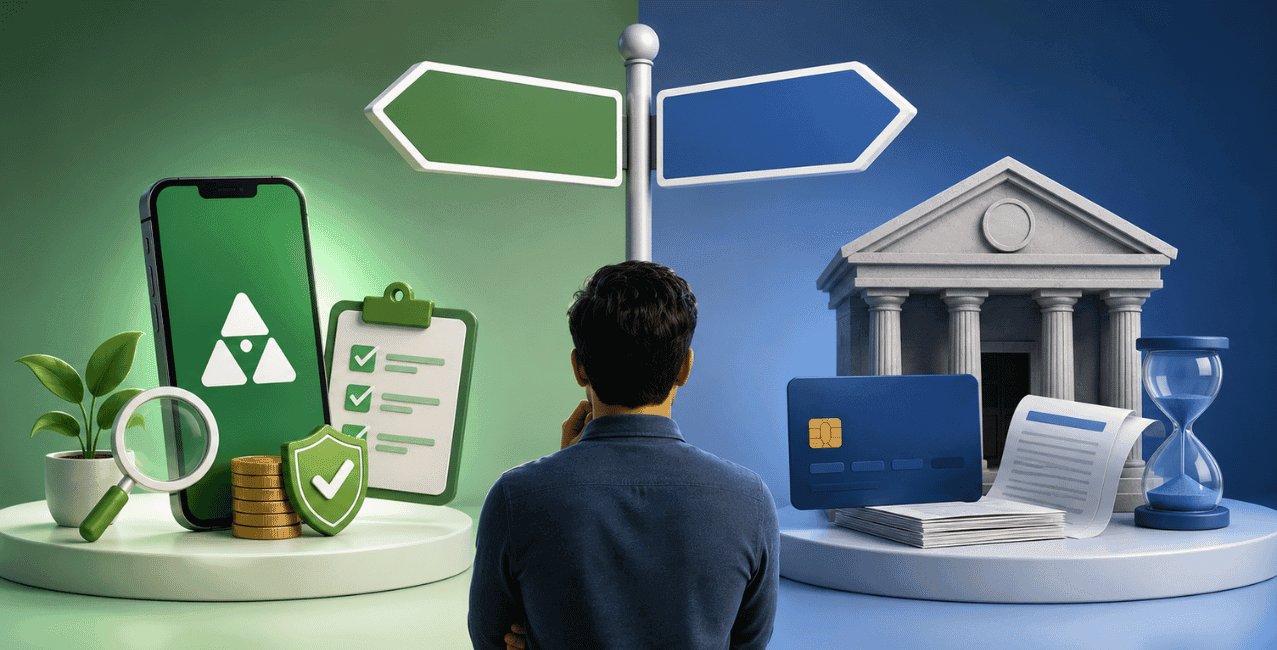
Both options address debt, but their repayment methods and outcomes differ significantly.
Choose a debt management plan for affordability and debt settlement for severe financial hardship.
Advantages of a Debt Management Program
There are numerous benefits to using a DMP, some of which include:
*T&C Apply
Weaknesses of a Debt Management Program
Despite its advantages, the debt management program may also have some weaknesses:
Benefits of Debt Settlement
Debt settlement can offer some advantages, such as:
Drawbacks of debt settlement
Even though debt settlement has many benefits, there are also some disadvantages:
LoansJagat can assist you in analysing your finances and determining the best course of action for managing your debts. If you require a repayment plan or simply need help in dealing with your creditors, LoansJagat can give you the right kind of assistance.
Both the debt management plan and the debt settlement can aid in bringing back financial control to the debtor, but there is a difference in the use of both of these terms. A debt management plan will be helpful for people who have been able to pay off their debts, and on the other hand, the debt settlement is meant for serious financial troubles.
Yes, this is allowed in case there is a drastic change in your financial situation. But it needs to be done with careful consideration since it might affect your payment method
Yes, some lenders can reach out to you during the process.
It will depend on the policy of the lender and the counselling agency involved. Some may fit while others will not.
Yes, lenders will always have to check your credit report before approving you for any new credit.
Yes, a lot of people try negotiating directly with their creditors. Still, it's always good to know what can be expected from such actions.
Usually, lenders ask for income proof, bank statements, and some data about the loan. These papers allow the lenders to estimate your ability to repay the loan properly.
This depends on the terms of the plan. It's very important to understand all the conditions before signing any papers.
Depends on the type of debt and on the policy of the creditor.
Yes, saving a little money will allow you to be ready for emergencies. This method decreases the probability of taking on more debt.
It is recommended to examine your finances every couple of months.