Debt Consolidation Loan: How It Works, Eligibility, Interest Rates & Benefits
By continuing, you agree to LoansJagat's Credit Report Terms of Use, Terms and Conditions, Privacy Policy, and authorize contact via Call, SMS, Email, or WhatsApp
Disclaimer: The information published on LoansJagat is intended for general informational and educational purposes only and should not be considered financial, legal, or investment advice. Interest rates, loan terms, statistics, and other data may change over time and may vary by lender or source. Please verify the latest information and consult a qualified financial advisor or the respective Bank/NBFC before making any financial decisions.
Subscribe Now
About the author

Anishka Bhadly is a content writer with a finance and business background. She has completed her bachelor's degree with a specialisation in finance and is currently pursuing an MBA in the finance field too. The knowledge she has gained from her studies and experience working with EdTech companies helped her combine theoretical knowledge with practical industry insight. Her expertise lies in creating well-researched, informative, and reader-friendly content in various banking, personal finance, loans, insurance, and investment-related topics.
Related Blog Post
Simplify All Your Loans Into One Affordable EMI

Customers Served

Debt Consolidated

1200+ Reviews

Locations in India
Club all Loans & Credit Card Bills into Single EMI

Quick Apply Loan
Consolidate your debts into one easy EMI.

Takes less than 2 minutes. No paperwork.

10 Lakhs+
Trusted Customers

2000 Cr+
Loans Disbursed

4.7/5
Google Reviews

50+
Banks & NBFCs Offers
Other services mentioned in this article
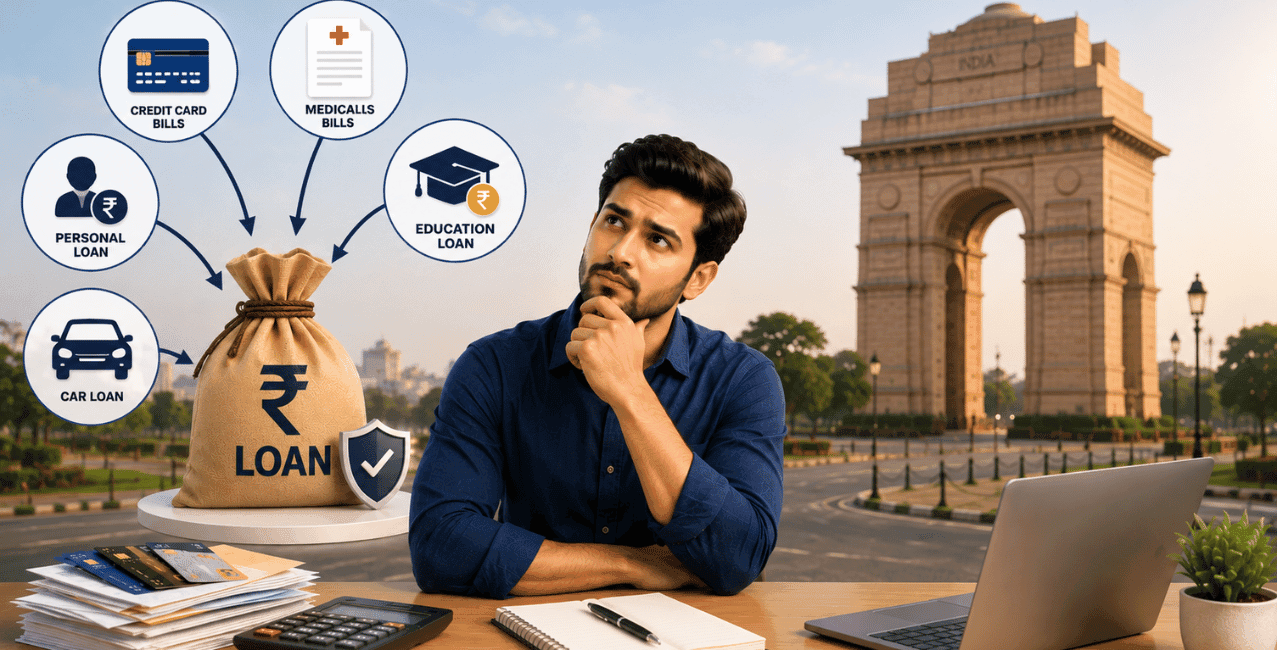
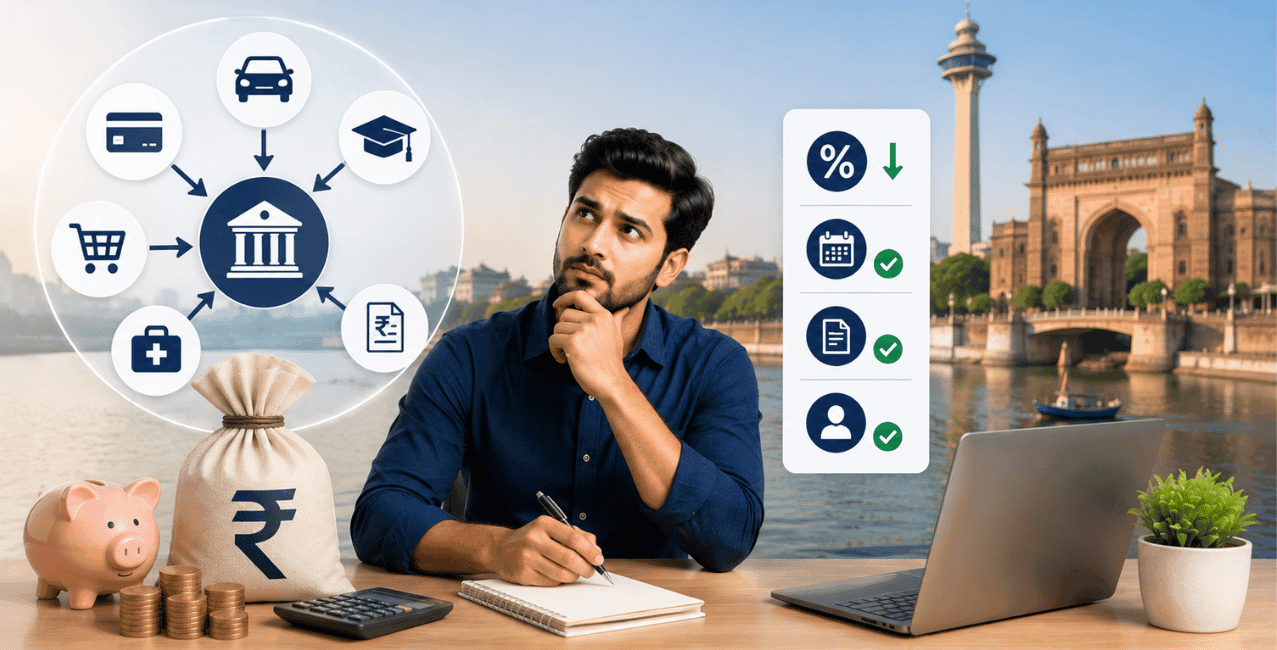
Managing multiple loan EMIs every month can stretch your finances thin and make it harder to stay on top of due dates, interest rates, and outstanding balances. A debt consolidation loan offers a practical way out — it combines all your existing debts into a single loan with one fixed EMI, one interest rate, and one repayment schedule.
In India, a debt consolidation loan is typically structured as a personal loan offered by banks and NBFCs. It doesn't erase what you owe, but it reorganises how you repay it — often at a lower interest rate and with more manageable monthly payments.
LoansJagat, India's first loan consolidation marketplace, connects salaried professionals and small business owners with 50+ RBI-regulated banking partners to help them find the right consolidation option for their financial situation. Whether you're dealing with credit card dues, personal loan EMIs, or a mix of both, this guide covers everything you need to know — from how a debt consolidation loan works to eligibility criteria, interest rates, required documents, and key benefits.
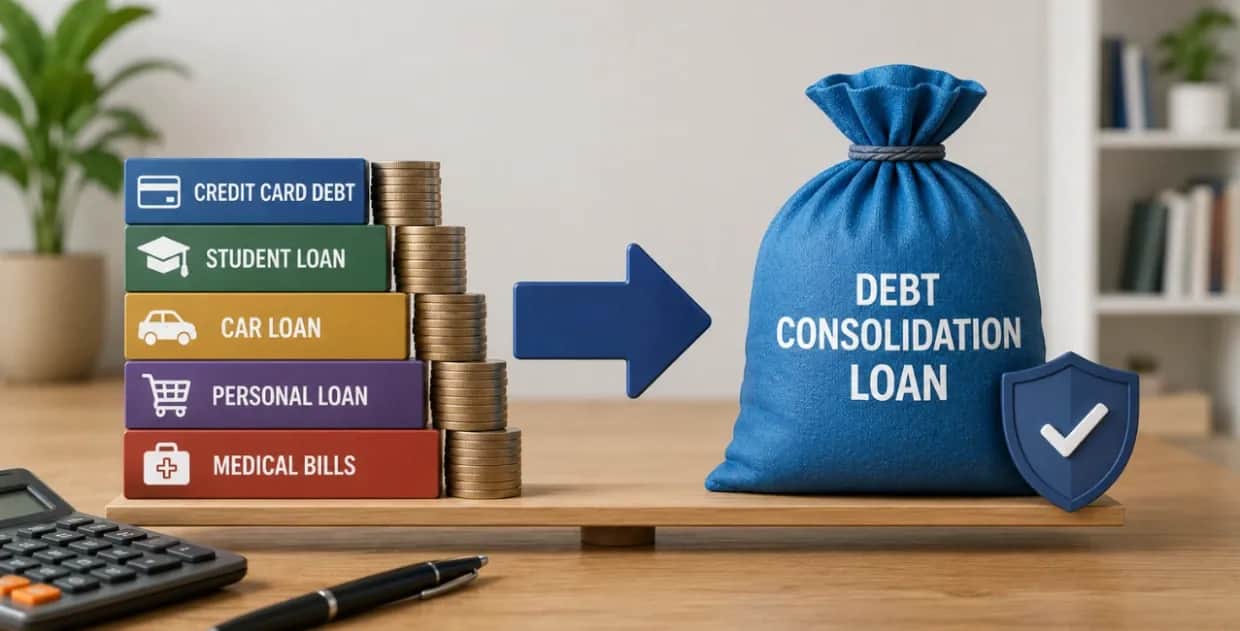
A debt consolidation loan in India is generally provided as a personal loan by several banks. Debt consolidation is the process of combining multiple debts into a single loan. So, the borrower needs to pay only one EMI every month. Debt consolidation lowers the burden on borrowers in terms of finances and fund management.
Debt consolidation does not reduce or erase the amount you owe. It changes how that debt is repaid, and depending on the new loan's interest rate, fees, and tenure, it may simplify repayment and reduce your overall borrowing cost.
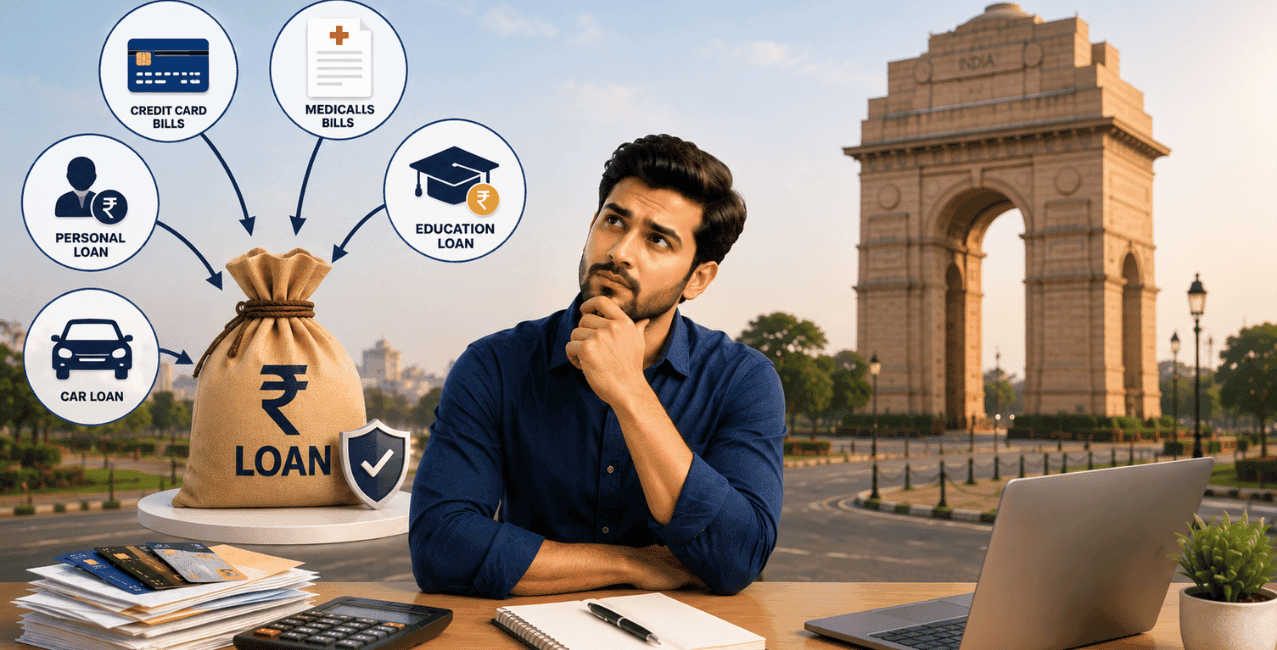
A debt consolidation loan is provided as a personal loan to people in India with multiple debts. For people who have more than one form of debt, like credit dues, multiple EMIs, etc., debt consolidation becomes a better option for them.
Several lenders combine these multiple debts into one loan and provide it to the borrower. Hence, the borrower only needs to pay a single instalment every month and faces no financial burden. The borrower faces no multiple due dates, no different interest rates, and no different due amounts.
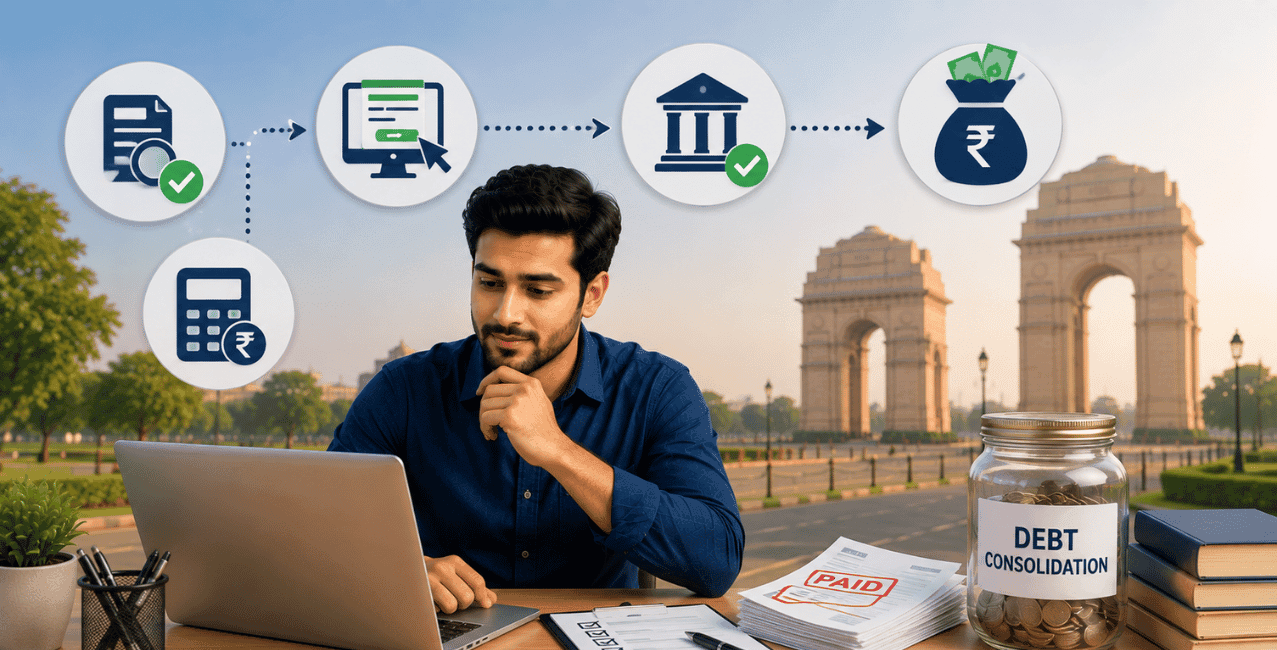
A debt consolidation loan works by combining multiple loans into one loan.
Here is how a debt consolidation loan works:
Hence, this is how a debt consolidation loan works.
Borrowers in India prefer debt consolidation loan because it offers several practical advantages for day-to-day financial management:
Also Read: Debt consolidation vs Loan restructuring
Debt consolidation brings multiple advantages and disadvantages to the borrowers in terms of credit score impact, financial burden, etc.
Here are the pros and cons of the debt consolidation loan:
Hence, these are the pros and cons of the debt consolidation loan.
Eligibility for a debt consolidation loan depends on the lender's specific criteria. While requirements vary. For example, India’s first debt consolidation marketplace, LoansJagat, provides certain criteria for people to qualify for debt consolidation.
The following is the eligibility criteria for personal loan debt consolidation as per LoansJagat:
Meeting these requirements does not guarantee approval, as every lending institution maintains its own internal policies.
Borrowers need to provide various documents to the lender as per their demand. This may vary from lender to lender. For example, for LoansJagat, which is India’s first debt consolidation marketplace, a person needs to submit certain documents.
Required documents for personal loan debt consolidation:
Hence, these are the documents required for the debt consolidation loan.
Debt consolidation Loan and debt settlement are two different poles of banking concepts. Debt consolidation combines multiple debts into one loan, whereas debt settlement is an action by the borrower to pay less of the loan amount to the lender with their permission due to financial hardship.
These two terms are frequently confused, but they refer to very different processes:
Hence, debt settlement and debt consolidation are different concepts in banking, and they act differently based on the borrower’s financial situation.
Debt consolidation loan can be a good idea for people with multiple debts who face a financial burden because of them. This is because debt consolidation can help them to combine those multiple debts into one new loan and reduce the financial stress created.
Hence, the borrower needs to pay one instalment each month. This improves the repayment behaviour of the borrower. This can positively impact their financial and credit profile.
LoansJagat is India's first loan consolidation marketplace, serving over 1,000,000 customers and having facilitated ₹2,000 Cr + in debt consolidated to date. LoansJagat is accessible across 10,000+ locations in India.
Rather than approaching banks individually, borrowers can use LoansJagat to compare personal loan and debt consolidation offers from 50+ banks and NBFCs in a single place with loans up to ₹5,000,000 and a 100% digital process.
Here's how LoansJagat matches borrowers to the right lender:
Bottom Line
A debt consolidation loan in India is given as a personal loan. The major intention is to lower the financial stress for borrowers with multiple debts. Every bank in India follows its own eligibility criteria and policies for debt consolidation. Moreover, debt consolidation helps to improve the credit score only if the borrower pays the instalment every month. Similarly, a fintech company like LoansJagat provides the facility of debt consolidation loans to people by connecting them with the right lender.
If you have several personal loans and are finding it hard to keep track of different EMIs, you can check debt consolidation options on LoansJagat. It is India’s first loan consolidation marketplace and has tie-ups with more than 50 RBI-regulated banking partners. LoansJagat offers personal and business loans for salaried people and small business owners, along with options for debt consolidation.
So far, LoansJagat has served more than 10 lakh customers across 10,000+ PIN codes and has facilitated loan disbursals of over ₹2,000 crore. You can check different loan options on the platform and see details such as the loan amount, interest rate, repayment period and other charges.
Yes, the bank will consider your employment status before providing you with the debt consolidation loan. But there are also other factors the bank will assess.
The two advantages of debt consolidation are that it reduces the financial burden of the borrower, and the borrower needs to pay only one instalment each month after debt consolidation.
Debt consolidation can impact the credit score by boosting it, but only if you pay the instalments regularly every month.
Yes, several banks in India provide different eligibility criteria for people for debt consolidation loans.
Yes, in India, several banks provide debt consolidation loans as personal loans to people.
No, debt consolidation is not for everyone; in fact, if one is dealing with multiple EMIs or dues that are causing a financial burden on them, then debt consolidation is a better option.
No, debt settlement, in fact, damages the credit score because you pay a lesser amount of the loan to the lender. Moreover, you need to make your own efforts to build your credit score after debt settlements.
Yes, one can apply for a personal loan for debt consolidation through the bank's website.
Yes, it is necessary to provide the proper KYC documents for debt consolidation.
Debt consolidation is considered a form of debt management.