By continuing, you agree to LoansJagat's Credit Report Terms of Use, Terms and Conditions, Privacy Policy, and authorize contact via Call, SMS, Email, or WhatsApp
Disclaimer: The information published on LoansJagat is intended for general informational and educational purposes only and should not be considered financial, legal, or investment advice. Interest rates, loan terms, statistics, and other data may change over time and may vary by lender or source. Please verify the latest information and consult a qualified financial advisor or the respective Bank/NBFC before making any financial decisions.
Subscribe Now
About the author

‘Simplify Finance for Everyone.’ This is the common goal of our team, as we try to explain any topic with relatable examples. From personal to business finance, managing EMIs to becoming debt-free, we do extensive research on each and every parameter, so you don’t have to. Scroll up and have a look at what 15+ years of experience in the BFSI sector looks like.
Related Blog Post
Simplify All Your Loans Into One Affordable EMI

Customers Served

Debt Consolidated

1200+ Reviews

Locations in India
Club all Loans & Credit Card Bills into Single EMI

Quick Apply Loan
Consolidate your debts into one easy EMI.

Takes less than 2 minutes. No paperwork.

10 Lakhs+
Trusted Customers

2000 Cr+
Loans Disbursed

4.7/5
Google Reviews

50+
Banks & NBFCs Offers
Other services mentioned in this article
The process to pay off loans faster starts with evaluating and understanding how much you owe. People with multiple loans can start by calculating the interest rate on each loan and then move forward to their monthly repayment capacity. First, make a list of all the outstanding loans and then prioritise the ones with the higher interest rates or the smallest balance, as per your repayment strategy. You can then make a minimum payment on every loan while you put extra money towards one loan at a time. But the important part is to stay consistent with repayments, and avoiding new debt.
Key Takeaways:
For every borrower, the first step of paying off multiple loans faster should be to understand exactly how much they owe. Many borrowers sometimes lose track of their debts because they have various outstanding loans from different lenders. Here is what they can do:
Create a list of this information:
The above table is provided just for example. With the help of this table, you can keep all the information in one place, which helps you decide which loan should be repaid first.
Each loan type is different from each other as some loans have higher interest rates, which makes them more expensive over time. Here is how you should prioritise your repayments:
High-interest loans should be your top priority as they can lead to higher debt quickly. These include:
These types of loans mostly have lower borrowing costs and longer repayment periods. This type of loan includes:
But which loan should be paid first? Here is a practical repayment order:
You can continue paying the minimum EMI on each of these loans every month while simultaneously putting extra money towards the higher-interest loan.
There are only two most popular methods that work great for borrowers:
The process of the method includes paying the highest interest rate first while you continue to pay the minimum amount of the remaining loans. This option is best for saving money on interest and becoming debt-free at lower overall cost. It also have various advantages like reduced total interest, helps clear expensive debt faster, and save more money in long-term.
For example: If you have credit card loan with 36% interest, personal loan with 15% interest, car loan with 9% interest, and home loan with 8% interest you need to clear the credit card debt first.
The Debt Snowball method focuses mainly on paying off the smallest loan first regardless of the interest rates. This process continue, every time one loan is closed, you can move on to the next smallest balance. The advantage of doing this that it gives quick results, builds confidence and motivation, and helps borrowers stay committed.
There is no certain comparison between avalanche and snowball as they both work in different ways. Whereas, it totally depends on the borrowers their financial goals. Here is a difference between them to understand which method suits you the best:
If you goal is to reduce the interest rate, you can choose the avalanche method, but if you want to stay motivated and make loan repayment qucikly, you can choose the snowball method.
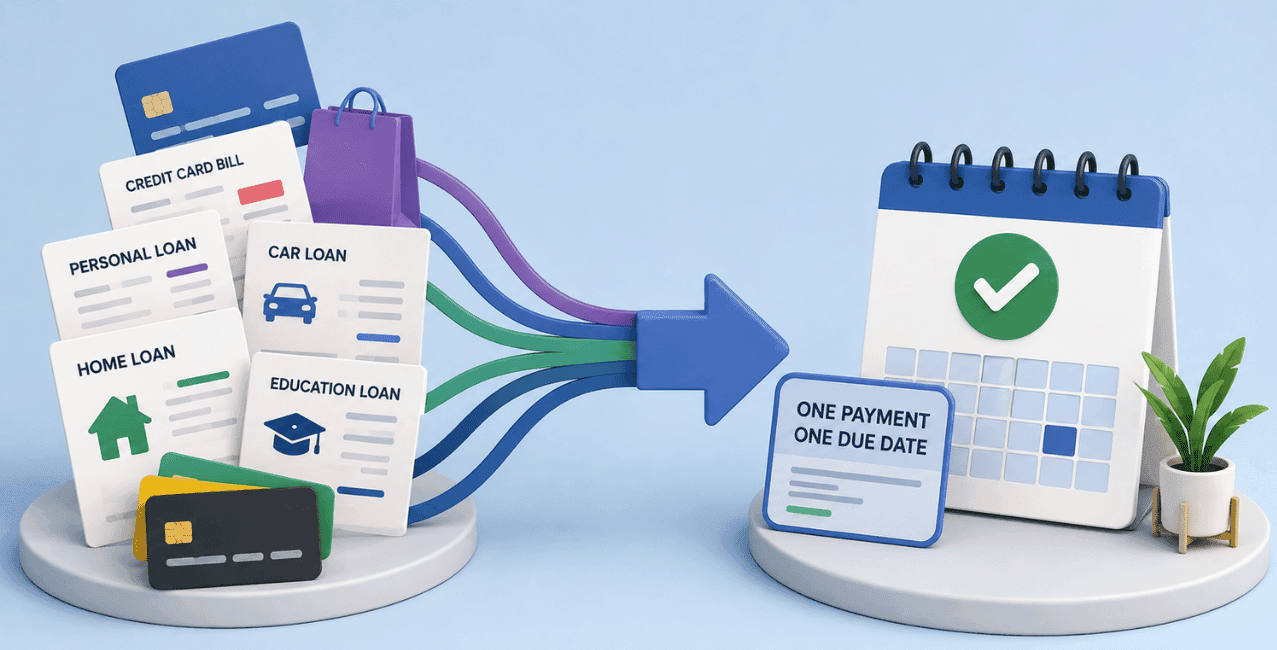
It can be very stressful for borrowers to manage five to six EMI every month, this is where debt consolidation helps them. Consolidating loan allows you to combine several loan into a single loan with only one monthly EMI. So, instead of remembering various due dates and interest, you only have to manage one repayment. There are different ways which can be used for loan consolidation:
Here are some of the benefits of loan consolidation:
*T&C Apply
Here are some strategies to avoid getting debt trapped:
The most important thing in this process is staying disciplined and make a repayment plan to help you reduce debt faster while avoiding unnecessary interest charges and financial stress. The table provided below will help you in paying off multiple loans faster, easily, and make it more manageable:
Borrowers must follow all these strategies consistently to achieve a lower interest costs, improve credit profile, and help become debt-free sooner while maintaining better financial stability.
It is proven, when you avoid mistakes almost 80% of your work automatically becomes more easier and manageable. Similarly, in debt repayment even the smallest financial decisions can lead to higher interest cost over time.
Bottom Line
The challenge of managing various loans can feel overwhelming, but with a clear repayment plan and discipline can make it easier. Focus on paying off high-interest loans first, never miss your monthly EMIs, and use any extra income to make prepayments whenever possible. If managing several loans becomes difficult, you can explore options like refinancing or debt consolidation after carefully comparing the costs and benefits. Most importantly, stay organised, avoid unnecessary borrowing, and keep your spending under control. The faster you reduce your outstanding debt, the sooner you can improve your financial stability and work towards future goals, savings, investments, and long-term financial security.
What is the fastest way to pay off multiple loans?
The fastest way is by paying the minimum EMI on all loans while making extra payments, bonuses, or additional income towards the highest-interest loans.
What are the 5 C's of debt?
The 5 C’s of debt are Character, capacity, Capital, Collateral, and Conditions which are used by lenders to assess borrower’s ability and willingness to repay the loan.
How can I repay my loan faster?
You can repay your loan faster by making timely EMI payments, choosing partial prepayments when possible, and increasing monthly repayment amount.
Can I pay 2 months EMI in advance?
Yes, most lenders in the market allow advance EMI payments or prepayments, however, you should first check the loan agreement for any applicable conditions or charges.
How to pay a 20 year loan in 10 years?
A 20 year loan can be paid in 10 years by increased monthly EMIs, regular prepayments, and using windfall income to reduce the principal to shorten the tenure and interest cost.
What is the 20 30 40 rule for home loan?
The 20-30-40 rule refers to paying 20% down payment, limiting home price to about 30% of your annual income, and keeping EMI within 40% of you monthly income.
Can I have 5 loans at once?
Yes, a person can have 5 or more multiple active loans at once if they meet th eligibility criteria, however, the approval depends on income, credit score, and repayment capacity.
How many loans are too many?
There is no fixed limit for having loan, but it can raise financial risk as too many loans can increase debt burden. Your EMI should remain affordable as compared to your monthly income.
How much can I borrow times my salary?
Many lenders offer loans of around 10 to 24 times of your monthly salary; however, it totally depends on your income, credit profile, and lender policies.
Who is eligible for a home loan?
Most salaried and self-employed individuals with stable income, good credit score, and repayment capacity can apply for a home loan, but the eligibility depends on the age, employment, and lender requirements.