By continuing, you agree to LoansJagat's Credit Report Terms of Use, Terms and Conditions, Privacy Policy, and authorize contact via Call, SMS, Email, or WhatsApp
Disclaimer: The information published on LoansJagat is intended for general informational and educational purposes only and should not be considered financial, legal, or investment advice. Interest rates, loan terms, statistics, and other data may change over time and may vary by lender or source. Please verify the latest information and consult a qualified financial advisor or the respective Bank/NBFC before making any financial decisions.
Subscribe Now
About the author

LoansJagat Team
‘Simplify Finance for Everyone.’ This is the common goal of our team, as we try to explain any topic with relatable examples. From personal to business finance, managing EMIs to becoming debt-free, we do extensive research on each and every parameter, so you don’t have to. Scroll up and have a look at what 15+ years of experience in the BFSI sector looks like.
Related Blog Post
Simplify All Your Loans Into One Affordable EMI

Customers Served

Debt Consolidated

1200+ Reviews

Locations in India
Club all Loans & Credit Card Bills into Single EMI

Quick Apply Loan
Consolidate your debts into one easy EMI.

Takes less than 2 minutes. No paperwork.

10 Lakhs+
Trusted Customers

2000 Cr+
Loans Disbursed

4.7/5
Google Reviews

50+
Banks & NBFCs Offers
Other services mentioned in this article
Key Takeaways
India’s banking sector may have just witnessed the beginning of a new strategic shift.
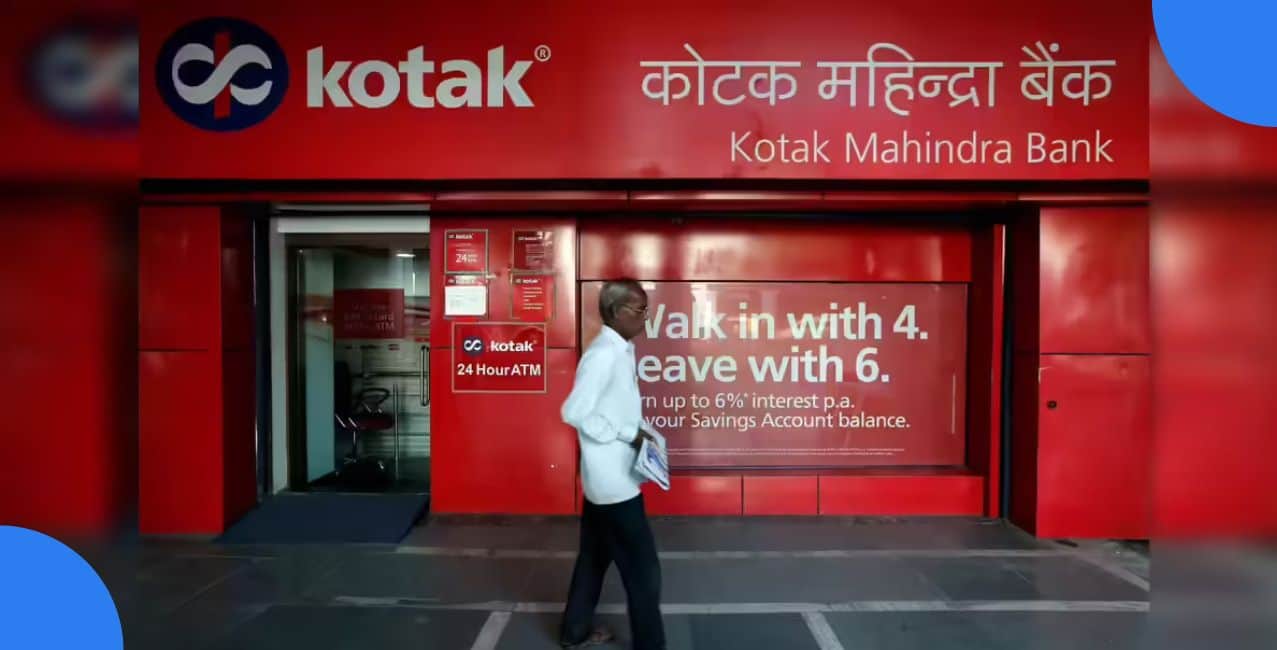
In a move that immediately caught Dalal Street’s attention, the Reserve Bank of India (RBI) has approved Kotak Mahindra Bank’s proposal to increase its holding up to 9.99% in both AU Small Finance Bank and Federal Bank. The approval was communicated on May 6 and later disclosed through regulatory filings by both banks.
While the transaction does not amount to a takeover, the timing and scale of the approval have sparked fresh conversations about consolidation in the private banking space.
The approval covers aggregate holdings by the Kotak Mahindra Group, including subsidiaries and schemes managed by group entities.
For investors, however, the bigger question is this: Why is Kotak interested in these two banks specifically?
Both Federal Bank and AU Small Finance Bank occupy unique positions in India’s banking ecosystem.
Federal Bank has steadily built a strong retail and NRI-focused franchise, particularly in South India. AU Small Finance Bank, meanwhile, has emerged as one of the fastest-growing retail-focused lenders with strong penetration in semi-urban markets.
For Kotak Mahindra Bank, these are not random investments.
The bank has historically maintained a conservative balance sheet strategy. But after facing regulatory restrictions in 2024 over digital onboarding and IT systems, Kotak appears to be diversifying its growth exposure more aggressively.
The RBI nod now gives Kotak flexibility to build meaningful financial exposure in two fast-growing lenders without crossing the 10% regulatory threshold that often triggers tighter scrutiny.
Many retail investors confuse “approval to acquire” with an actual purchase.
That is not the case here.
The RBI has merely allowed Kotak Mahindra Bank to acquire stakes up to 9.99%, subject to compliance with RBI shareholding norms, FEMA regulations, SEBI rules, and the Banking Regulation Act.
Whether Kotak immediately buys shares from the market, gradually accumulates them, or simply keeps the approval as a strategic option remains unclear.
Here’s a simple breakdown:
The Indian banking industry has entered a phase where scale matters more than ever.
Large private banks are increasingly seeking exposure to specialised lenders, regional strengths, and niche customer bases. That is why this approval has generated disproportionate excitement despite being technically just a regulatory clearance.
Federal Bank recently reported a strong Q4 FY26 performance, with net profit rising to ₹1,259 crore for the quarter. The bank also crossed ₹1 lakh crore in NRI deposits, a major milestone.
AU Small Finance Bank, on the other hand, continues to benefit from rising retail credit demand and deeper rural penetration.
For Kotak, exposure to these banks potentially strengthens its reach into customer segments where it wants faster expansion.
To understand the significance, consider how global banks often operate.
Instead of outright mergers, financial institutions frequently take minority stakes first to study operations, build partnerships, and evaluate future opportunities.
For instance:
Kotak’s move resembles this cautious approach.
At 9.99%, Kotak gets significant economic exposure without triggering a complicated merger process.
This development also comes at a time when RBI has tightened oversight on ownership structures in banks.
The central bank’s revised 2025 directions require prior approval for substantial acquisitions in private banks.
Interestingly, the same week also saw multiple cross-holding approvals among major financial groups, indicating that India’s banking ecosystem is becoming increasingly interconnected.
*T&C Apply
Industry experts believe this trend could eventually reshape competitive dynamics among mid-sized private lenders.
The message is becoming clearer: scale, capital strength, and distribution reach will define the next decade of Indian banking.
The next major trigger will be shareholding disclosures over the coming quarters.
Investors will closely track:
For now, the RBI’s approval is less about ownership and more about intent.
And in the banking industry, intent often matters long before a deal is formally announced.
Related Finance News | |||









.png&w=3840&q=75)



