By continuing, you agree to LoansJagat's Credit Report Terms of Use, Terms and Conditions, Privacy Policy, and authorize contact via Call, SMS, Email, or WhatsApp
Disclaimer: The information published on LoansJagat is intended for general informational and educational purposes only and should not be considered financial, legal, or investment advice. Interest rates, loan terms, statistics, and other data may change over time and may vary by lender or source. Please verify the latest information and consult a qualified financial advisor or the respective Bank/NBFC before making any financial decisions.
Subscribe Now
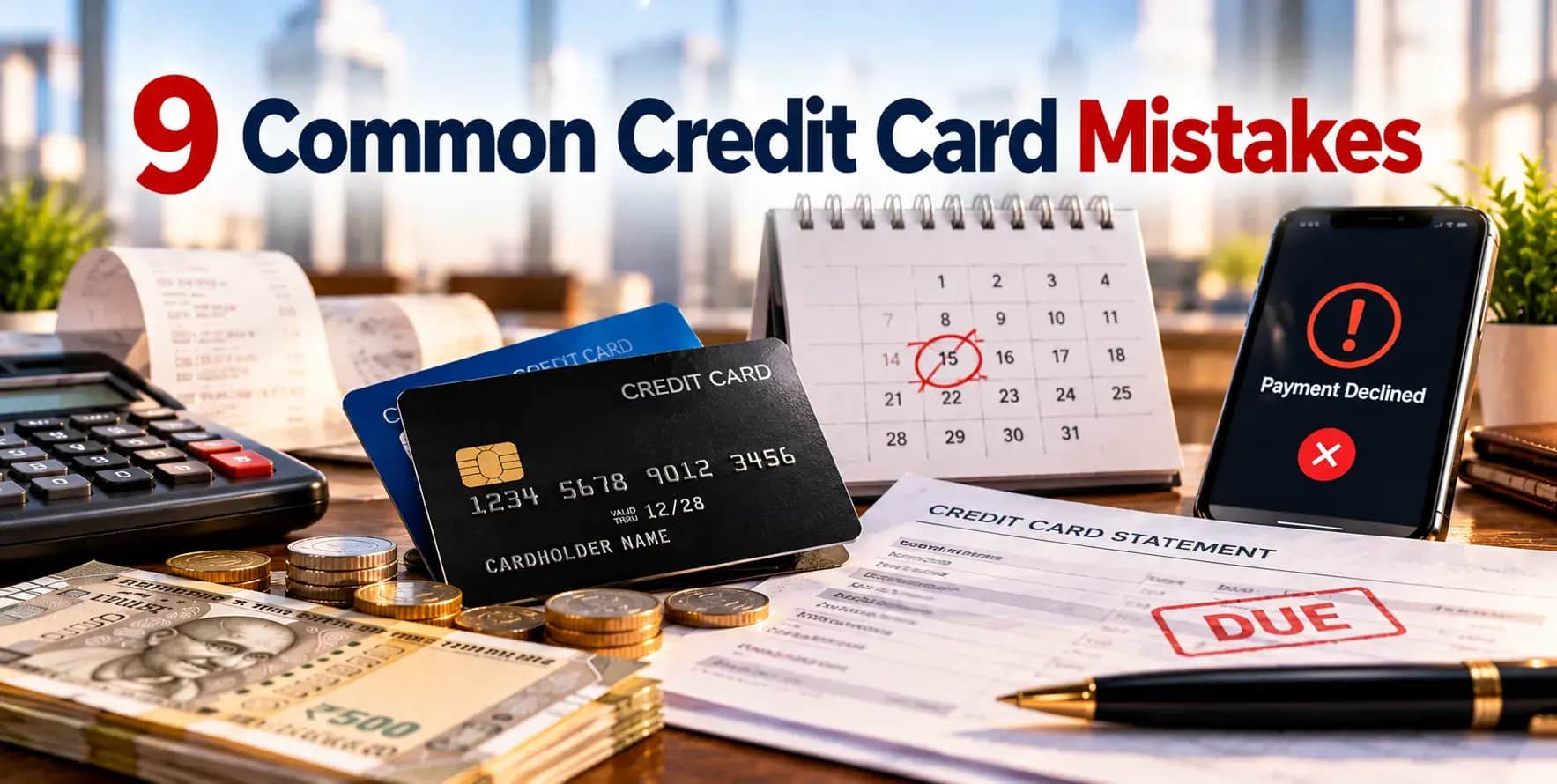
Credit card mistakes can result in extra interest, fees, and greater debt, as well as potential damage to your credit profile. The most common credit card mistakes made by cardholders are missing payment due dates, paying just the minimum amount due, overspending beyond repayment capacity, ignoring statements, and applying for too many cards or credit facilities in a short period. Your CIBIL Score may also be affected by your payment history, credit utilisation, and credit enquiries. Understanding these common credit card errors will help you use a credit card wisely and keep away from unneeded financial stress.
Key Takeaways:

Credit cards can turn out to be expensive if there are mistakes made. Learning what mistakes to avoid helps cardholders know what careless mistakes could cause them to pay more.
Failing to read the terms and conditions can cause a cardholder to spend money they do not have or misunderstand other terms and conditions.
Missing a payment on a credit card can cause one to pay late payment charges and damage their credit history if the default is reported. Defaulting on a credit card can also increase the difficulty in clearing debts.
Paying the minimum amount due by the payment due date may help avoid late-payment charges; however, interest may continue to accrue on the outstanding balance.
Using a large portion of your credit limit can affect your credit score. A high credit utilisation can also make it harder to manage and repay your outstanding debt.
Applying for several credit cards within a short period can result in multiple hard enquiries on your credit report, which may affect your credit score. Having several cards can also make it harder to keep track of different payment due dates and outstanding balances.
Not reviewing statements can cause one to overlook unwarranted transactions and billing errors.
Failing to take advantage of rewards points, cashback and other rewards can cause one to miss out on rewards that they are entitled to under their rewards programme or rewards that have expiry dates.
Making unnecessary purchases can cause one to spend more than they intend due to the spending nature of a credit card and the ability to defer payments until a later date.
Most credit cards allow the cardholder to spend money and not be charged interest on those purchases until the payment due date specified by the card issuer. Not taking this time period into account can increase the difficulty in paying for purchases.
These common mistakes could cause credit card holders to pay more than they expect for goods and services. Knowing these mistakes will show the dangers of careless credit card usage.
To avoid credit card mishaps, it is essential to understand the features and follow certain guidelines for using a card and paying off balances. Below are a few vital tips for avoiding credit card trouble and excessive debt:
Responsible credit card use is all about understanding your card, analysing expenses, and making timely payments. This will help in drawing up credit card payments and their repayment.

A credit card can be a handy way to pay for everyday costs, but it can be all too simple to get carried away and accumulate debt. By being aware of a few key factors, you can avoid paying excessive sums of money.
Getting to grips with your credit card is a simple process. Keeping track of your spending and staying aware of your financial limits can help you manage the card responsibly and reduce the chances of facing repayment or spending-related problems.
LoansJagat can help you stay more organised in relation to their credit cards by providing the information necessary that allows everyday financial decisions to be simpler. The information can be used to evaluate credit options, compare and contrast which options are most beneficial for the consumer and educate the consumer on the responsible usage of credit. Additionally, armed with this knowledge prior to obtaining a credit card or making a financial decision, consumers can prevent themselves from making common mistakes like acquiring more credit than they can repay or ignoring vital information on their credit cards.
A credit card should be treated as a tool for making payments, not an instrument for increasing purchasing power. The card owner should pay off his or her debt on time, monitor spending and expenses, and be able to control them. In addition, it is critical to study the conditions of the credit card, the rules for paying, and the billing system in advance in order to avoid problems in the future. This way, credit cards can be useful financial tools for managing expenses and making payments, as long as individuals spend within their repayment capacity.
Missing payment due dates is one of the most common credit card mistakes. It may result in additional charges and damage your credit history.
Paying only the minimum amount on a credit card can be a bad idea if this happens regularly. The unpaid balance will continue to accrue interest, increasing the amount that needs to be repaid.
Yes, it can. Using a significant part of your credit limit can increase your credit utilisation, affecting your credit score negatively.
Applying for multiple credit cards can affect your credit score, as each application can leave a mark on your credit report.
A credit card statement is a document that provides information on all the charges, payments, and other activities, hence why it is important to go through the statement monthly. It will help you track your spending and detect any unauthorised transactions or errors.
Using a credit card when you know you will be unable to repay the amount can lead to a larger outstanding balance that becomes difficult to manage.
You may have to pay a fee if you don't make the payment by the due date. If the payment isn't made, it could also negatively affect your credit history.
The terms and conditions page has crucial information about your card, including rates, charges, how and when you need to make payments, and other important information.
Rewards may be in the form of points, cashback or other, while every card issuer has its own terms and conditions for their accumulation and redemption. Therefore, it is important to study them carefully and get to know the rules and restrictions for using a credit card.
We can give you information about credit cards and other financial products so you can research and make more educated decisions before you open another account and put yourself into more debt.
About the author

Anishka Bhadly
Anishka Bhadly is a content writer with a finance and business background. She has completed her bachelor's degree with a specialisation in finance and is currently pursuing an MBA in the finance field too. The knowledge she has gained from her studies and experience working with EdTech companies helped her combine theoretical knowledge with practical industry insight. Her expertise lies in creating well-researched, informative, and reader-friendly content in various banking, personal finance, loans, insurance, and investment-related topics.
Related Blog Post
Simplify All Your Loans Into One Affordable EMI

Customers Served

Debt Consolidated

1200+ Reviews

Locations in India
Club all Loans & Credit Card Bills into Single EMI

Quick Apply Loan
Consolidate your debts into one easy EMI.

Takes less than 2 minutes. No paperwork.

10 Lakhs+
Trusted Customers

2000 Cr+
Loans Disbursed

4.7/5
Google Reviews

50+
Banks & NBFCs Offers
Other services mentioned in this article