Check AI Loan Optimisation Plans to Reduce Your EMI

Disclaimer: The information published on LoansJagat is intended for general informational and educational purposes only and should not be considered financial, legal, or investment advice. Interest rates, loan terms, statistics, and other data may change over time and may vary by lender or source. Please verify the latest information and consult a qualified financial advisor or the respective Bank/NBFC before making any financial decisions.
Subscribe Now
About the author

Anishka Bhadly is a content writer with a finance and business background. She has completed her bachelor's degree with a specialisation in finance and is currently pursuing an MBA in the finance field too. The knowledge she has gained from her studies and experience working with EdTech companies helped her combine theoretical knowledge with practical industry insight. Her expertise lies in creating well-researched, informative, and reader-friendly content in various banking, personal finance, loans, insurance, and investment-related topics.
Related Blog Post
Simplify All Your Loans Into One Affordable EMI

Customers Served

Debt Consolidated

1200+ Reviews

Locations in India
Club all Loans & Credit Card Bills into Single EMI

Quick Apply Loan
Consolidate your debts into one easy EMI.

Takes less than 2 minutes. No paperwork.

10 Lakhs+
Trusted Customers

2000 Cr+
Loans Disbursed

4.7/5
Google Reviews

50+
Banks & NBFCs Offers
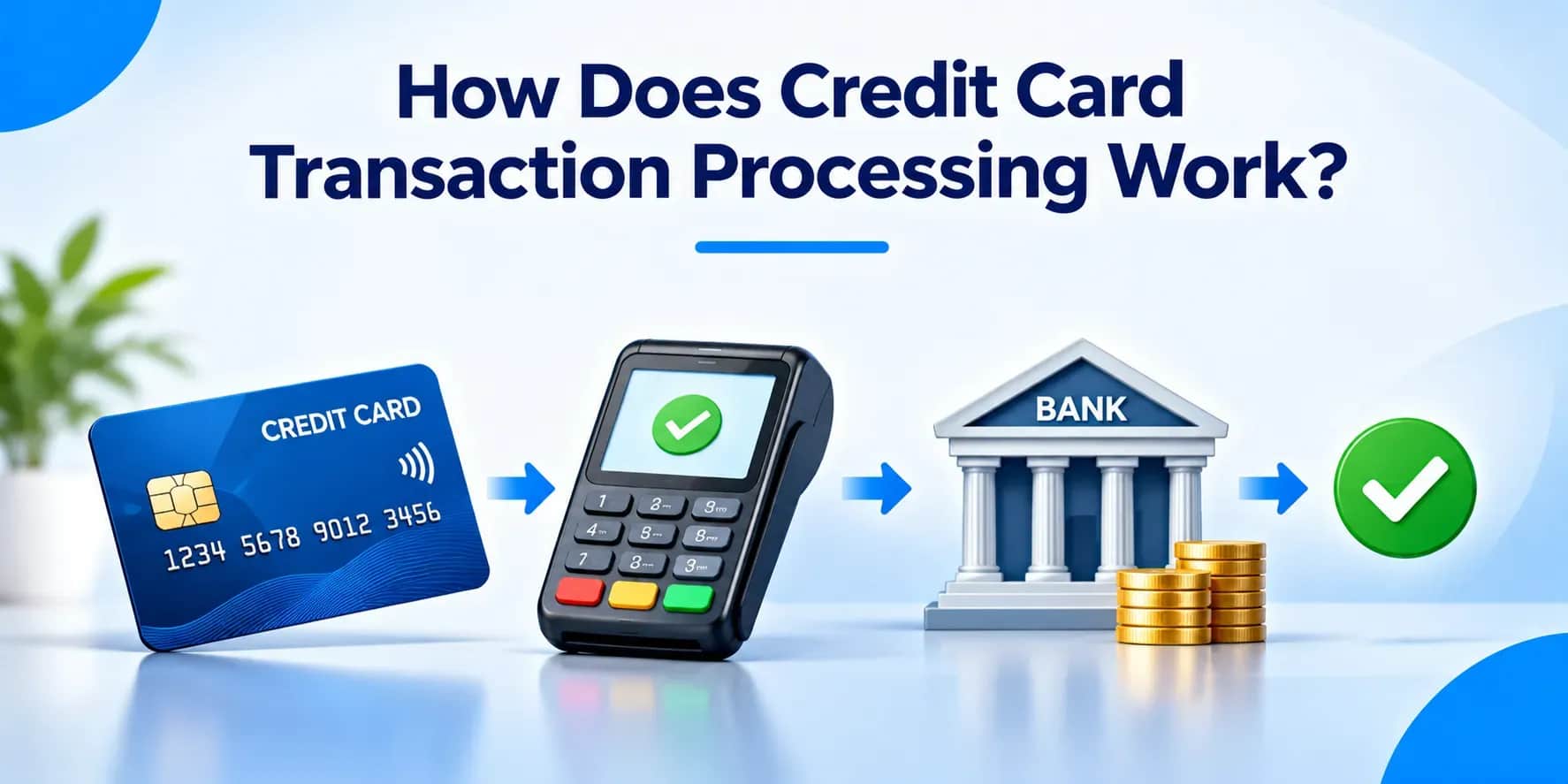
Credit card transaction processing is the process that moves money from the cardholder’s card to the seller’s bank account. The process involves several entities, including a merchant, payment processor, acquiring bank, card network, and issuing bank. In the transaction process, a customer presents their card to the merchant, and the payment system approves the transfer. Then, the payment goes through the clearing and settlement procedures to enter the merchant’s account. The approval of a customer's transaction usually takes a few seconds. However, the funds are transferred to the merchant's account later, after the clearing and settlement processes are completed.
Key Takeaways
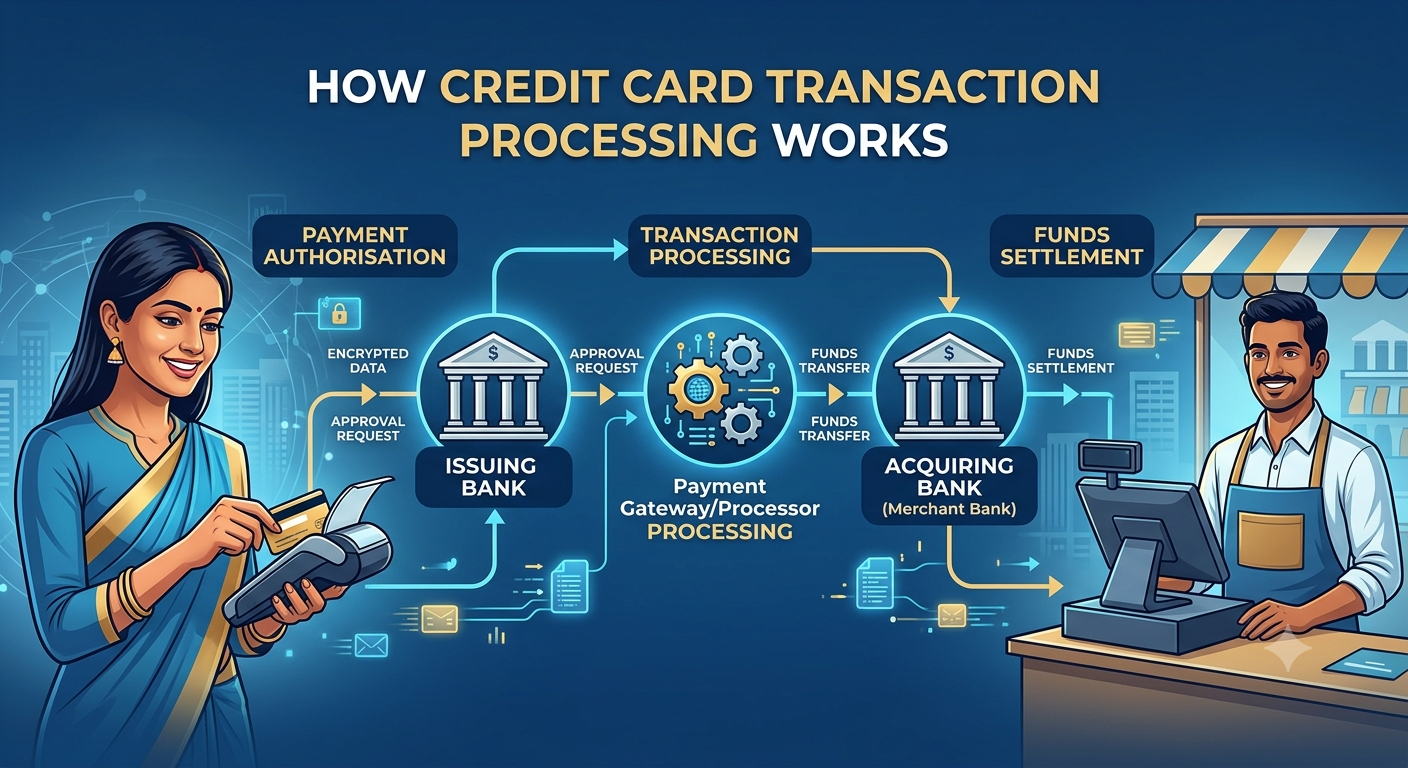
Credit card transaction processing is a term that refers to the authorisation, settlement, and payment processes involved in a credit card transaction. The payment processing system of the merchant submits the transaction to a payment processor and card network, which will pass the transaction on to the customer's bank for authorisation. The actual card payment settlement and transfer of funds to the merchant’s bank account take place through the clearing and settlement process. This will ensure that all card transactions have been processed securely.
Credit card processing undergoes several steps that enable funds to be transferred from the customer’s account to the merchant’s account. These steps involve several entities, such as the payment gateway, processor, card network, and banks. A customer’s payment request undergoes various processes starting at the point of purchase up to settlement.
The table below shows the stages of credit card processing using an online transaction as an example:
Credit card processing undergoes several stages that involve numerous entities such as networks, processors, banks, and payment gateways. These steps help ensure that only legitimate transactions occur between customers and businesses. In addition, the process helps explain how and why a customer’s transaction request is approved or denied.
Credit card payments go through a number of stages that ensure the transaction’s validity, protect the card owner from fraud, and settle the payments to the seller. Each step is necessary to be able to purchase with a credit card.
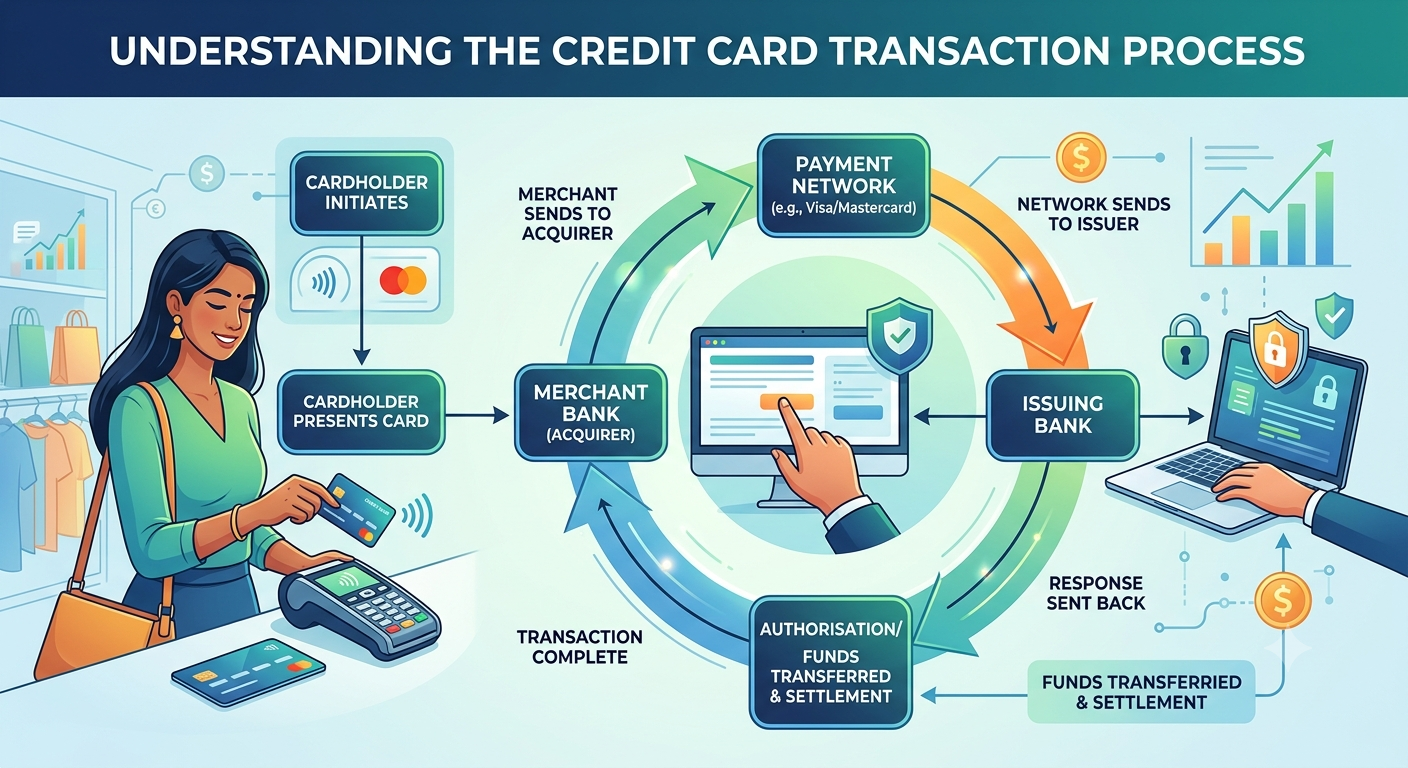
The first step in credit card processing is authorisation, which occurs when a customer requests to make a purchase. The seller’s processor relays the transaction information to the card-issuing bank through the card network to seek authorisation for the transaction.
Authentication is the process of verifying the cardholder's identity during a transaction. Depending on the transaction type, it may involve CVV verification, address verification, OTP verification and other security checks
The third step in credit card processing is called batching. Approved transactions are batched up by the merchant and sent to the acquiring bank/payments processor. This information will be passed to the card network. At this stage, businesses can also add new transactions to the file that will be settled at a later time instead of immediately.
At the next step, called clearing, the transaction details are sent via the card network to the relevant banks for posting. The issuing bank will record the transaction at this stage. The acquiring bank will pay the interchange fee, which applies to that card type, to the issuing bank.
Transfer of funds between the banks. The amount to be paid to the seller is determined by the acquiring bank.
Finally, the issuer creates an invoice to send to the cardholder. This will list what purchases have been made, the fee and how much they owe. They will need to pay the remaining amount before the due date. Otherwise, they will incur late payment charges. Billing is not part of the payment process on the merchant's side.
Credit card payments follow a structured process, from authorisation and authentication to settlement and billing. Understanding these stages helps cardholders track transactions, recognise payment issues and manage their credit card repayments effectively.
The credit card transaction involves several steps and requires the cooperation of banks, merchants, and payment networks to authorise a purchase. The authorisation, clearing, and settlement are different stages that make up the whole process. In this way, it is easier to understand why the approval of the payment and the transfer of funds to the merchant’s account occur in completely different timeframes. Thus, for the cardholder, it is essential to review the transaction details and monthly statements to ensure that no unauthorised purchases have been made.
Credit card transaction processing is a procedure whereby card payment is verified, approved, and settled, thus enabling the merchant to receive the payment.
Cardholder, merchant, payment processor, card network, issuing bank and acquiring bank are the main entities involved in credit card processing.
At this stage, the issuing bank approves the payment request while also reviewing the transaction details, checking the available credit and assessing the applicable security requirements.
Authorisation is about verifying if a transaction can happen, while authentication evaluates the transaction to confirm the cardholder’s identity. Both are important processes in credit card payment approval.
Batching is a process used to compile and group a number of approved transactions to be processed further. It is usually the practice adopted by merchants to process payments in batches.
During clearing, the transaction details are shared between the relevant entities connected to the card network to clear the amount due.
Funds are transferred from the issuing bank to the acquiring bank. The acquiring bank deposits this amount in the merchant's account according to the terms of settlement.
Authorisation completes the verification process of a transaction but does not settle the payment. Funds are transferred between the issuing and acquiring banks during settlement, which follows the clearing process. The acquiring bank subsequently credits the merchant's account.
A billing statement usually provides the list of transactions, fees, and the amount of interest applied. This can also include the payments received, the amount due and the due date for the cycle.
Depending on the terms and conditions of the card, the cardholder might be subjected to late payment fees and/or interest penalties. Additionally, they might suffer negative implications for their credit rating and history.
Start your journey today
Apply Now*T&C apply