Check AI Loan Optimisation Plans to Reduce Your EMI

Disclaimer: The information published on LoansJagat is intended for general informational and educational purposes only and should not be considered financial, legal, or investment advice. Interest rates, loan terms, statistics, and other data may change over time and may vary by lender or source. Please verify the latest information and consult a qualified financial advisor or the respective Bank/NBFC before making any financial decisions.
Subscribe Now
About the author

Anishka Bhadly is a content writer with a finance and business background. She has completed her bachelor's degree with a specialisation in finance and is currently pursuing an MBA in the finance field too. The knowledge she has gained from her studies and experience working with EdTech companies helped her combine theoretical knowledge with practical industry insight. Her expertise lies in creating well-researched, informative, and reader-friendly content in various banking, personal finance, loans, insurance, and investment-related topics.
Related Blog Post
Simplify All Your Loans Into One Affordable EMI

Customers Served

Debt Consolidated

1200+ Reviews

Locations in India
Club all Loans & Credit Card Bills into Single EMI

Quick Apply Loan
Consolidate your debts into one easy EMI.

Takes less than 2 minutes. No paperwork.

10 Lakhs+
Trusted Customers

2000 Cr+
Loans Disbursed

4.7/5
Google Reviews

50+
Banks & NBFCs Offers
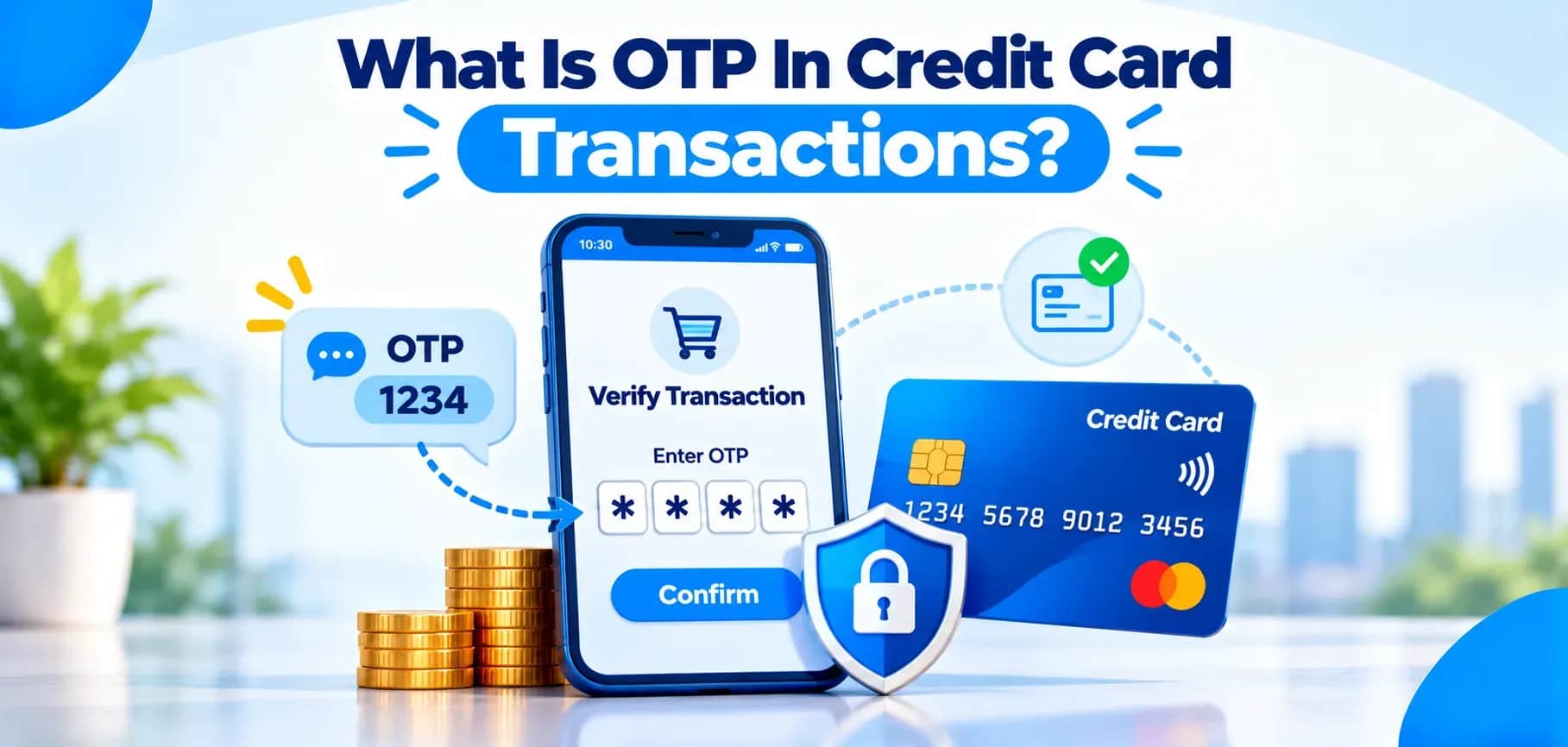
An OTP (one-time-password) for a credit card is a temporary password that can be used to verify a payment or confirm the transaction. It is often sent to your registered mobile number or can be generated using an approved authentication method. In online purchases, a credit card OTP can be used to confirm that you have authorised the payment. However, authentication methods may differ for different transactions and credit card companies. You must never share your OTP with anyone, even if they claim to work for your bank.
Key Takeaways:
An OTP (One-Time Password) is a temporary security code sent to your registered mobile number, which is used while making certain online credit card payments. The code is usually four to six digits long and is only valid for a short period of time. The OTP needs to be entered to authorise the payment, and the transaction will only be completed once the OTP has been successfully verified.

The Reserve Bank of India (RBI) has released the Authentication Mechanisms for Digital Payment Transactions Direction, 2025. This guide aims to enhance the security of payments and offer alternative methods to customers for verifying transactions instead of SMS-based One-Time Password (OTP). The directions require that most domestic digital payments use at least two distinct authentication factors, with some exceptions. Payment system providers and participants must adopt these directions by 1 April 2026. They apply to all domestic digital payment transactions unless specifically exempted, but generally do not cover cross-border digital payment transactions.
Key Highlights of RBI Directions for Digital Payments
The RBI directions offer a more significant degree of security to digital payment methods while also providing an alternative to customers. Customers should ensure that they follow the verification procedure provided by the issuer and confirm the transaction details before authorising the payment.
OTP authentication is applicable for some online credit card payments. It generally takes place by entering the credit card details, followed by a code sent as a text message, and then confirming the transaction.
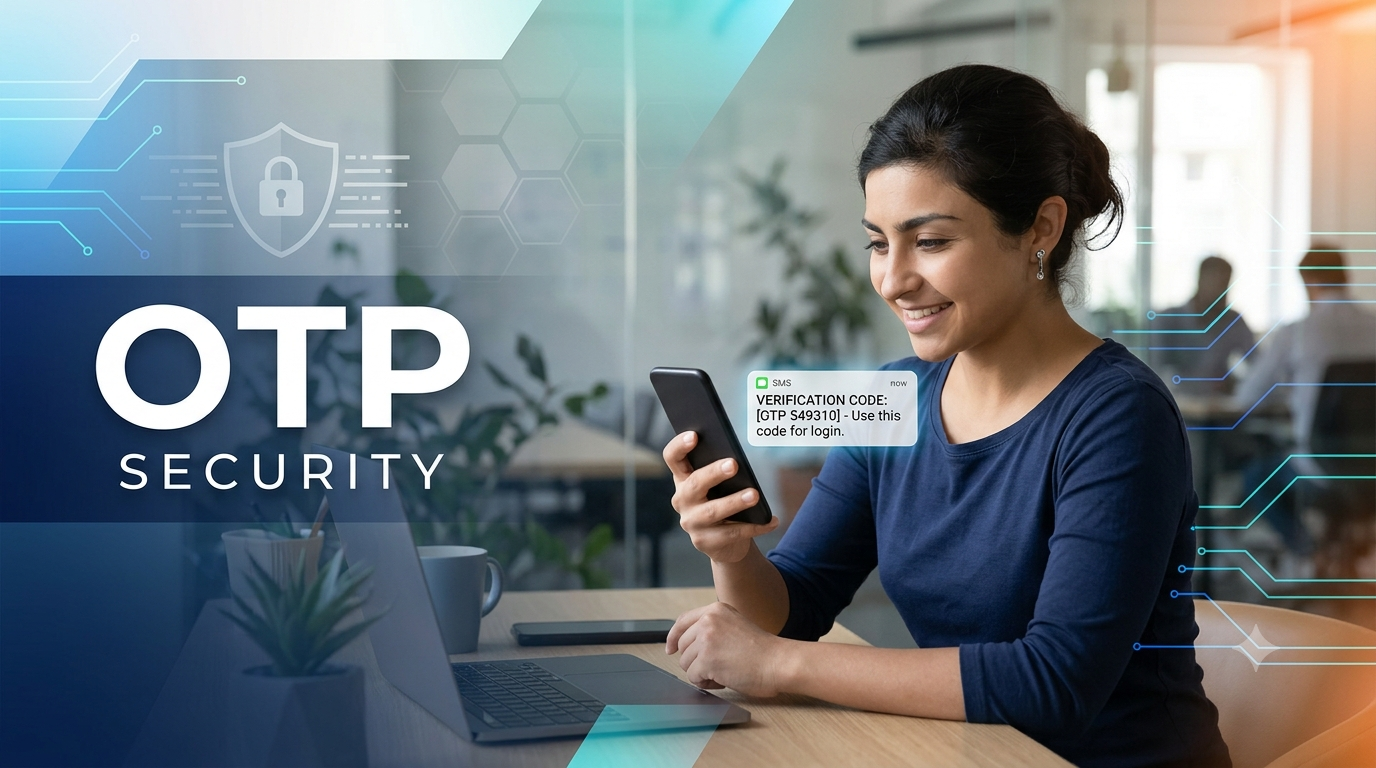
OTP verification is an additional step for certain online credit card payments that requires entering the OTP received on the registered mobile number to confirm the transaction. Always cross-check the amount and merchant before entering the OTP, and do not share the OTP with anyone.
To use OTPs safely for online credit card transactions, do not give out your code to anybody, not even people that call themselves from your bank. Make sure to only use OTPs on secure sites or apps and verify the merchant and amount before entering the code. Do not click any suspicious links; never give out the OTP for a transaction that is not related to you or the merchant. Never share your OTP with anyone over a call, message, email or any other channel, even if they claim to represent the bank.
Make sure to keep your registered mobile number up to date to get the OTP code from your bank or card issuer in case of a transaction. If you change numbers, make sure to update this information with your card issuer. It is best to set a strong password or fingerprint scan on your mobile device to stop unauthorised transactions. In case you receive an OTP for a transaction that is not related to you, do not enter the code or reveal it. Contact your bank to inform them about the suspicious transaction.
A card transaction OTP adds an important step to the security process of a credit card transaction while offering a safe way to pay bills. However, you must stay alert and confirm the transaction details are correct before approving the payment. OTPs (One-Time Passwords) must never be shared verbally or in writing over the phone, through any chat application, or via email. If you suspect fraud, contact the card issuer first. If you are thinking of reducing your borrowing costs, Loans Jagat offers a wide range of personal loans, business loans, and loan consolidation programmes from banks and NBFCs for comparison to ensure that you get the best deal in the market.
An OTP (One-Time Password) is a temporary security code that authenticates certain credit card transactions.
An OTP can help authenticate a transaction by verifying that the payment initiator has access to the registered authentication method.
You will typically receive the OTP on your registered mobile number via SMS. However, the OTP may be delivered using other authentication methods as well, based on the issuing bank and transaction.
An OTP remains valid for a limited period. The exact validity duration depends on the bank's authentication process. Ensure that you enter the OTP within the time frame mentioned on the screen or within the validity of the OTP received.
In some cases, yes. The authentication method for a transaction can vary, and alternate secure authentication methods or RBI-mandated exemptions may apply.
No, you must not share your OTP (One Time Password) in case of a call, message, or email, even if they claim to represent the bank. You must give your OTP only in case of a legitimate transaction.
If you get any such calls, please do not enter or share your OTP. Instead, you can contact your card issuer through their official customer care and inform them of the unauthorised request.
First, check whether your mobile phone has a stable cellular network connection and ensure that you have entered the correct registered mobile number on your bank's portal. If you still do not receive the OTP, contact your card issuer for assistance.
Fraudsters can exploit OTP-based authentication through phishing, fake calls or social engineering to access your card details or authorise unauthorised transactions. Never share your OTP with anyone, even if they claim to be from your bank.
As per the Reserve Bank of India's (RBI) instructions for 2025, a transaction cannot be authorised in India without two-factor authentication for most digital payments, except for certain exemptions. A one-time password is one of the methods that can be used for two-factor authentication, but it is not mandatory.
Start your journey today
Apply Now*T&C apply