By continuing, you agree to LoansJagat's Credit Report Terms of Use, Terms and Conditions, Privacy Policy, and authorize contact via Call, SMS, Email, or WhatsApp
Disclaimer: The information published on LoansJagat is intended for general informational and educational purposes only and should not be considered financial, legal, or investment advice. Interest rates, loan terms, statistics, and other data may change over time and may vary by lender or source. Please verify the latest information and consult a qualified financial advisor or the respective Bank/NBFC before making any financial decisions.
Subscribe Now
About the author

Vaishnavi is a Financial Content Writer at LoansJagat. She holds a B.Sc. and an M.Sc. She has experience in writing SEO-focused content across finance, digital marketing, education, and Ayurveda. Before joining LoansJagat, she worked with digital marketing agencies serving fintech clients and quick-commerce brands like Zepto and blinkit. At LoansJagat, Vaishnavi writes on banking, loans, personal finance, and insurance. Her work involves researching financial topics, understanding user search intent, and creating content that is clear and accurate. She has experience in SEO content writing, keyword research, content optimisation, and AEO. She enjoys simplifying complex topics into practical information that readers can easily understand and use. She believes that well-researched and reliable content plays an important role in helping people make informed financial decisions.
Related Blog Post
Simplify All Your Loans Into One Affordable EMI

Customers Served

Debt Consolidated

1200+ Reviews

Locations in India
Club all Loans & Credit Card Bills into Single EMI

Quick Apply Loan
Consolidate your debts into one easy EMI.

Takes less than 2 minutes. No paperwork.

10 Lakhs+
Trusted Customers

2000 Cr+
Loans Disbursed

4.7/5
Google Reviews

50+
Banks & NBFCs Offers
Other services mentioned in this article
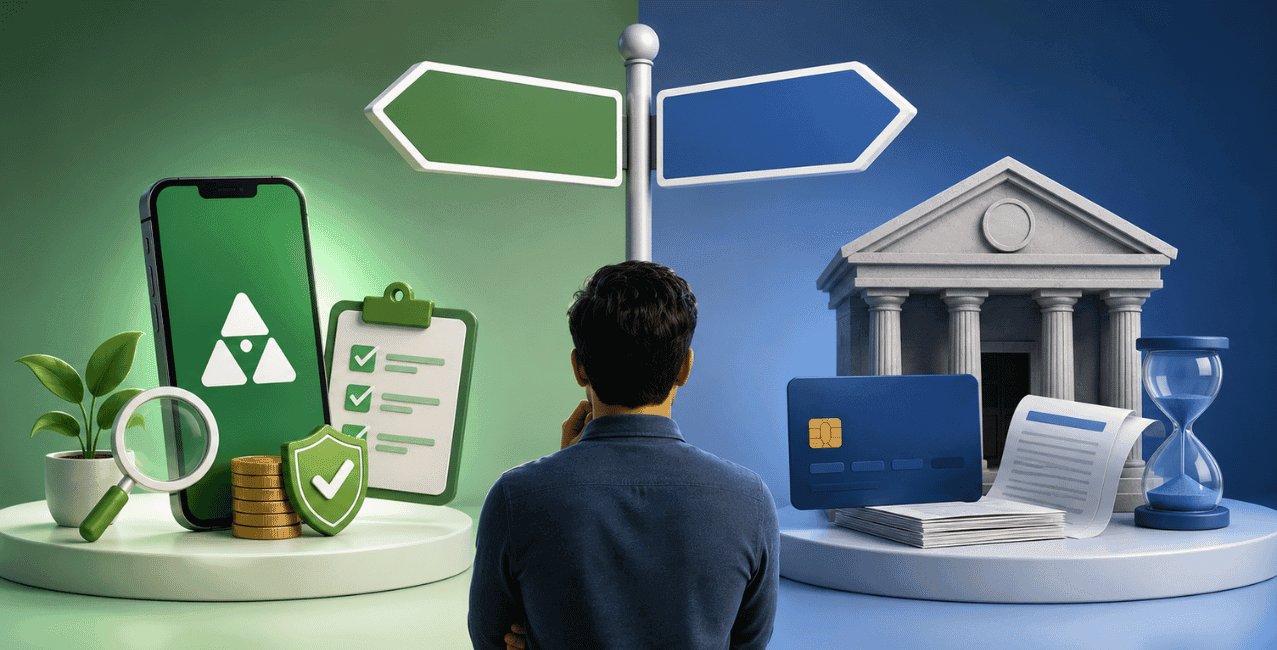
Choosing between debt consolidation and a secured loan depends entirely on the borrower’s financial situation and repayment goals. Debt consolidation is a strategy combining multiple debts into a single repayment arrangement rather than a separate loan type. The loan used for consolidation can be unsecured or secured. A personal loan gives you the freedom to use the money for various purposes like medical expenses, education, home repairs, and other such expenses. However, debt consolidation can help combine your existing debts eligible under the specific consolidation arrangement into a single loan, which can makes repayment easier with one monthly EMI. If you have several loans and a credit card balance, debt consolidation can be a better option.
For a better comparison, borrowers must understand how both work and how they can help with repayment or cover major expenses.
Key Takeaways:
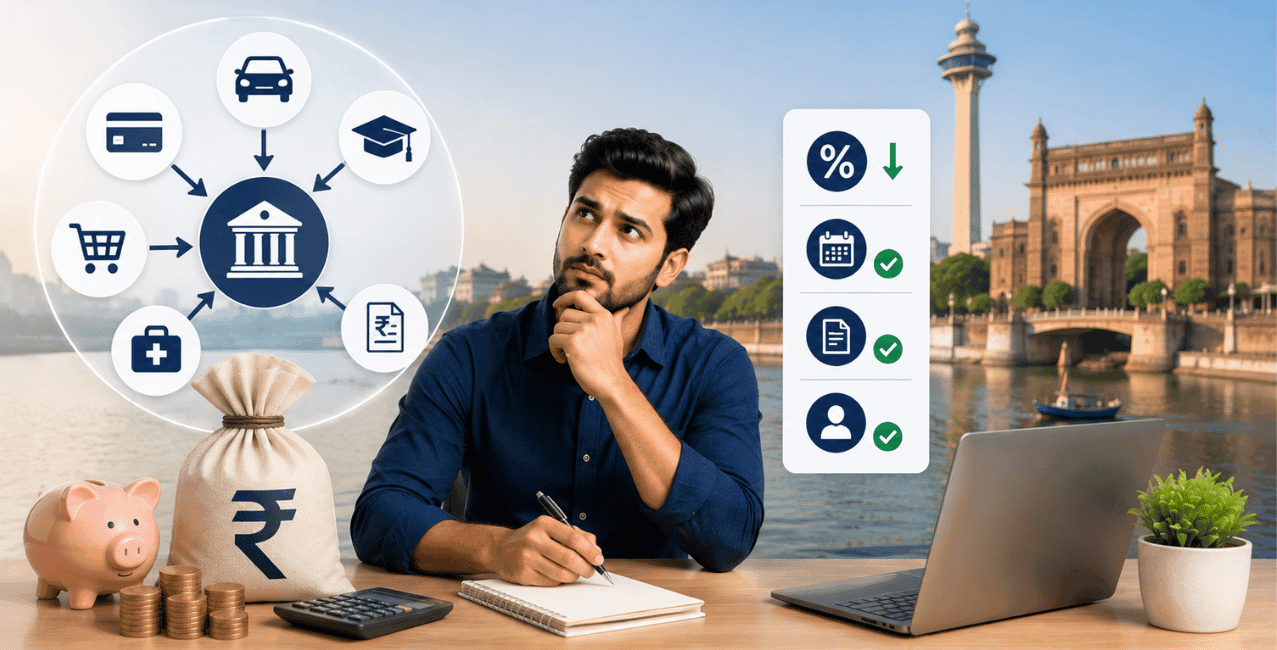
In simple words, a debt consolidation loan is a type of loan that is used to clear existing debts, meaning that once the debts are cleared, you need to repay only one loan. But the debts that can be consolidated depend on the lender and product.
Example:
You can easily combine them into a single debt consolidation loan. It means you need to remember one EMI, one interest rate, and one repayment date. The main purposes may be to simplify repayment and potentially reduce the overall borrowing cost if the new loan has more favourable terms.
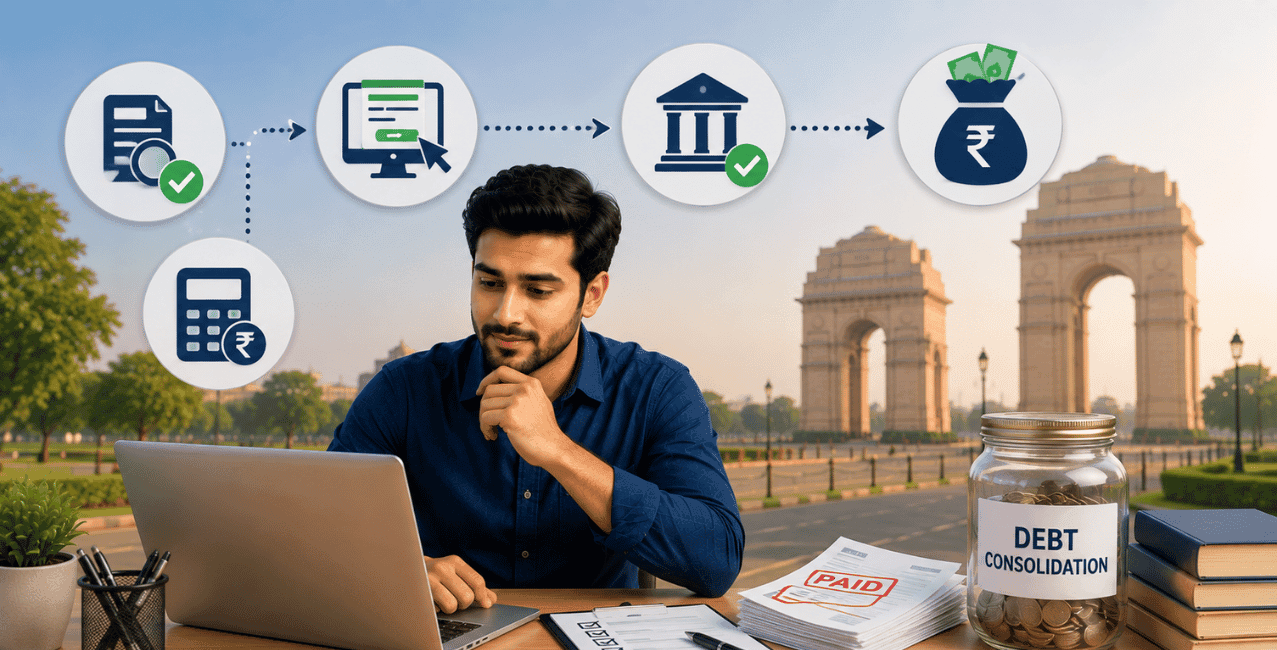
The process of debt consolidation is very simple and practical; here is how it works:
Read More - What Is Debt Consolidation
This process actually reduced the hassle of keeping track of multiple payments every month.
Several ways can be used for a consolidation loan; here are some of the major types considered by most borrowers:
A personal loan is the most common way to consolidate debt. Personal loans generally do not require collateral but loan structure and eligibility depends on banks and NBFCs. You should check the lender's offers and eligibility criteria to understand the collateral.
You can use personal loan amount to repay:
Most credit card companies offer borrowers the option to transfer their outstanding balance from other credit cards. These cards also provide:
Debt consolidation is not something you need to use for every other loan; it works best in certain situations. It is suitable if:
However, if your income is not stable or you are unable to make loan payments, consolidation may not solve the problem.
Every financial tool has a positive and a negative side. Similarly, personal loans also have some advantages and disadvantages:
Pros of Using a Personal Loan for Consolidation
Cons of Using a Personal Loan for Consolidation
Debt consolidation may reduce borrowing costs and simplify repayments if the new loan’s overall terms are more favourable. But what if it is not suitable based on your financial needs? Let’s see how to check if it is right for you or not:
Debt consolidation is suitable when:
Most people get confused and think it is a way to eliminate debt, but it is not. Consolidation is used to reorganise the existing obligations into one manageable EMI. Make sure you avoid borrowing again unless it is necessary.
Bottom Line
The better loan depends on your personal needs and wants. If a person needs extra cash for new expenses, a personal loan is the right choice, and if you are struggling to manage existing debts, consolidation will help you.
However, before you decide which option is best for you, make sure to compare the interest rates, processing fees, loan tenure, and total repayment costs for both of the options. After comparison, you can easily pick the option that fits your budget and repayment capacity perfectly so you can handle your debt over time.
In a gold loan, you give your gold jewellery to a bank or lender as collateral. The lender checks its value and lends money as per the market value.
A gold loan is a way to borrow money by using your gold jewellery as a guarantee for the lender.
The final amount depends on your pay, other active loans, credit score, and bank rules. Loan amount is lender specific and depends on the factors like credit profile, income, and eligible criteria of the lender.
A 700 CIBIL score is decent and acceptable to many banks. But loan approval depends on Lenders criteria. A high credit score is positive but there is no universal score threshold that guarantees access to lower-cost loans.
For unsecured personal loans, an interest rate between 9.99% and 16.50% per annum, subject to the applicable eligibility criteria and loan terms. This is the ICICI bank's personal loan interest rate.
Is it a good idea to consolidate debts?
Combining your debts is smart if it lowers your interest rate and cuts down your multiple bills into one. It works, if you make your new payments on time.
What are the disadvantages of loan consolidation?
The downsides can include high processing fees, a longer time to pay back the money, or paying more total interest in the long run.
Who qualifies for a consolidation loan?
Banks look at your monthly income, CIBIL score, past payment track record, and how much debt you already have compared to what you earn.
How long does it take to pay off a consolidation loan?
The loan repayment tenure depends on your agreement. Picking a shorter timeline means you will pay much less total interest.
What actually happens after you apply for a loan consolidation?
The lender pays off your old debts, leaving you with just one new loan and a single monthly EMI. But sometimes the borrower must distribute the funds themselves.