By continuing, you agree to LoansJagat's Credit Report Terms of Use, Terms and Conditions, Privacy Policy, and authorize contact via Call, SMS, Email, or WhatsApp
Disclaimer: The information published on LoansJagat is intended for general informational and educational purposes only and should not be considered financial, legal, or investment advice. Interest rates, loan terms, statistics, and other data may change over time and may vary by lender or source. Please verify the latest information and consult a qualified financial advisor or the respective Bank/NBFC before making any financial decisions.
Subscribe Now
About the author

Darshana Patel is a finance and tech writer with a strong background in journalism, financial economics, and political science, working with Loans Jagat. She has immense experience writing content through her previous work in fintech and edtech companies. Her contribution at Loans Jagat is to simplify finance-backed content and academically powered content for the readers.
Related Blog Post
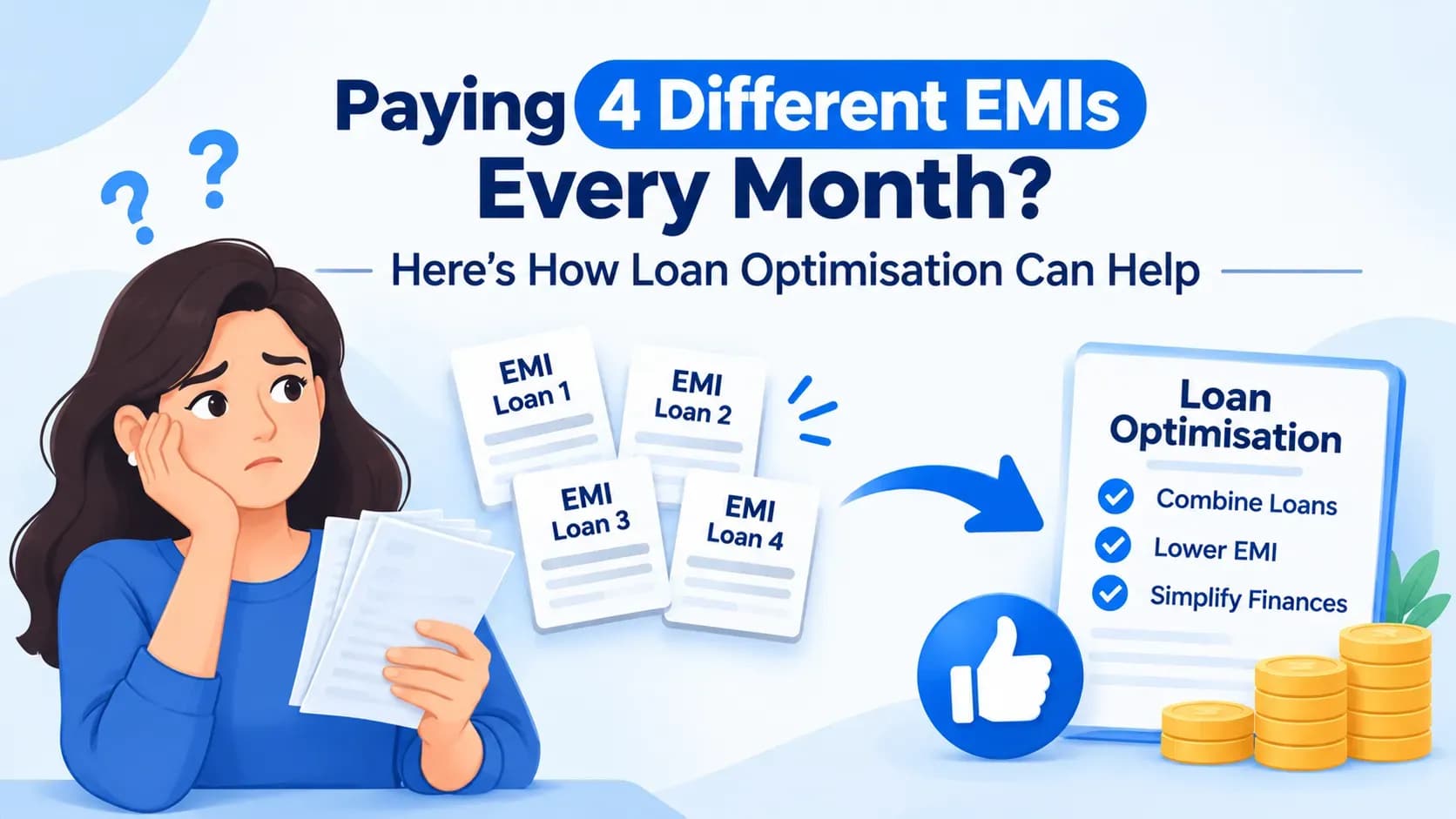
Simplify All Your Loans Into One Affordable EMI

Customers Served

Debt Consolidated

1200+ Reviews

Locations in India
Club all Loans & Credit Card Bills into Single EMI

Quick Apply Loan
Consolidate your debts into one easy EMI.

Takes less than 2 minutes. No paperwork.

10 Lakhs+
Trusted Customers

2000 Cr+
Loans Disbursed

4.7/5
Google Reviews

50+
Banks & NBFCs Offers
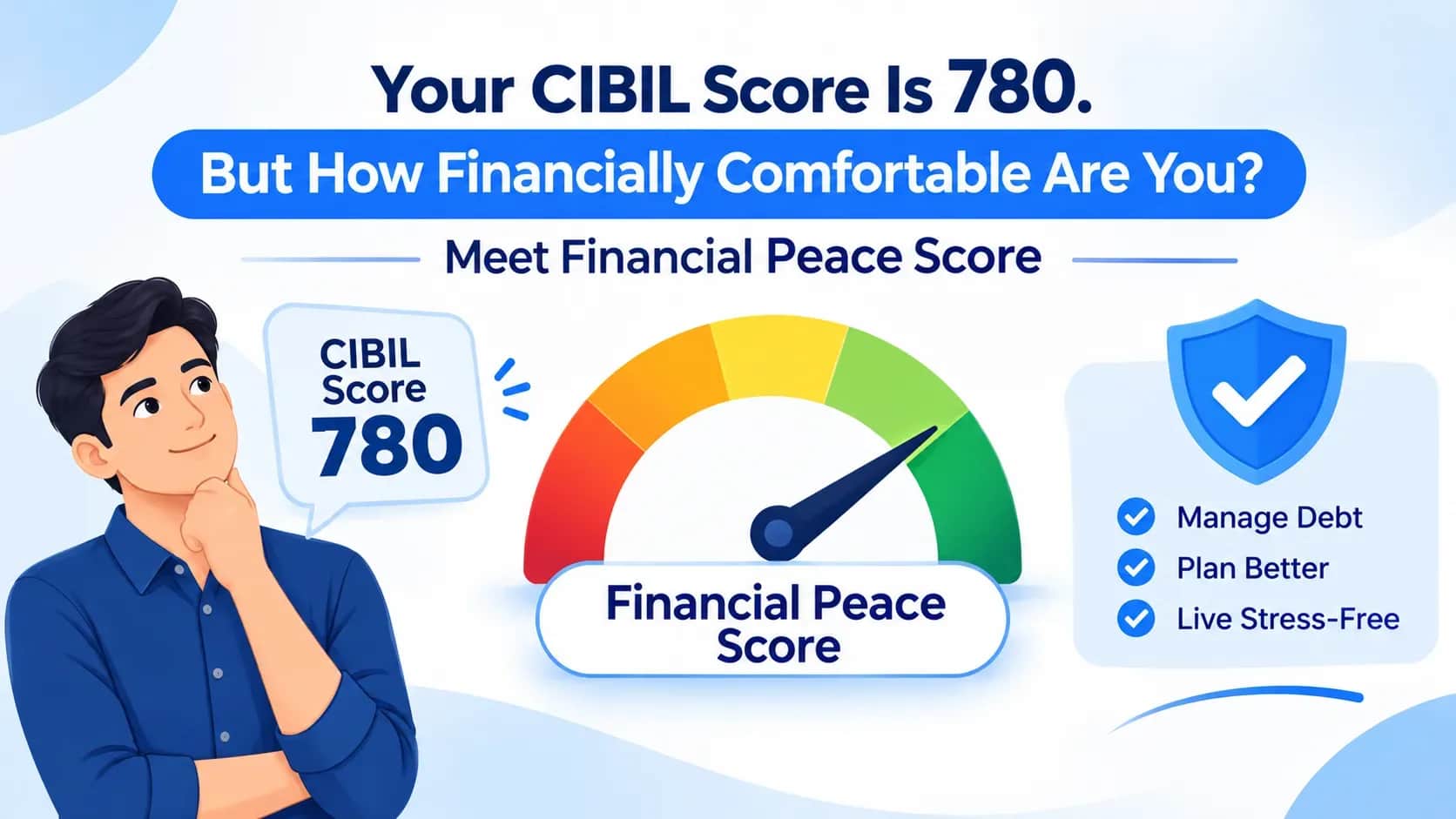
A CIBIL score of 780 reflects a strong credit profile, but does it mean you are financially comfortable? Not necessarily. You may pay every EMI on time and maintain a good credit history, yet struggle with multiple loan commitments, limited savings or rising monthly expenses. Your credit score does not capture your entire financial situation. To understand your financial wellness, you also need to consider your income, spending habits, savings and existing obligations. This is where Financial Peace Score takes a broader approach to assessing your financial health.
Key Takeaways
A CIBIL score is a three-digit number ranging from 300 to 900. It reflects your credit history and helps lenders assess your creditworthiness when you apply for a loan or credit card.
A score of 780 indicates a strong credit profile. However, loan approval also depends on your income, existing financial commitments and the lender's eligibility criteria.
Your CIBIL score is influenced by five key factors:
These factors help lenders understand your borrowing and repayment behaviour. However, they do not show your complete financial position, including savings, monthly expenses and emergency funds.
For example, someone with a CIBIL score of 780 may have a good repayment history but still struggle with multiple EMIs and limited savings.
A good credit score does not always mean strong financial wellness.
Your CIBIL score and financial wellness answer two different questions. Your credit score helps lenders understand how you have managed credit, while financial wellness reflects how comfortably you manage your overall financial responsibilities.
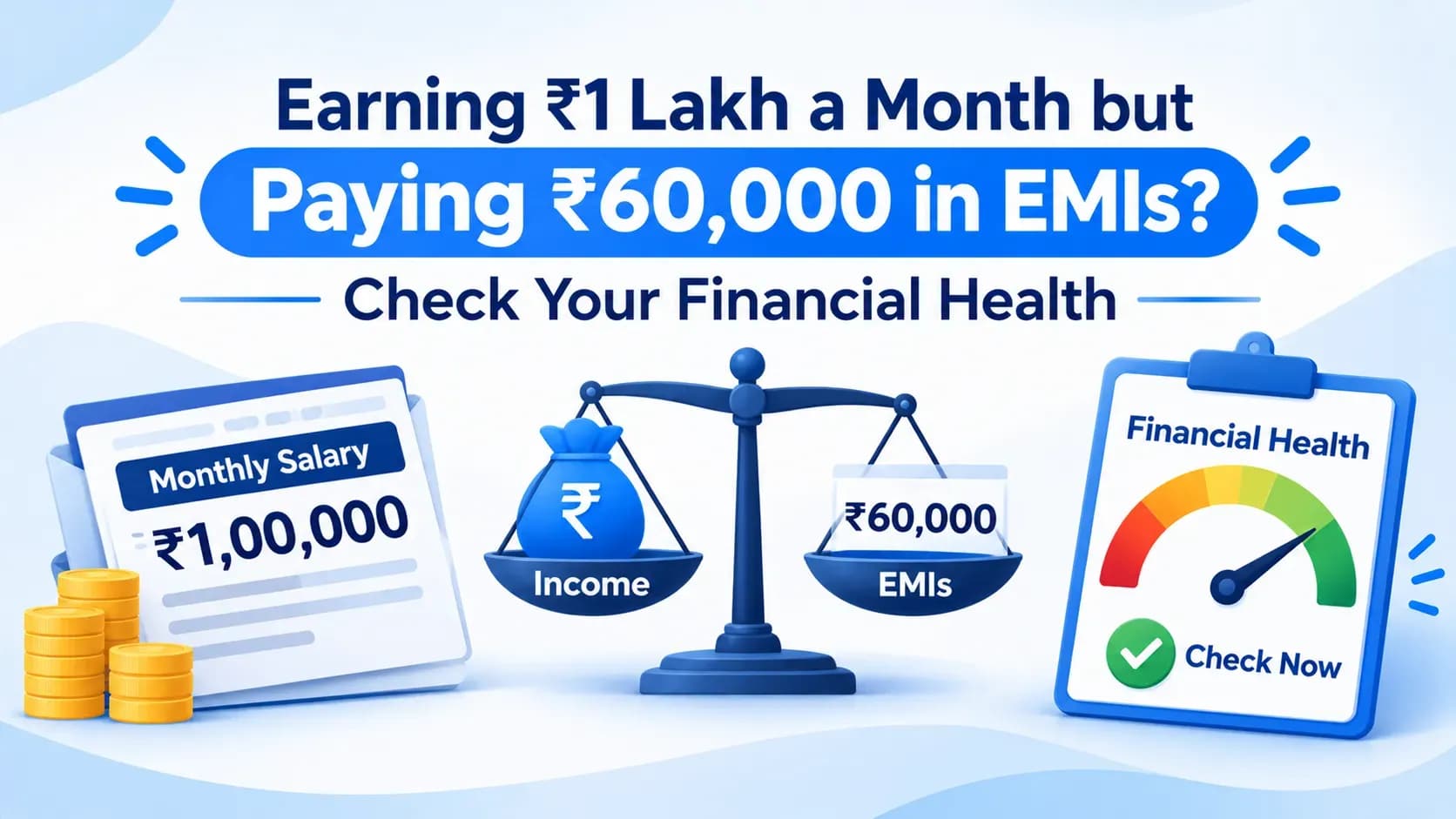
Consider two individuals earning ₹1 lakh per month. The first pays ₹20,000 towards EMIs and saves ₹25,000 regularly. The second pays ₹60,000 towards EMIs, leaving limited room for savings and unexpected expenses.
Both may have similar credit scores, but their financial flexibility is different.
This is why understanding your financial wellness requires looking beyond your credit history.
Financial wellness depends on how different parts of your financial life work together. Here are five important areas to review.
Your existing loan commitments determine how much money remains after monthly repayments.
Suppose your monthly income is ₹80,000 and you pay ₹35,000 towards EMIs. You have ₹45,000 remaining for household expenses, insurance, savings and other financial responsibilities.
Reviewing your loan obligations helps you understand:
The objective is to keep repayments manageable alongside your other financial priorities.
Your credit habits influence your credit profile and broader financial health.
Paying EMIs and credit card bills on time, controlling credit utilisation and avoiding unnecessary borrowing support better financial discipline.
For example, consistently paying only the minimum amount due on credit cards can leave an outstanding balance that attracts interest. Similarly, using one credit facility to repay another may indicate that your cash flow needs attention.
Review your borrowing habits to understand whether you are using credit responsibly or depending on it for regular expenses.
Savings provide financial support when unexpected expenses arise.
An emergency fund can help you manage medical expenses, temporary income disruptions, urgent home repairs and other unplanned requirements without depending entirely on credit.
The amount you need depends on your income stability, household expenses and existing commitments. Building an emergency fund gradually can help you prepare for unexpected situations.
Your salary alone does not determine your financial comfort. What matters is how you manage your income against monthly expenses and financial commitments.
For example, someone earning ₹1 lakh per month may have limited financial flexibility if their EMIs and household expenses consume most of their income.
Track your monthly take-home income, essential expenses, loan repayments, insurance payments and savings. This helps you understand where your money goes and whether your spending supports your financial goals.
Financial wellness also involves identifying opportunities to manage your existing commitments better.
For example, if you have multiple personal loans, consolidation may be worth exploring, depending on your eligibility and available terms.
If your existing loan has a relatively high interest rate, refinancing could be another option. Restructuring may also be relevant in certain situations, subject to lender policies.
Before choosing any option, compare interest rates, processing fees, repayment tenure and total interest payable. The right approach depends on your financial profile.
Yes. A good credit score and financial comfort do not always go together.
Consider Rahul, who earns ₹1 lakh per month and has a CIBIL score of 780. He has maintained a good repayment history but currently manages two personal loans and one vehicle loan.
His monthly commitments look like this:
 Apply Now
*T&C Apply
Rahul has ₹15,000 remaining before accounting for additional savings goals and unexpected expenses.
His CIBIL score reflects his repayment history, but it does not tell him whether his current commitments leave enough room for financial security and future goals.
He may need to review his expenses, savings and existing loan structure to identify areas for improvement.
This example highlights why a healthy credit profile does not automatically translate into a comfortable financial position.
Financial Peace Score offers a broader understanding of your financial wellness beyond your credit score.
It considers different aspects of your financial profile, helping you understand your current position and identify opportunities for improvement.
It focuses on four important areas:
The objective is to move beyond a single credit-related number and consider the factors that influence your financial wellness.
LoansJagat combines financial assessment with AI-powered personalised loan optimisation plans.
Here is how the process works:
Step 1: Check Your Financial Peace Score
Start by checking your score to understand your financial position. The assessment considers relevant details from your financial profile.
Step 2: Get Your Score and Personalised Plans
Once the assessment is complete, you immediately see your score along with personalised loan optimisation plans. There is no separate step required to access these opportunities.
Step 3: Explore AI-Powered Loan Optimisation
Based on your financial profile, LoansJagat identifies relevant optimisation opportunities. These may include consolidation, refinancing, restructuring and other suitable options.
Step 4: Compare Available Options
Explore and compare options from 50+ banks and NBFCs. Review applicable interest rates, repayment terms and charges before deciding whether an option suits your requirements.
All options are subject to lender terms, eligibility and approval.
Understanding your financial position is the first step. These practical actions can help you manage your finances better.
Calculate how much of your monthly income goes towards loan repayments. For example, if your take-home salary is ₹80,000 and your total EMIs are ₹32,000, your EMI-to-income ratio is 40%.
This helps you understand how much income is committed to existing loans. Your expenses, dependants and income stability also matter when assessing affordability.
Before applying for another loan, check whether an additional EMI would leave enough money for essential expenses, savings and unexpected requirements.
Set payment reminders or enable suitable auto-debit facilities. Regularly check your bank statements to ensure scheduled payments have been processed.
Set aside a fixed amount every month, even if you start small. Gradually work towards building savings that can cover essential expenses for a few months.
Explore refinancing, consolidation or restructuring if they suit your circumstances. Compare the total repayment cost rather than focusing only on the EMI. A lower EMI through a longer tenure could increase your total interest payable.
A CIBIL score of 780 is a positive indicator of your credit history, but it does not tell you everything about your financial health.
Your existing EMIs, monthly expenses, savings and income stability also influence how comfortably you manage your money.
Financial Peace Score helps you look beyond your credit score, understand your broader financial position and explore personalised opportunities to improve it.
With LoansJagat's AI-powered assessment and loan optimisation plans, you can explore options based on your financial profile.
Check your Financial Peace Score and take a more informed approach to your financial wellness.
A CIBIL score of 780 indicates a strong credit profile. However, loan approval also depends on income, existing obligations and lender eligibility criteria.
A high CIBIL score reflects your credit history and repayment behaviour. It does not directly measure savings, monthly expenses or emergency funds.
A CIBIL score measures creditworthiness based on credit history. Financial Peace Score takes a broader approach by considering loan obligations, credit habits, savings cushion and opportunities to improve your financial position.
You may have a strong repayment history but limited disposable income because of multiple EMIs and regular expenses.
You can check your Financial Peace Score through LoansJagat. The assessment provides your score along with personalised loan optimisation plans based on your financial profile.
LoansJagat uses AI-powered assessment to identify loan optimisation opportunities based on your financial profile. These may include consolidation, refinancing and restructuring. Actual outcomes depend on lender terms and eligibility.
A credit score focuses on your credit history and repayment behaviour. Financial Peace Score takes a broader view of your financial wellness and considers additional aspects of your financial profile.