By continuing, you agree to LoansJagat's Credit Report Terms of Use, Terms and Conditions, Privacy Policy, and authorize contact via Call, SMS, Email, or WhatsApp
Disclaimer: The information published on LoansJagat is intended for general informational and educational purposes only and should not be considered financial, legal, or investment advice. Interest rates, loan terms, statistics, and other data may change over time and may vary by lender or source. Please verify the latest information and consult a qualified financial advisor or the respective Bank/NBFC before making any financial decisions.
Subscribe Now
About the author

Darshana Patel is a finance and tech writer with a strong background in journalism, financial economics, and political science, working with Loans Jagat. She has immense experience writing content through her previous work in fintech and edtech companies. Her contribution at Loans Jagat is to simplify finance-backed content and academically powered content for the readers.
Related Blog Post
Simplify All Your Loans Into One Affordable EMI

Customers Served

Debt Consolidated

1200+ Reviews

Locations in India
Club all Loans & Credit Card Bills into Single EMI

Quick Apply Loan
Consolidate your debts into one easy EMI.

Takes less than 2 minutes. No paperwork.

10 Lakhs+
Trusted Customers

2000 Cr+
Loans Disbursed

4.7/5
Google Reviews

50+
Banks & NBFCs Offers
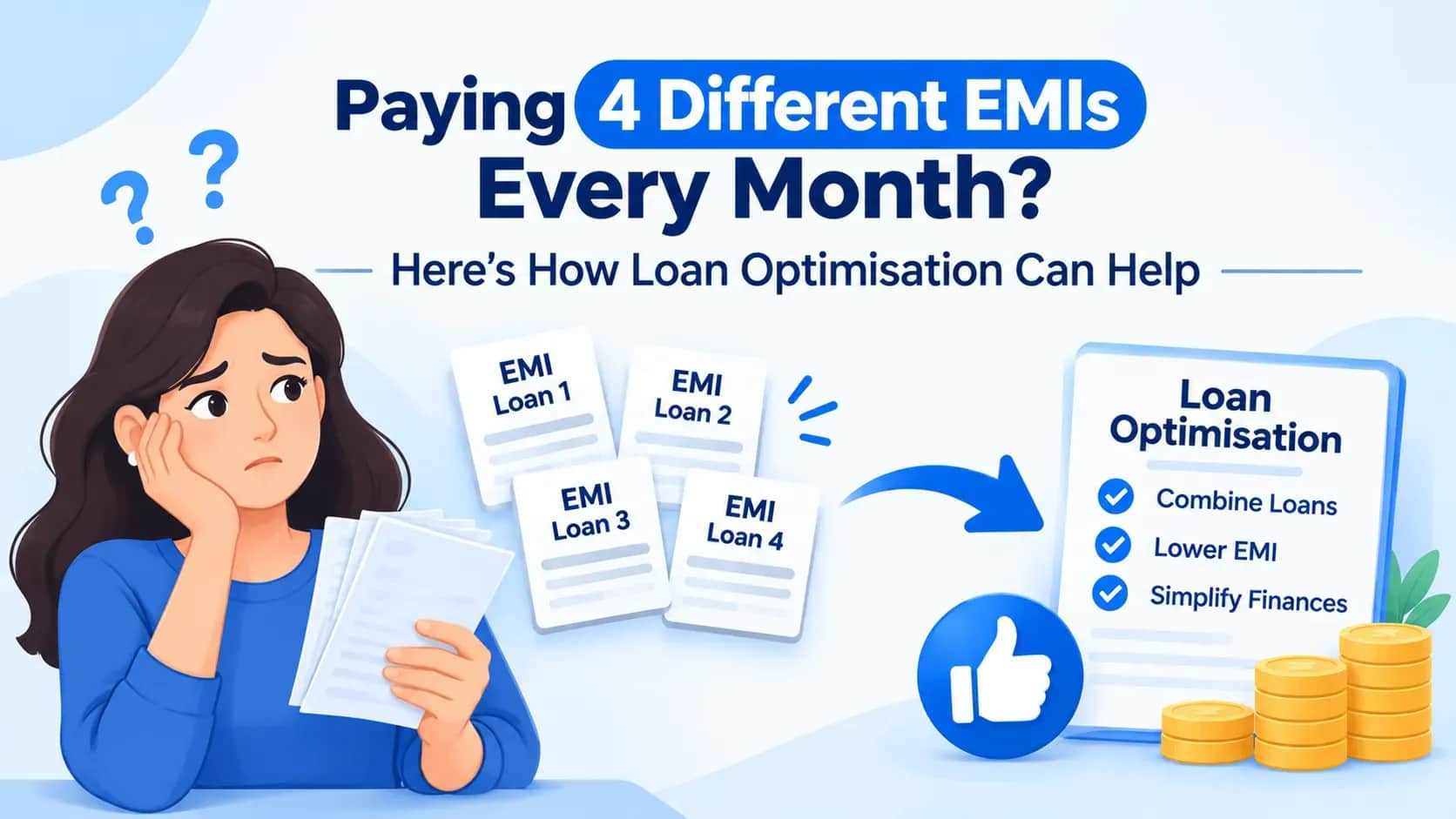
Managing four different EMIs every month can make it difficult to keep track of repayment dates, interest rates and outstanding balances. Even with a regular salary, multiple loan commitments can leave less room for savings and other expenses. Before applying for another loan to manage your finances, it is worth reviewing your existing commitments. Loan optimisation helps you explore ways to manage current loans more effectively through options such as consolidation, refinancing and restructuring, depending on your financial profile and lender eligibility.
Key Takeaways
Taking loans for different financial needs is common. You may have a personal loan for a medical expense, a vehicle loan and another loan for a planned purchase.
However, managing several repayments simultaneously can become challenging.
Consider someone who has four active loans. Each has a different interest rate, repayment date, outstanding balance and remaining tenure. Keeping track of all these details requires regular attention.
Some common challenges include:
When loans have different due dates, you need to maintain sufficient bank balance throughout the month. Missing a payment can result in late fees and may affect your credit history.
Every loan comes with different borrowing terms. You may be paying a higher interest rate on one loan while another has more favourable terms.
Without reviewing these differences, you may miss opportunities to manage your borrowing costs.
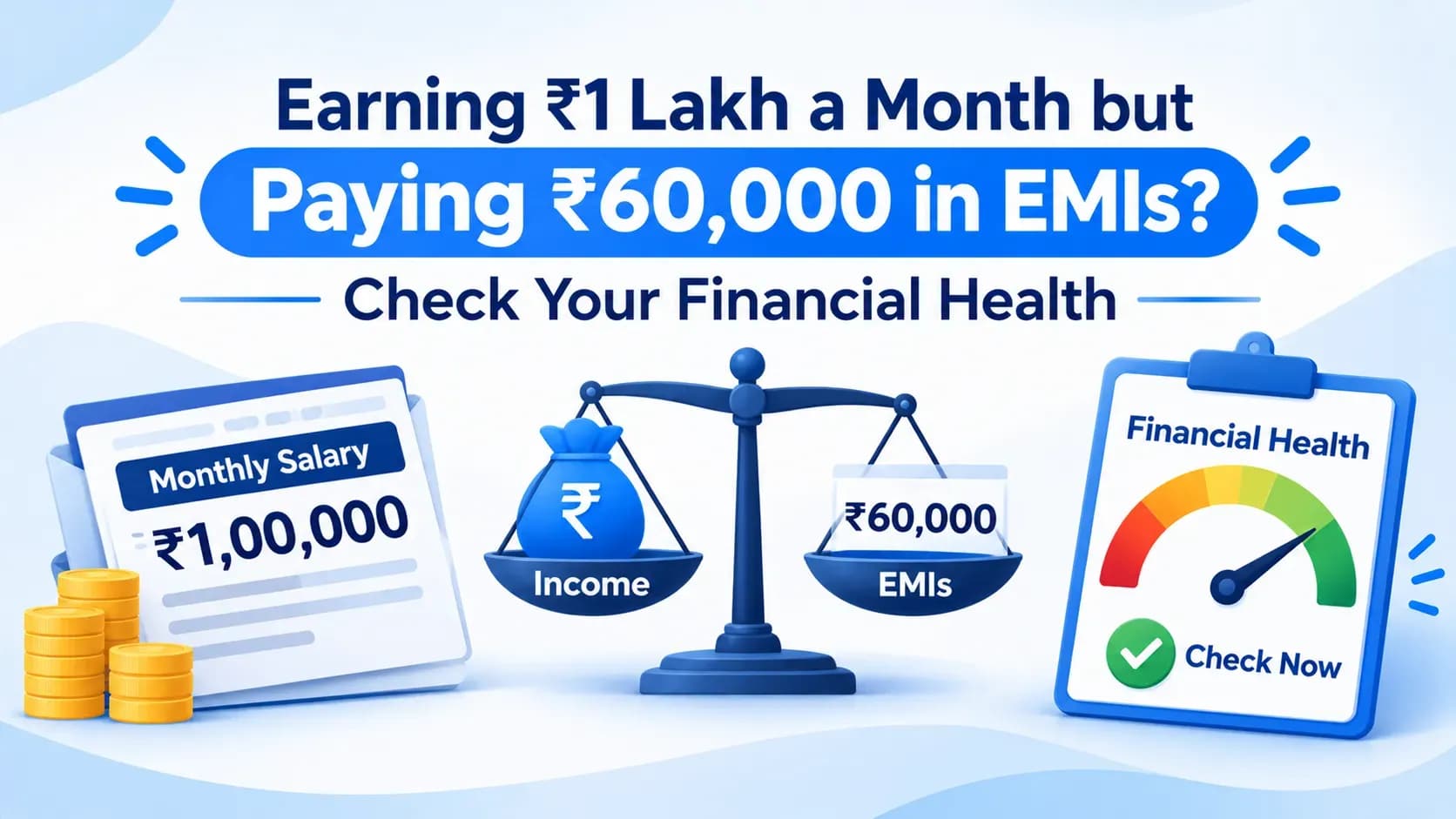
Multiple EMIs can consume a significant portion of your monthly income.
For example, if you earn ₹1 lakh and pay ₹45,000 towards four different EMIs, only ₹55,000 remains for household expenses, savings and other financial commitments.
This can make it difficult to manage unexpected expenses or work towards other financial goals.
When you have multiple loans, tracking the outstanding principal, repayment tenure and total interest payable can become complicated.
Without a clear understanding of your loan position, making informed repayment decisions becomes harder.
Loan optimisation means reviewing your existing loans and identifying ways to manage them more effectively.
Instead of taking another loan without examining your current commitments, you evaluate your outstanding balances, interest rates, repayment capacity and available options.
Depending on your financial situation, loan optimisation may involve:
The objective is to find a loan structure that better aligns with your income and financial requirements.
However, optimisation does not guarantee lower interest costs or EMIs. Every option should be evaluated against its fees, repayment conditions and total cost.
There is no single solution for managing multiple EMIs. The suitable approach depends on your outstanding loan amounts, interest rates, repayment history and eligibility.
Here are three options worth understanding.
Loan consolidation involves combining multiple eligible loans or credit card dues into a single loan.
Instead of managing several repayments, you repay one consolidated loan through a single EMI.
For example, suppose you have three personal loans with different repayment dates. You may explore consolidating them into one loan, subject to lender approval and eligibility.
Potential benefits include:
However, compare the new loan's interest rate, processing fees and tenure with your existing loans. A longer repayment period may increase the total interest payable even if the monthly EMI decreases.
Refinancing involves replacing an existing loan with a new loan, potentially offering more suitable terms.
For example, you may have taken a personal loan when your income was lower or your credit profile was different. If your financial circumstances have improved, you could explore whether another lender offers more favourable interest rates or repayment terms.
Potential benefits include:
Before refinancing, account for foreclosure charges, processing fees and other applicable costs. Compare the total repayment amount rather than focusing only on the revised EMI.
Loan restructuring involves modifying the terms of an existing loan with the lender's approval.
Depending on the lender's policies and your circumstances, this may involve changes to repayment tenure, instalment amounts or other loan conditions.
It may be worth discussing restructuring when your current repayment commitments become difficult to manage because of changes in income or financial circumstances.
However, restructuring is subject to lender approval and may affect the total interest payable or other loan terms.
Although these options can help manage existing loan commitments, they serve different purposes.
 Apply Now
*T&C Apply
The right option depends on your financial position. Compare the available terms before deciding.
Not everyone with multiple loans needs consolidation or refinancing. However, certain situations may mean it's worth reviewing your loan structure.
Consider evaluating your existing loans if:
Start by preparing a list of your active loans, including outstanding principal, interest rates, EMIs, remaining tenure and applicable charges.
This gives you a clearer picture of your current commitments and helps you compare available optimisation options.
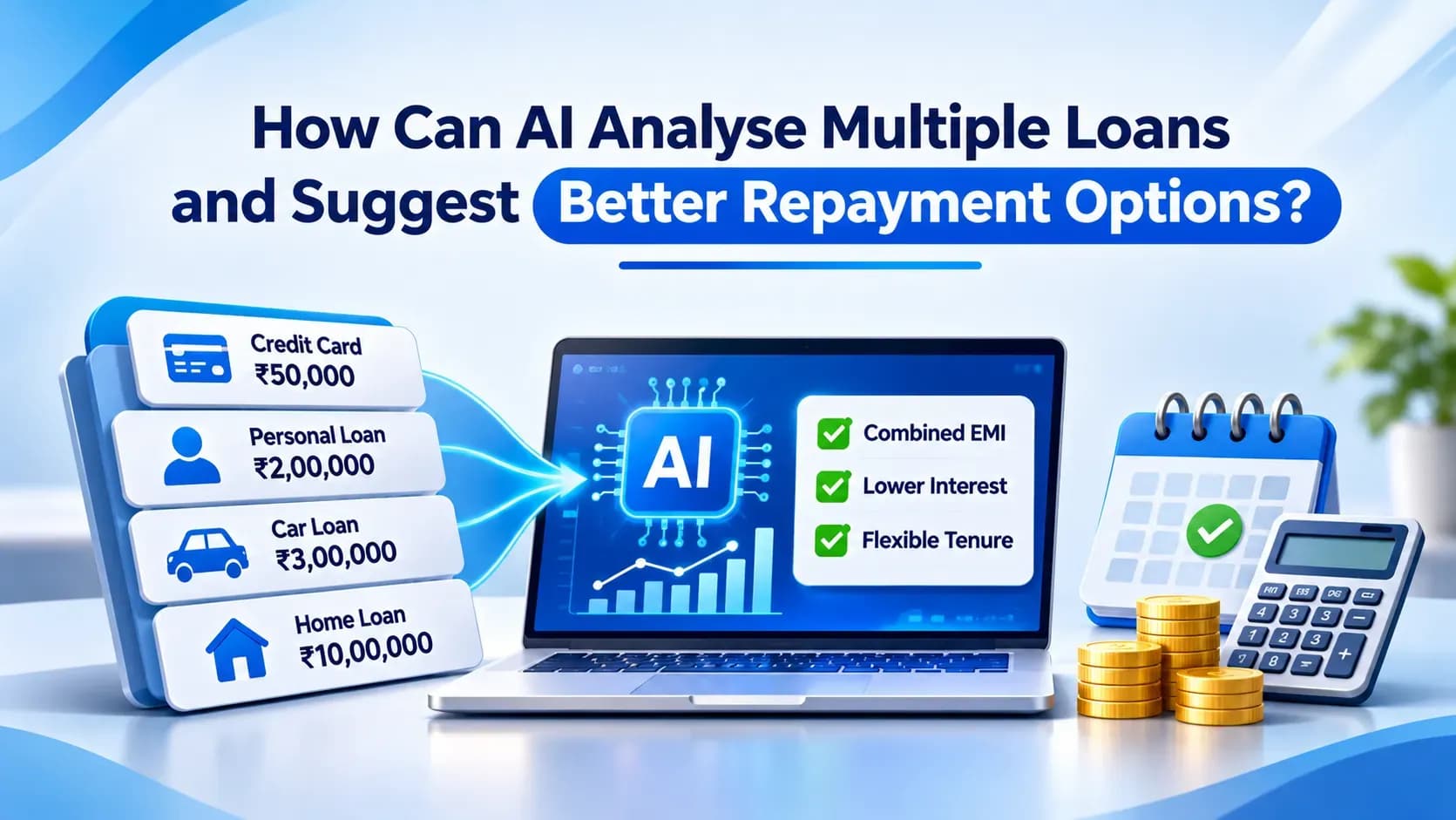
Comparing different loan options can take time, especially when you are already managing multiple repayments. LoansJagat's Financial Peace Score combines a financial assessment with AI-powered personalised loan optimisation plans. Here is how it works:
This approach helps you explore loan optimisation opportunities based on your financial circumstances instead of choosing an option simply because it offers a lower EMI.
Before consolidating, refinancing or restructuring your loans, review these important factors.
Check the interest rates on your existing loans against the available offers. A new loan should make financial sense after considering all applicable charges.
Do not judge an offer only by its EMI. A longer tenure may reduce monthly payments but increase the total interest payable.
Review processing fees, foreclosure charges and other costs associated with closing existing loans or taking a new one.
Ensure that the revised EMI fits your monthly budget without affecting essential expenses and savings.
Understand the eligibility requirements, repayment conditions and other applicable terms before accepting an offer.
Managing four different EMIs does not necessarily mean you need another loan. It may be more useful to review your existing commitments and understand whether consolidation, refinancing or restructuring can help. Loan optimisation allows you to evaluate your current loan structure and explore alternatives based on your financial needs.
With LoansJagat's Financial Peace Score, you can understand your broader financial position and access AI-powered personalised loan optimisation plans. Check your Financial Peace Score to explore ways to manage your existing loans more effectively.
Start by listing your outstanding loans, interest rates, repayment dates and remaining tenures. You can then evaluate whether consolidation, refinancing or restructuring suits your financial situation.
You may explore loan consolidation to combine multiple eligible loans into one repayment. Approval depends on your income, credit profile, outstanding balances and lender eligibility criteria.
The outcome depends on the new interest rate, repayment tenure, processing fees and other applicable charges. Compare the total repayment cost before consolidating.
They serve different purposes. Refinancing replaces an existing loan with another loan, while consolidation combines multiple eligible loans into one. The suitable option depends on your financial requirements.
LoansJagat uses AI-powered assessment through Financial Peace Score to identify personalised loan optimisation opportunities, including consolidation, refinancing and restructuring, based on your financial profile.