By continuing, you agree to LoansJagat's Credit Report Terms of Use, Terms and Conditions, Privacy Policy, and authorize contact via Call, SMS, Email, or WhatsApp
Disclaimer: The information published on LoansJagat is intended for general informational and educational purposes only and should not be considered financial, legal, or investment advice. Interest rates, loan terms, statistics, and other data may change over time and may vary by lender or source. Please verify the latest information and consult a qualified financial advisor or the respective Bank/NBFC before making any financial decisions.
Subscribe Now
About the author

Ananya Shrivastava is a Content Writer specialising in finance-focused news, blogs, and long-form articles on Indian markets, RBI policy, personal finance, and lending. She has authored over 450 blogs and 250 news pieces, combining technical knowledge with rigorous research to simplify complex financial concepts into clear, engaging content. With a marketing-driven lens and sharp editorial judgment, she consistently achieves top Google rankings while ensuring every claim is backed by verified data.
Related Blog Post
Simplify All Your Loans Into One Affordable EMI

Customers Served

Debt Consolidated

1200+ Reviews

Locations in India
Club all Loans & Credit Card Bills into Single EMI

Quick Apply Loan
Consolidate your debts into one easy EMI.

Takes less than 2 minutes. No paperwork.

10 Lakhs+
Trusted Customers

2000 Cr+
Loans Disbursed

4.7/5
Google Reviews

50+
Banks & NBFCs Offers
Other services mentioned in this article
Yes. A loan defaulter can still apply for a loan in India. Banks turn away most applications below a 700 CIBIL score, but NBFCs, gold loans and secured credit products remain within reach. Whether you get approved comes down to income proof, collateral and how recent the default was.
A default begins the moment your account misses a payment, not when the bank decides to act on it. It doesn't end your borrowing life in India, though it narrows the field. This article walks through who actually counts as a defaulter, what a lender checks before saying yes or no, and where you can still get funds. Everything here applies whether you're salaried or self-employed, dealing with a bank or an NBFC, and whether the default happened last year or three years ago.
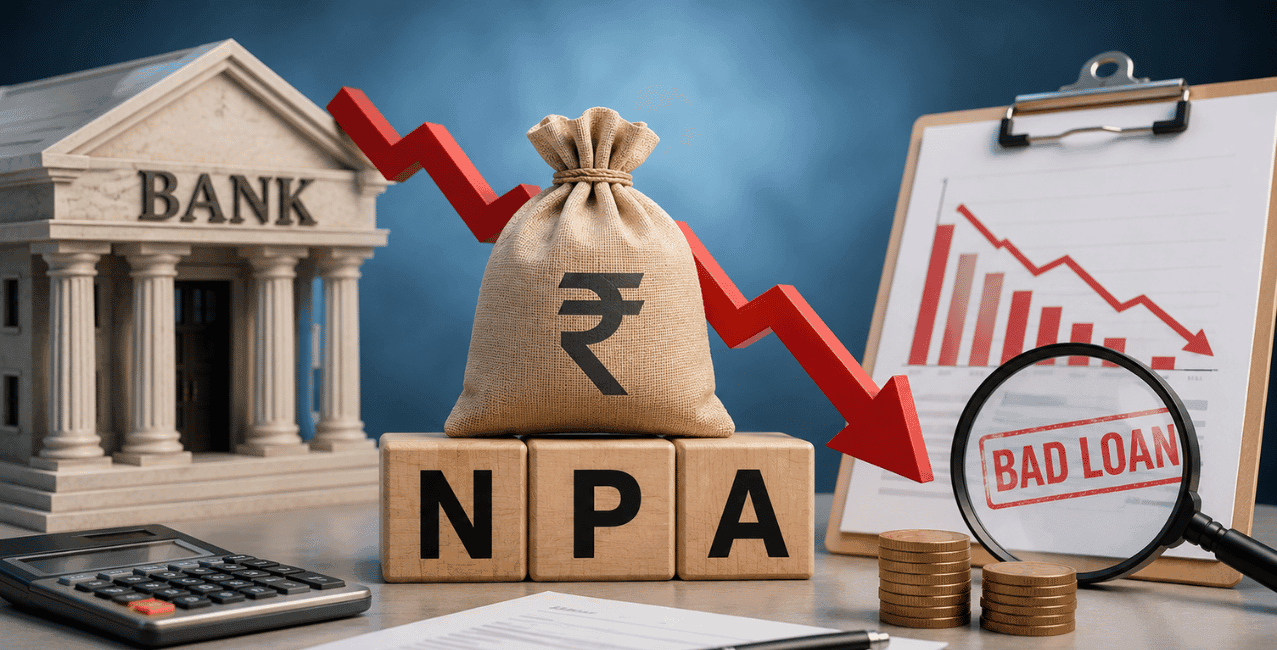
Someone becomes a loan defaulter after missing loan or credit card payments for 90 days straight. RBI files this account as a Non-Performing Asset, or NPA.
As per RBI's rules, a loan account is classified as an NPA if the interest or principal remains overdue for 90 days (3 months) or more, as confirmed in the official IRACP guidelines. Before day 90 arrives, the account already carries earlier warning tags that banks call SMA, short for Special Mention Account. It's triggered the moment the day count crosses the line.
There's a harsher label too: "wilful defaulter." This one only applies when someone has the money to pay but simply won't. Mondaq's breakdown of the RBI's Master Circular points out that banks must report all wilful default cases of ₹25,00,000 or more to the RBI quarterly, as laid out in its analysis of the framework. A borrower who fell behind because of a job loss or a hospital bill isn't in this bracket at all.
Yes, and nothing in Indian law stops a defaulter from filing a fresh loan application. What decides the answer is the lender's own risk appetite, not a rule on a statute book.
Most banks stop entertaining unsecured personal loan requests once a CIBIL score falls under 685 to 700. NBFCs and fintech lenders don't work that way. Current income and job stability tend to matter more to them than a default sitting in your history.
A few routes still work reasonably well after a default:
Anything above 700 clears most bank thresholds. Below 600, unsecured approval gets tough, though it isn't off the table entirely.
The table below sketches out how lenders broadly treat each band, though every institution sets its own bar.
Score bands are indicative. Exact cutoffs vary by lender.
Seven years. That's how long a default sits on your CIBIL report, counted from the date of the last missed payment, and repaying the amount early doesn't shorten it.
One credit report guide notes that a loan default or settlement can remain on your CIBIL report for up to seven years. A separate piece adds a detail people often get wrong: the clock starts from the date the account was first reported as defaulted, not from the missed EMI itself and not from any later settlement.
Clearing the debt changes what label sits next to the account. It doesn't erase the entry.
Gold loans, secured NBFC products, and co-applicant loans stay accessible even with a weak score. Getting an unsecured bank loan is where the real difficulty starts.
A gold loan is not much affected by your credit score, since gold itself acts as collateral for the lending risk. The gold loan regulations, according to RBI guidelines since 2025, stipulate that loans up to ₹2.5 lakh be up to 85% of gold value, loans between ₹2.5 lakh and ₹5 lakh be up to 80%, and anything beyond ₹5 lakh be 75%.
NBFCs put more weight on income stability and current repayment capacity than on old credit history. Applicants generally need to be between 21 and 58 years of age, with a minimum monthly income set by the lender's own policy.
Bringing someone with a strong track record onto the application lowers what the lender is exposed to. A guarantor with a high CIBIL score can meaningfully improve approval chances, though the guarantor's own score takes a hit if the primary borrower defaults again.
Beyond the usual paperwork, lenders want proof that your finances have moved on since the default happened.
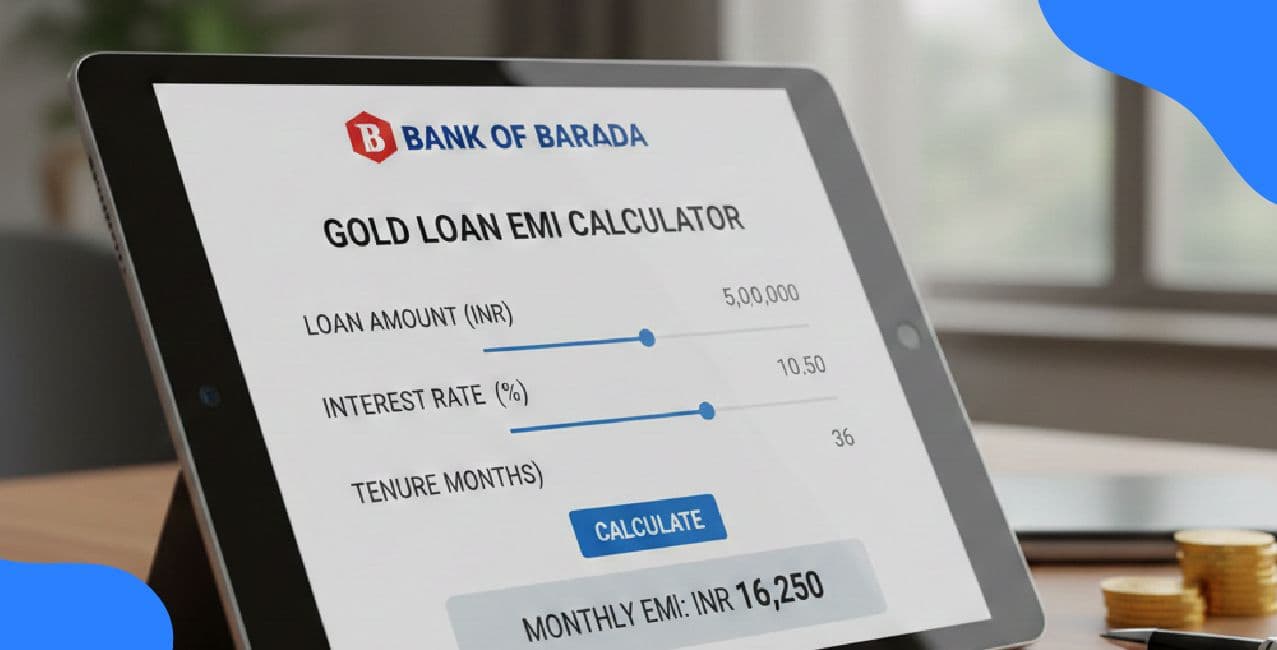
Ravi ran a small office in Mumbai. A flood damaged his workspace, so he took a ₹2,50,000 personal loan to cover repairs. Ravi's CIBIL score stood at 750 before the default, and it dropped sharply after he missed three consecutive EMIs.
When he later needed ₹5,00,000 for a fresh expense, banks turned down his unsecured loan request outright. He pledged 40 grams of gold instead. At an 80% LTV for loans in the ₹2,50,000 to ₹5,00,000 bracket, he walked away with close to ₹4,00,000, enough to cover his need without his old CIBIL score ever entering the conversation.
Expect 2 to 6 percentage points above standard rates, with the gap depending on the lender and the type of loan.
Rates vary by lender, loan tenure and applicant profile. Confirm current rates on the lender's official page before applying.
Clear the existing dues first. The score recovers slowly, but it does recover, provided you feed it a run of on-time payments.
A default closes some doors, not all of them. Indian lenders draw a real line between an ordinary defaulter and a wilful one, and only the latter group gets shut out of the system entirely. If you need money now, a gold loan or a co-applicant is the faster route. However, if you have the capability to wait, then use this period of six to twelve months to repay all your pending debts and build a new repayment record, before applying for a larger loan that is unsecured.
Frequently Asked Questions
Yes, but the majority of NBFCs and fintech companies generally provide loans to individuals with a good CIBIL score and at a higher interest rate compared to a bank.
Most of the lenders generally prefer a score of more than 650. Secured loans work even below 600.
90 days. That's when an account is formally tagged as an NPA under RBI's overdue rules.
Yes, it does. "Settled" tells a future lender you paid less than what was owed, and that record stays for 7 years, weighing against you more than "Closed - Paid" would.
Yes. Since the gold itself backs the loan, the lender cares less about your score here than it would for an unsecured product.
Seven years from the last missed payment, whether you repay it in month two or year six.
Yes. A wilful defaulter has enough money to repay the loan and does not want to pay; this term is used primarily for defaults of ₹25,00,000 and above following a committee examination.
Yes. If the credit score of the co-applicant is good, then it helps lower the risk factor for the bank, and this can lead to the loan being sanctioned.
No. The status becomes “Closed-Paid,” but the record will remain there for the entire 7 years.
Yes, provided they can show 12 months of bank statements along with proof of steady business income.