By continuing, you agree to LoansJagat's Credit Report Terms of Use, Terms and Conditions, Privacy Policy, and authorize contact via Call, SMS, Email, or WhatsApp
Disclaimer: The information published on LoansJagat is intended for general informational and educational purposes only and should not be considered financial, legal, or investment advice. Interest rates, loan terms, statistics, and other data may change over time and may vary by lender or source. Please verify the latest information and consult a qualified financial advisor or the respective Bank/NBFC before making any financial decisions.
Subscribe Now
About the author

LoansJagat Team
‘Simplify Finance for Everyone.’ This is the common goal of our team, as we try to explain any topic with relatable examples. From personal to business finance, managing EMIs to becoming debt-free, we do extensive research on each and every parameter, so you don’t have to. Scroll up and have a look at what 15+ years of experience in the BFSI sector looks like.
Related News
Simplify All Your Loans Into One Affordable EMI

Customers Served

Debt Consolidated

1200+ Reviews

Locations in India
Club all Loans & Credit Card Bills into Single EMI

Quick Apply Loan
Consolidate your debts into one easy EMI.

Takes less than 2 minutes. No paperwork.

10 Lakhs+
Trusted Customers

2000 Cr+
Loans Disbursed

4.7/5
Google Reviews

50+
Banks & NBFCs Offers
Other services mentioned in this article
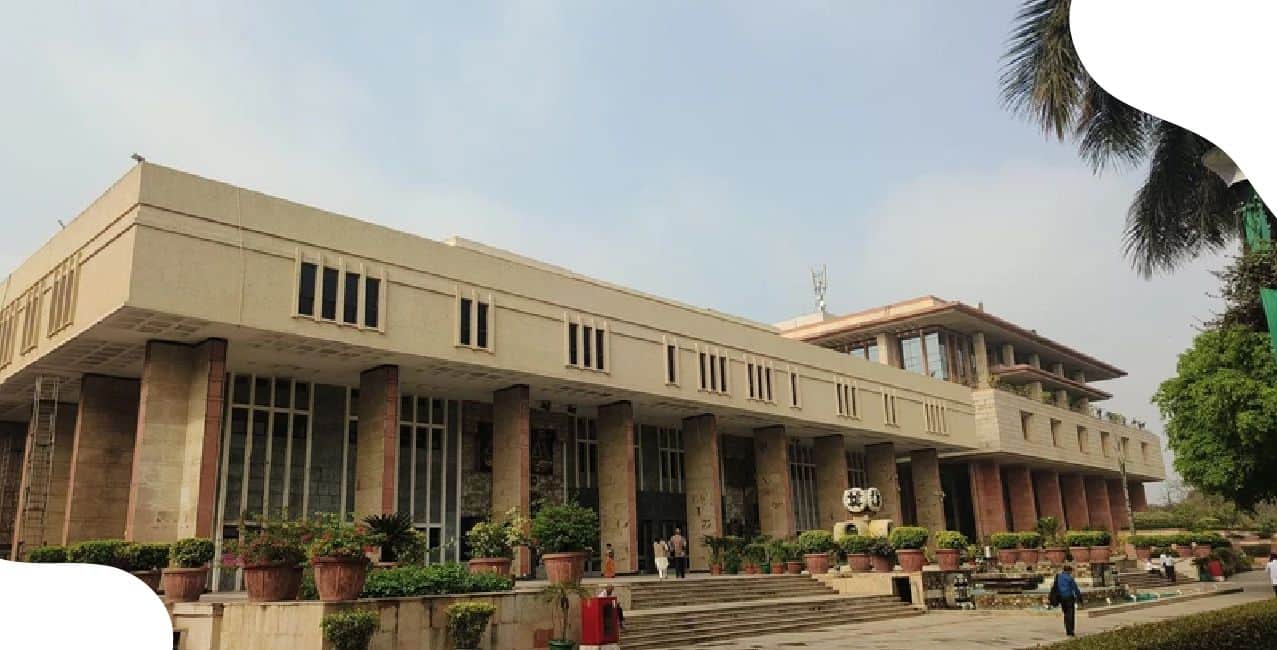
In a ruling that will have far-reaching implications for banks, borrowers and corporate lending in India, the Delhi High Court has held that the presentation of a security cheque after a loan default does not amount to criminal breach of trust under Section 409 of the IPC.
The judgment came in a dispute involving China Trust Commercial Bank and a borrower company under a ₹15 crore Working Capital Demand Loan Agreement.
The ruling is expected to discourage the growing practice of invoking criminal provisions in purely commercial recovery disputes and provide greater certainty to financial institutions in enforcing loan security mechanisms.
Justice Neena Bansal Krishna noted that for an offence under Section 409 IPC to be made out, there must be both entrustment of property and dishonest misappropriation. In this case, neither condition was satisfied. The cheque had been issued under the loan agreement itself, with a clear contractual understanding that it could be presented if the borrower defaulted.
The Court observed that at best, the borrower could argue that there was no legally enforceable liability on the date of presentation of the cheque. However, such an argument can only be taken as a defence in proceedings under Section 138 of the Negotiable Instruments Act, and not as a criminal breach of trust case. This position has also been reported in detail by LiveLaw:
The Court further recorded that the criminal complaint appeared to be a “counterblast” to the cheque dishonour case already initiated by the bank, and therefore amounted to abuse of the process of law.
The summoning order and even the non-bailable warrants issued against the bank officials were quashed.
Indian courts have consistently held that not every dishonoured cheque becomes a criminal offence. The Negotiable Instruments Act, 1881, particularly Section 138, applies only when a cheque is issued in discharge of an existing legally enforceable debt. This distinction has been explained in multiple rulings covered by LatestLaws and Verdictum.
Cheque-dishonour litigation has been a chronic burden on Indian courts. According to news reports, over 43 lakh (4.3 million) cheque bounce cases were pending in courts across India as of late 2024, with Rajasthan alone topping the list in pendency. This backlog shows how frequently negotiable instrument disputes reach the judiciary, including cases involving security cheques and repayment disputes.
In line with this, the Supreme Court had earlier observed, as reported by Economic Times, that a security cheque is not a “worthless piece of paper”, but its mere presentation does not automatically create criminal liability.
This framework has now been reinforced once again by the Delhi High Court in this important Security cheque legal case.
The ruling sends a clear message that criminal law should not be used as a pressure tactic to recover money in commercial disputes. According to industry reporting by LoansJagat, India’s loan recovery system is already under strain due to rising defaults and delays in resolution, making legal clarity on recovery tools increasingly important. In such a situation, turning routine loan disputes into criminal cases only adds to the burden on courts and businesses.
By holding that the use of a security cheque after a loan default does not amount to criminal breach of trust, the Delhi High Court has brought much-needed clarity for banks and borrowers.
By drawing a clear boundary between contractual enforcement and criminal liability, the Delhi High Court has once again reinforced that not every financial dispute belongs in a criminal courtroom. The message is simple: security cheques are a commercial safeguard, not a tool for criminal intimidation.
*T&C Apply
Related Financial News | |||
Delhi High Court Rules on Security Cheques After Loan Default | |||









.png&w=3840&q=75)



