By continuing, you agree to LoansJagat's Credit Report Terms of Use, Terms and Conditions, Privacy Policy, and authorize contact via Call, SMS, Email, or WhatsApp
Disclaimer: The information published on LoansJagat is intended for general informational and educational purposes only and should not be considered financial, legal, or investment advice. Interest rates, loan terms, statistics, and other data may change over time and may vary by lender or source. Please verify the latest information and consult a qualified financial advisor or the respective Bank/NBFC before making any financial decisions.
Subscribe Now
About the author

LoansJagat Team
‘Simplify Finance for Everyone.’ This is the common goal of our team, as we try to explain any topic with relatable examples. From personal to business finance, managing EMIs to becoming debt-free, we do extensive research on each and every parameter, so you don’t have to. Scroll up and have a look at what 15+ years of experience in the BFSI sector looks like.
Related News
Simplify All Your Loans Into One Affordable EMI

Customers Served

Debt Consolidated

1200+ Reviews

Locations in India
Club all Loans & Credit Card Bills into Single EMI

Quick Apply Loan
Consolidate your debts into one easy EMI.

Takes less than 2 minutes. No paperwork.

10 Lakhs+
Trusted Customers

2000 Cr+
Loans Disbursed

4.7/5
Google Reviews

50+
Banks & NBFCs Offers
Other services mentioned in this article
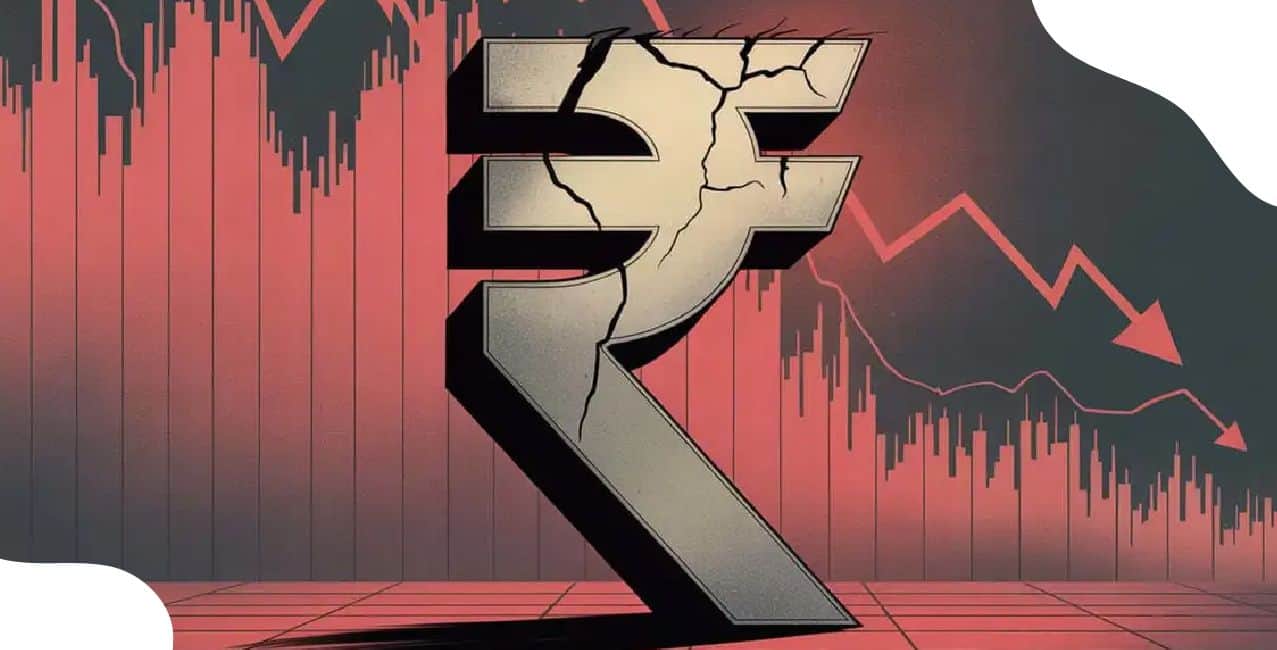
The Indian rupee slid to historic lows against the US dollar in January 2026, reflecting deepening volatility in global markets and heightened risk aversion. Investors have favoured safe‑haven assets like the US dollar as geopolitical tensions and capital flow strains weigh on emerging market currencies, particularly the rupee. With foreign investors withdrawing funds and demand for dollars rising, the currency’s weakness has intensified pressure on markets and policymakers alike.
The rupee’s descent toward roughly ₹91.3 per dollar represents one of its most pronounced slides in recent memory, adding to a nearly 5 % decline in 2025 and further depreciation in January 2026. Persistent selling of Indian equities by foreign portfolio investors (FPIs) has been a key driver, with about $3 billion pulled out of Indian stocks this month alone, compounding an already challenging backdrop of capital outflows.
Heightened global risk aversion — amplified by geopolitical uncertainties, including tensions linked to remarks about Greenland by the US President — has made investors more cautious about emerging market assets. This shift has increased demand for the US dollar over riskier currencies, leading to further depreciation of the rupee.
Domestic pressures have also played a role. Strong dollar demand from importers and hedging activity by Indian corporates has intensified downward pressure on the currency, even as India’s current‑account deficit remains relatively manageable.
Read More - India’s Rupee Nears ₹92: What’s Behind the Weakness and Why It Matters
RBI’s Response: Intervention and Strategy
Faced with these headwinds, the Reserve Bank of India (RBI) has taken a measured approach to stabilising the currency. Rather than attempting to defend a specific level, RBI interventions have aimed at reducing excess volatility through dollar sales in the forex market. Traders note that these actions are geared more toward alleviating sharp swings than reversing the broader trend.
In prior periods of stress, RBI also used FX swaps and forward interventions to add liquidity and support the rupee, suggesting a toolkit that balances market support with broader monetary stability.
This cautious posture reflects RBI’s broader view that some depreciation flows are driven by external factors — such as global risk sentiment — rather than domestic imbalances, and therefore occasional tolerance of weakening may be acceptable as long as it remains orderly.
Also Read - RBI Steps In as Rupee Weakens After Budget Reaction
Impact on Markets and Economic Sentiment
The rupee’s slide has been accompanied by volatility in the Indian stock market, with major indices extending losses amid weak investor sentiment. Equity sell‑offs have reinforced concerns about capital
*T&C Apply
A weaker rupee also affects import costs, potentially increasing the price of fuel and other dollar‑denominated goods. This can have inflationary implications, though exporters may benefit somewhat from better rupee‑equivalent returns on foreign earnings.
Analysts suggest that the rupee’s vulnerability persists as long as foreign inflows remain constrained and global risk aversion remains elevated. The absence of a definitive catalyst, such as progress on international trade agreements, has removed a potential support for capital flows, leaving the currency exposed to further swings.
While the RBI stands ready to cushion disorderly movements, the broader trend reflects deep‑seated shifts in investor preferences and external pressures. How effectively these headwinds fade — or intensify — in the coming months will be a key determinant of the rupee’s direction in 2026 and beyond.









.png&w=3840&q=75)



