By continuing, you agree to LoansJagat's Credit Report Terms of Use, Terms and Conditions, Privacy Policy, and authorize contact via Call, SMS, Email, or WhatsApp
Disclaimer: The information published on LoansJagat is intended for general informational and educational purposes only and should not be considered financial, legal, or investment advice. Interest rates, loan terms, statistics, and other data may change over time and may vary by lender or source. Please verify the latest information and consult a qualified financial advisor or the respective Bank/NBFC before making any financial decisions.
Subscribe Now
About the author

LoansJagat Team
‘Simplify Finance for Everyone.’ This is the common goal of our team, as we try to explain any topic with relatable examples. From personal to business finance, managing EMIs to becoming debt-free, we do extensive research on each and every parameter, so you don’t have to. Scroll up and have a look at what 15+ years of experience in the BFSI sector looks like.
Related Blog Post
Simplify All Your Loans Into One Affordable EMI

Customers Served

Debt Consolidated

1200+ Reviews

Locations in India
Club all Loans & Credit Card Bills into Single EMI

Quick Apply Loan
Consolidate your debts into one easy EMI.

Takes less than 2 minutes. No paperwork.

10 Lakhs+
Trusted Customers

2000 Cr+
Loans Disbursed

4.7/5
Google Reviews

50+
Banks & NBFCs Offers
Other services mentioned in this article
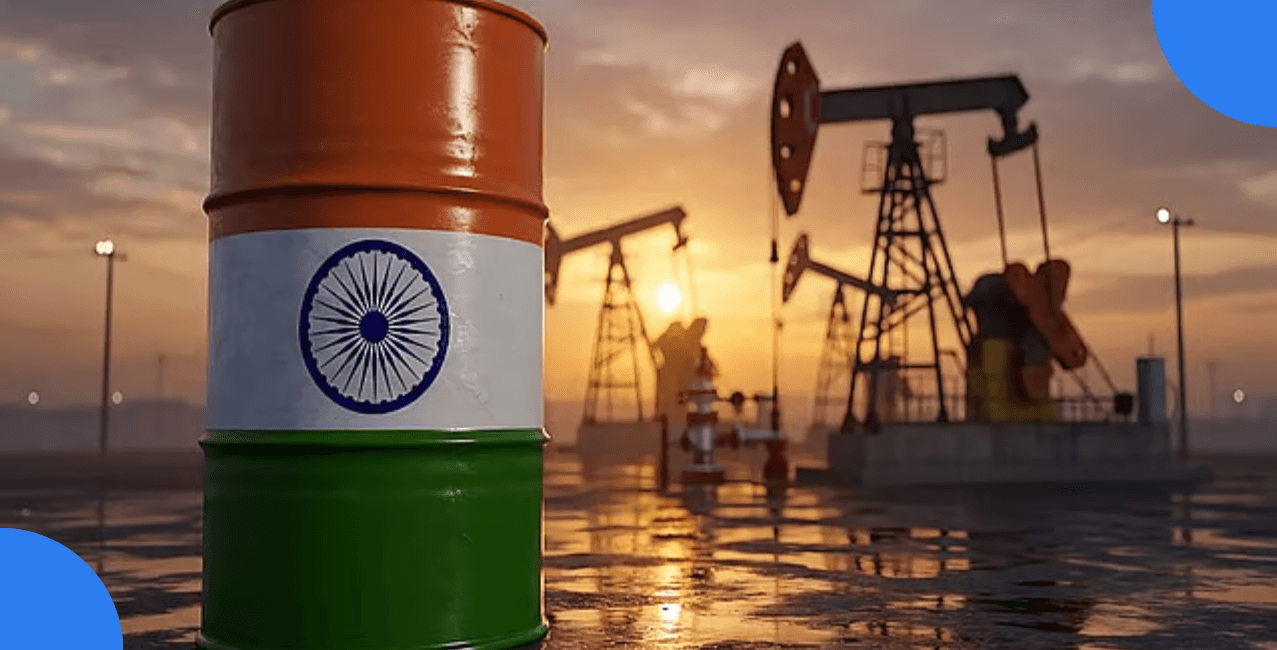
Oil prices eased after Trump’s Hormuz plan and OPEC+ output hike, giving India brief fuel relief while geopolitical risks remain active.
Key Takeaways
Global crude prices softened on May 4, 2026, after US President Donald Trump announced Project Freedom, a plan to help stranded ships pass through the Strait of Hormuz. Business Standard reported that Brent crude futures fell 6 cents, or 0.1%, to $108.11 per barrel by 0400 GMT. WTI crude was at $101.50 per barrel, down 44 cents, or 0.4%.
For India, the short-term benefit can show up through lower pressure on fuel-linked inflation, freight costs and the rupee. The risk is that any fresh disruption near Hormuz can again lift crude prices. LoansJagat reported on March 10, 2026, that if crude touches $130, petrol prices in India could rise by 13% to 14%.
Hormuz tension rises → Brent crude jumps → India’s import bill rises → rupee weakens → transport cost increases → petrol, diesel and food inflation pressure grows.
Trump’s Project Freedom and the OPEC+ quota hike have reduced some pressure for now, but India still depends heavily on imported crude and cannot ignore West Asia risks.
The Strait of Hormuz remains the biggest watchpoint. Hindustan Times reported on May 4, 2026, that Iran warned against the US mission, saying safe passage in the strait must be coordinated with Iranian armed forces.
Read More - Petrol Price Hike In India
Why Indian Consumers Should Track This Oil Fall?
Indian households may not see instant petrol or diesel price cuts. Pump prices depend on taxes, dealer commissions, refining margins and oil marketing company decisions. Still, lower crude reduces pressure on transporters, airlines, logistics firms, paint makers, tyre companies and FMCG supply chains.
This can help retail inflation if the fall stays for more than a few sessions. Expensive oil usually increases freight bills, which then feeds into vegetables, groceries and daily-use items. A softer crude market gives the government and oil companies more room to avoid sudden retail fuel hikes.
OPEC+ has also tried to add supply. The New Indian Express reported on May 4, 2026, that 7 major producers, including Saudi Arabia, Russia, Iraq, Kuwait, Kazakhstan, Algeria and Oman, will add 188,000 barrels per day to their June production quota.
DD News reported on May 4, 2026, that this is the third OPEC+ quota hike since the Hormuz closure. But it also said the increase may remain largely on paper if the Iran conflict keeps disrupting Gulf oil flows.
The practical solution for India is steady crude sourcing, larger strategic reserves and faster use of alternative supply routes. For consumers, fuel-saving habits and public transport can reduce exposure if crude spikes again.
India has received a short fuel-price breather, not a permanent shield. The next price move depends on Hormuz safety and real OPEC+ barrels reaching the market.
Why Do Petrol And Diesel Prices In India Rise Even When Global Crude Oil Is Cheaper?
*T&C Apply
Petrol and diesel prices in India do not depend only on global crude oil rates. A large part of the retail price comes from central excise duty, state VAT, dealer commission and refining costs. Even when crude becomes cheaper, governments may keep taxes high to protect revenue.
If the rupee weakens against the dollar, India’s import cost also rises. Reddit users discussed the same issue, pointing out that lower global crude benefits are often not fully passed to consumers. So, pump prices can rise despite cheaper crude oil.
Who controls petrol rates in India and why do prices differ by city?
Petrol prices in India are mainly revised by oil marketing companies such as Indian Oil, Bharat Petroleum and Hindustan Petroleum.
They follow a daily pricing system, usually updated at 6 AM, based on global crude oil prices, rupee-dollar exchange rate, refining cost, dealer commission, freight and margins. However, the final pump price also includes central excise duty and state VAT, which is why petrol rates differ from city to city. The government does not fix daily petrol prices directly, but taxes and policy decisions strongly influence what consumers finally pay.
Related Finance News | |||









.png&w=3840&q=75)



