By continuing, you agree to LoansJagat's Credit Report Terms of Use, Terms and Conditions, Privacy Policy, and authorize contact via Call, SMS, Email, or WhatsApp
Disclaimer: The information published on LoansJagat is intended for general informational and educational purposes only and should not be considered financial, legal, or investment advice. Interest rates, loan terms, statistics, and other data may change over time and may vary by lender or source. Please verify the latest information and consult a qualified financial advisor or the respective Bank/NBFC before making any financial decisions.
Subscribe Now
About the author

LoansJagat Team
‘Simplify Finance for Everyone.’ This is the common goal of our team, as we try to explain any topic with relatable examples. From personal to business finance, managing EMIs to becoming debt-free, we do extensive research on each and every parameter, so you don’t have to. Scroll up and have a look at what 15+ years of experience in the BFSI sector looks like.
Related Blog Post
Simplify All Your Loans Into One Affordable EMI

Customers Served

Debt Consolidated

1200+ Reviews

Locations in India
Club all Loans & Credit Card Bills into Single EMI

Quick Apply Loan
Consolidate your debts into one easy EMI.

Takes less than 2 minutes. No paperwork.

10 Lakhs+
Trusted Customers

2000 Cr+
Loans Disbursed

4.7/5
Google Reviews

50+
Banks & NBFCs Offers
Other services mentioned in this article
Three forces oil, offshore derivatives, and a hawkish Fed converge to push India's currency into uncharted territory
Key Insights
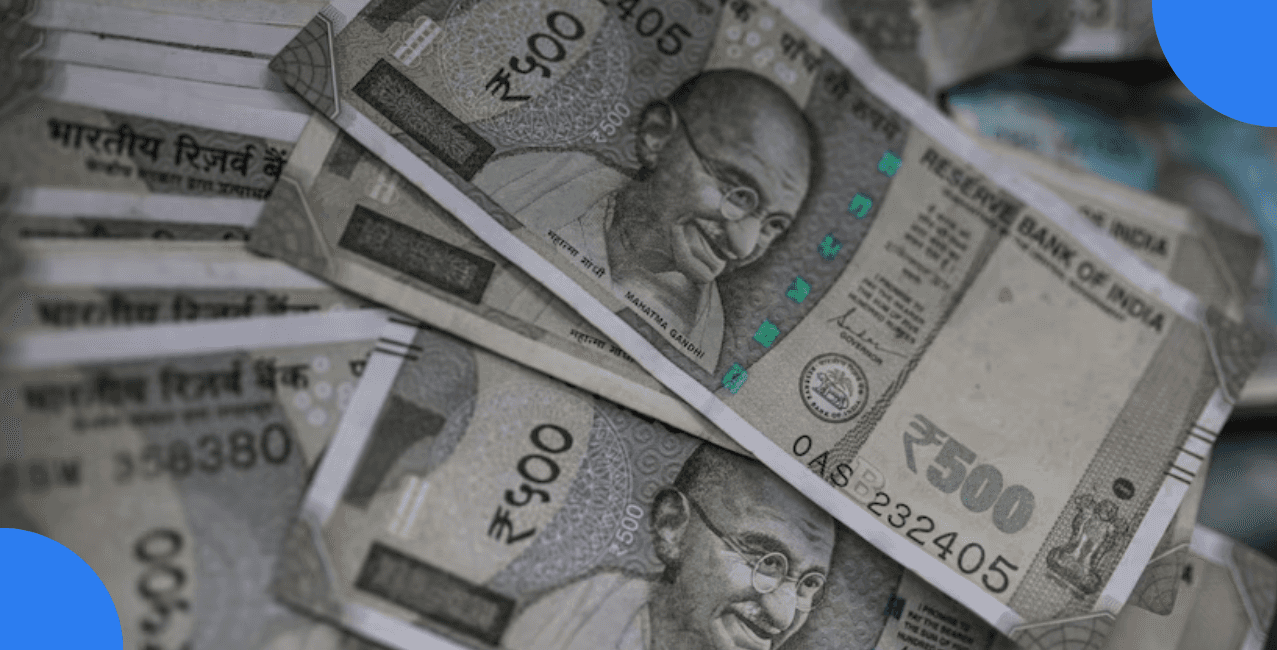
The Indian rupee opened sharply lower on Thursday, April 30, falling 34 paise to hit a fresh record low against the US dollar.
Kunal Sodhani, treasury head at Shinhan Bank, confirmed the rupee made a record closing low of 94.85, pressured by heightened crude oil prices following supply fears linked to the Strait of Hormuz conflict.
The currency was caught between three simultaneous headwinds and none are abating quickly.
Brent crude prices touched $126 a barrel on April 30, 2026, with oil having nearly doubled since the start of the year when it traded near $60.
For India, which imports 85% of its oil requirements, surging prices inflate the import bill and drive up dollar demand.
Long-term, if the Strait of Hormuz remains disrupted, currency vulnerability could deepen through FY27, widening India's trade and current account deficit materially.
The table below maps the key forces weighing on the currency and their current readings.
India has already seen record FII selling of more than $20 billion in CY2026, with April alone accounting for $7.5 billion in outflows.
The data makes the rupee's predicament starkly clear, it is fighting a multi-front battle.
For households, the rupee's slide has direct, daily consequences.
Oil marketing companies have been absorbing high crude prices so far, but should prices be increased, many things from transport to crude-linked raw materials will become expensive, impacting consumption as companies pass on higher costs.
A weaker rupee amplifies this further every dollar of oil India buys now costs significantly more in rupee terms.
Retail investors holding mutual funds with overseas exposure also face quiet erosion.
Market participants note the currency is caught in a feedback loop rising oil drives dollar demand from importers, while persistent FII selling amplifies capital outflows.
That said, exporters in IT and pharmaceuticals are quietly benefiting from rupee depreciation, receiving higher rupee revenues on their dollar-denominated earnings.
Experts are clear-eyed about the RBI's limited firepower. “Reserves are being deployed to slow the move, not to reverse it.
As long as the underlying drivers Brent above $115 and FII selling remain in place, the path of least resistance for USDINR is higher," one analyst noted.
New record close
*T&C Apply
Anindya Banerjee of Kotak Securities flagged 96–97 as the next levels to watch, saying a sustained break above 96 opens a path to 97 if Brent breaches $125 and the Hormuz situation deteriorates.
Dilip Parmar of HDFC Securities believes the RBI is not finished with interventions and is likely to introduce more impactful measures in coming days.
For the full FY27, CAREEdge Ratings projects India's merchandise trade deficit could widen to $422 billion, notably higher than recent years, should crude remain elevated.
Accelerating domestic import substitution and diversifying India's energy mix remain the only durable structural solutions.
The rupee's record close reflects deeper structural vulnerabilities oil dependence, FPI sensitivity, and global rate dynamics that no single intervention can resolve. Until crude cools and geopolitical tensions ease, India's currency will remain under sustained, uncomfortable pressure.
INR hitting record lows! short-term panic or macro reality?
The Indian Rupee (INR) hitting record lows near ₹95 against the US Dollar (USD) in early 2026 is driven by macroeconomic realities rather than mere panic, primarily fueled by soaring crude oil prices (>\(\$100\)/barrel), sustained foreign portfolio investor (FPI) outflows, and a strong USD.
What happens if the Indian rupee falls?
A falling Indian rupee (depreciation) makes imports costlier, particularly crude oil, electronics, and machinery, leading to higher import-driven inflation and higher consumer prices.
Related Finance News | |||









.png&w=3840&q=75)



