.png&w=3840&q=65)
By continuing, you agree to LoansJagat's Credit Report Terms of Use, Terms and Conditions, Privacy Policy, and authorize contact via Call, SMS, Email, or WhatsApp
The information published on LoansJagat is intended for general informational and educational purposes only and should not be considered financial, legal, or investment advice. Interest rates, loan terms, statistics, and other data may change over time and may vary by lender or source. Please verify the latest information and consult a qualified financial advisor or the respective Bank/NBFC before making any financial decisions.
Subscribe Now
About the author

LoansJagat Team
‘Simplify Finance for Everyone.’ This is the common goal of our team, as we try to explain any topic with relatable examples. From personal to business finance, managing EMIs to becoming debt-free, we do extensive research on each and every parameter, so you don’t have to. Scroll up and have a look at what 15+ years of experience in the BFSI sector looks like.
Related Blog Post
Simplify All Your Loans Into One Affordable EMI

Customers Served

Debt Consolidated

1200+ Reviews

Locations in India
Club all Loans & Credit Card Bills into Single EMI

Quick Apply Loan
Consolidate your debts into one easy EMI.

Takes less than 2 minutes. No paperwork.

10 Lakhs+
Trusted Customers

2000 Cr+
Loans Disbursed

4.7/5
Google Reviews

50+
Banks & NBFCs Offers
Other services mentioned in this article
India’s farm credit flagship, the Kisan Credit Card, is set for a reset. Draft directions propose longer tenure, standard crop cycles, and easier access. Comments close on March 06.
A fresh consultation is underway to update the Kisan Credit Card (KCC) framework, with feedback invited till March 06, 2026. Multiple reports say the draft aims to make KCC limits track cultivation costs better, bring uniformity in repayment timelines, and widen the list of eligible expenses.
The key proposals being tracked include a 6-year product structure, crop cycles standardised to 12 months and 18 months, and support for tech-linked spends such as soil testing and weather inputs.
KCC is widely used, yet farmers and lenders often flag two gaps: limits that lag input inflation and repayment schedules that do not match real crop durations. The draft changes being discussed attempt to tackle both.

Coverage also points to a push towards broader inclusion, especially for small and marginal farmers, through simpler access conditions and flexible ticket sizes for very small holdings. The consultation window is short, and banks, farmer groups, and the public have till March 06, 2026 to send suggestions.
Read More : Farmer Seeking A Loan Without Security
Inside The Draft: 6-Year Tenure, Standard Crop Cycles, Higher Limit Logic
The headline proposal is a longer runway for borrowers. The Economic Times Reports say KCC validity could move to a 6-year structure, which may reduce frequent renewals for long-duration crops and allied activities.
Crop seasons are proposed to be standardised by duration: 12 months for short-duration crops and 18 months for long-duration crops. This is expected to help lenders map sanction and repayment schedules more consistently across regions.
Another key change is how the drawing limit is determined. The draft is being described as linking KCC limits to crop-wise Scale of Finance, so the cap reflects realistic cultivation costs. Reports also highlight add-on components, including 10% for post-harvest and consumption needs and 20% for repairs, maintenance, and technology support. (TaxGuru)
Before the deeper implications, here is a clean snapshot of what is being proposed.
This redesign is also being positioned as a nudge towards modern farming spends. Public broadcaster coverage notes that eligible components include agri-tech spends such as soil testing, weather forecasting, and organic certification.
The current draft did not appear overnight. Business dailies reported the consultation on February 12, 2026, when draft directions were put out and feedback was sought till March 06, 2026. Key ideas reported then were the standard crop durations and the 6-year tenure proposal, along with changes to align limits with cultivation costs.
In the days after, explainers across outlets added detail on the borrower-facing thresholds. News On AIR reported a waiver of collateral and margin requirements up to ₹2,00,000 per borrower for agricultural and allied loans. It also reported a flexible credit limit of ₹10,000 to ₹50,000 for marginal farmers holding up to 1 hectare.
Tax and banking explainers further outlined the structure of the drawing limit and add-ons, including 10% for post-harvest and consumption needs and 20% for maintenance and technology support, with a focus on scale-of-finance-based sizing.
Here is the set of hard numbers most frequently cited so far.
*T&C Apply
10% post-harvest, 20% repairs and tech
A separate but related push is the broader digitisation of farm credit flows. State-level reporting from Uttar Pradesh cited faster e-KCC processing, signalling the direction many states and banks want to take as back-end systems improve.
Also Read : RBI Revises Kisan Credit Card Draft Norms For Wider Farm Loan Access
Banks, States, Borrowers React To Proposed KCC Changes
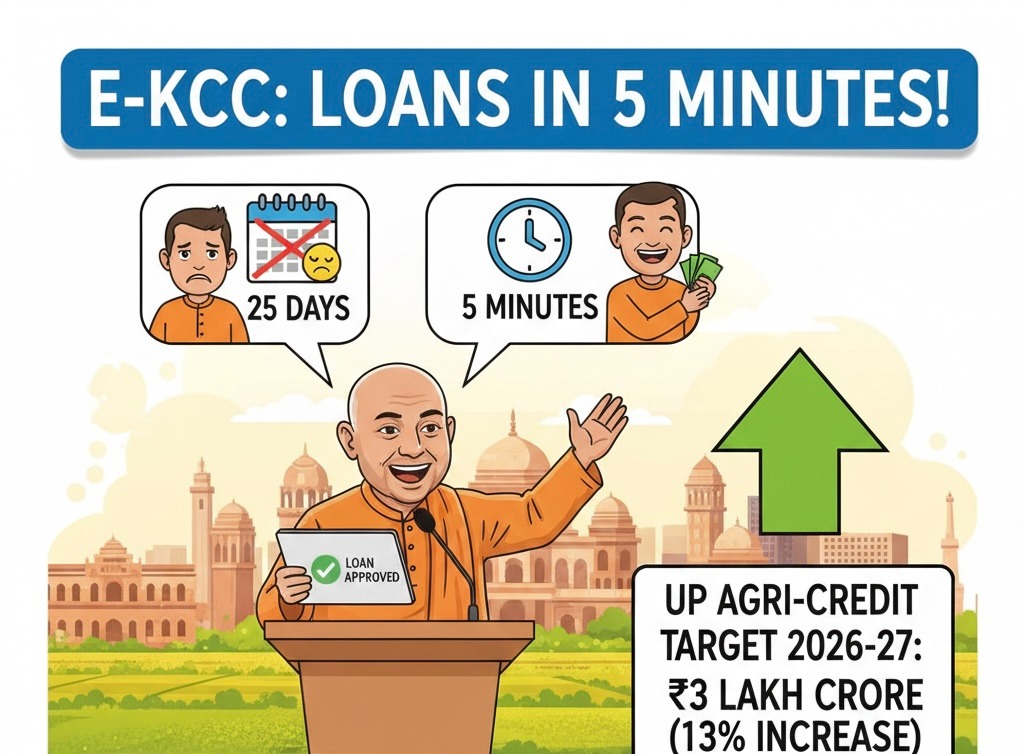
At a State Credit Seminar in Lucknow, Uttar Pradesh Chief Minister Yogi Adityanath said farmers can now avail loans within 5 minutes through e-KCC and added, “Earlier, farmers waited 25 days to a month for loans.”
He also flagged the state’s agricultural credit target of ₹3 lakh crore for 2026-27, a 13% increase over the previous year.
Borrower-side expectations, as summarised in a LoansJagat explainer dated February 19, 2026, focus on longer tenure and easier access for smaller-ticket credit.
The draft KCC revamp is now a tight, time-bound consultation with a clear end date of March 06, 2026. The final version will decide how much flexibility farmers and lenders actually get in 2026-27.
Related Financial News | |||
How RBI’s Repo Rate Decision Affects Borrowers and Depositors | |||









.png&w=3840&q=75)



