By continuing, you agree to LoansJagat's Credit Report Terms of Use, Terms and Conditions, Privacy Policy, and authorize contact via Call, SMS, Email, or WhatsApp
Disclaimer: The information published on LoansJagat is intended for general informational and educational purposes only and should not be considered financial, legal, or investment advice. Interest rates, loan terms, statistics, and other data may change over time and may vary by lender or source. Please verify the latest information and consult a qualified financial advisor or the respective Bank/NBFC before making any financial decisions.
Subscribe Now
About the author

LoansJagat Team
‘Simplify Finance for Everyone.’ This is the common goal of our team, as we try to explain any topic with relatable examples. From personal to business finance, managing EMIs to becoming debt-free, we do extensive research on each and every parameter, so you don’t have to. Scroll up and have a look at what 15+ years of experience in the BFSI sector looks like.
Related News
Simplify All Your Loans Into One Affordable EMI

Customers Served

Debt Consolidated

1200+ Reviews

Locations in India
Club all Loans & Credit Card Bills into Single EMI

Quick Apply Loan
Consolidate your debts into one easy EMI.

Takes less than 2 minutes. No paperwork.

10 Lakhs+
Trusted Customers

2000 Cr+
Loans Disbursed

4.7/5
Google Reviews

50+
Banks & NBFCs Offers
Other services mentioned in this article
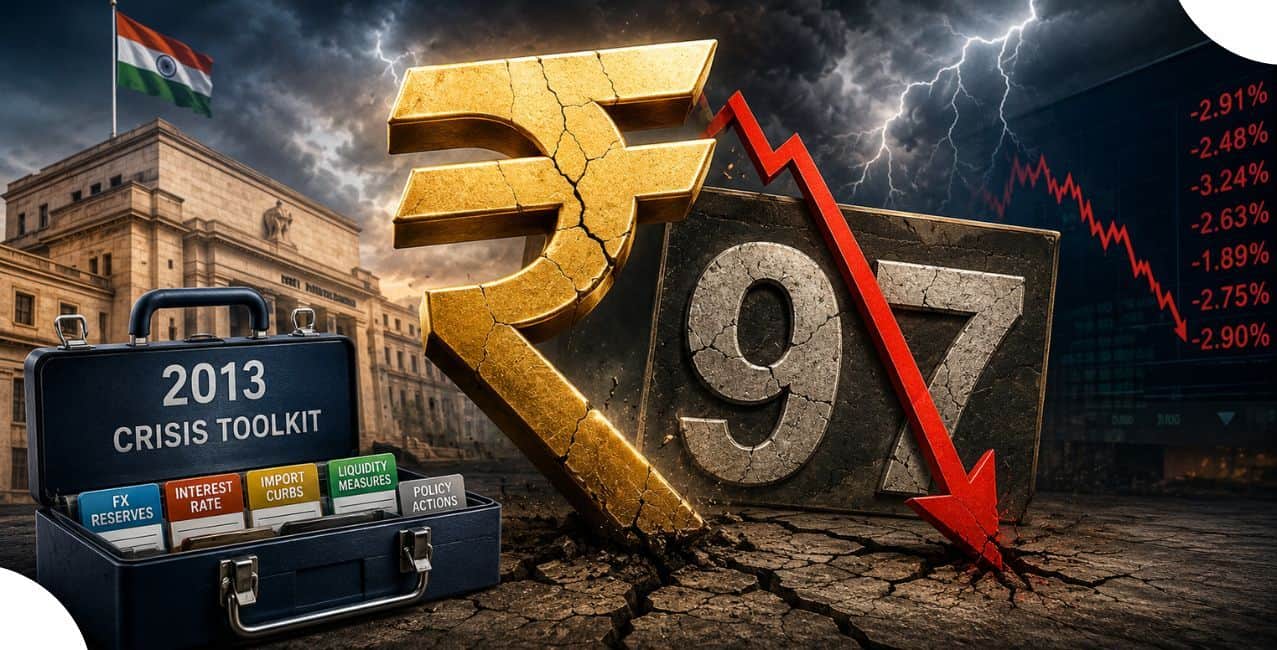
India’s rupee crash near 97 per dollar has pushed policymakers towards old crisis tools as oil, outflows and import bills hit pressure points.
Key Takeaways
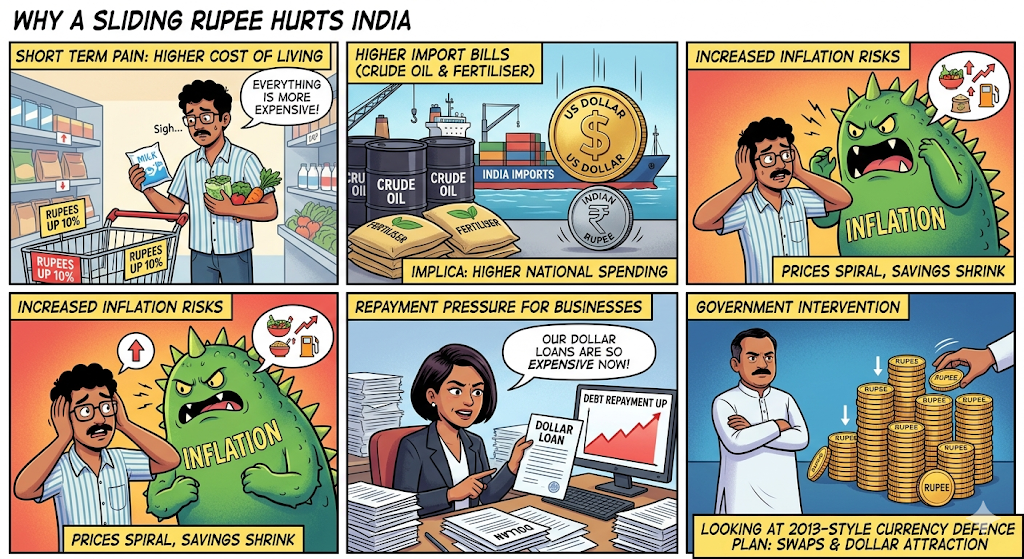
The rupee has slipped close to 97 against the US dollar, and that is not good news for people who deal with imports, loans or foreign payments. Moneycontrol, quoting Bloomberg, said on
For now, this can make petrol, diesel, fertilisers, gadgets and foreign trips more expensive. If the rupee stays weak for a long time, India’s import bill can go up, inflation can become a bigger problem, and companies that borrowed in dollars may have to pay more.
The Indian rupee has fallen to a record-low zone near 97 against the US dollar, raising fresh concern for importers, banks and households. Moneycontrol, citing Bloomberg, reported on 22 May 2026 that India is looking at a 2013-style currency defence plan, including swaps and steps to attract overseas dollars.
In the short term, a weak rupee can make crude oil, fertilisers, electronics and foreign travel costlier. In the long term, it can widen the current account gap, push inflation risk and increase repayment pressure for companies with dollar loans.
Reuters reported that the rupee strengthened to 95.8650 per dollar on 22 May 2026, after intervention-backed dollar selling.
Still, oil above $100 per barrel remains a major risk because India depends heavily on imported crude.
For ordinary Indians, a falling rupee can show up through higher petrol, diesel and transport-linked prices. Imported goods can become costlier, while students paying overseas fees may need more rupees for the same dollar amount.
Borrowers may also track rate pressure closely if inflation climbs. Platforms such as LoansJagat connect users with loan offers from 50+ RBI-regulated banks and NBFCs, useful for comparing options when EMIs and refinancing costs become important.
But this benefit reduces if imported inputs become costlier.
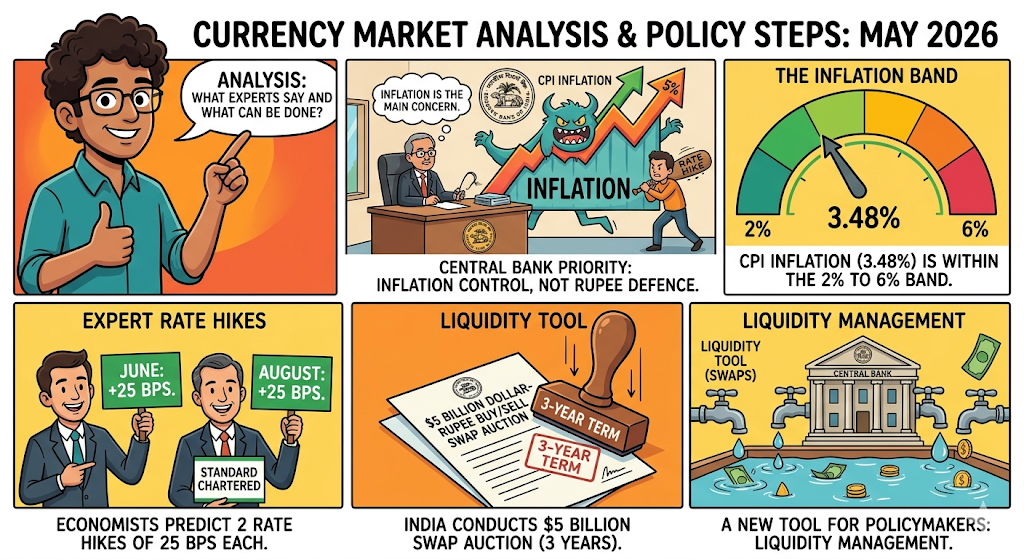
Reuters reported on 22 May 2026 that the central bank is not keen to raise rates only to defend the rupee, as inflation remains the bigger policy focus. CPI inflation was 3.48% in April, while inflation was seen moving towards 5%, still inside the 2% to 6% band.
Standard Chartered economists expect 2 rate hikes of 25 basis points each in June and August if inflation risks continue. Reuters also reported that India will conduct a $5 billion dollar-rupee buy/sell swap auction for 3 years on 26 May 2026, giving policymakers another liquidity tool.
India’s rupee battle is now moving beyond routine dollar sales.
If oil stays high, the 2013-style toolkit may return faster than markets expected.
Why does India worry when the rupee falls against the dollar?
When the rupee falls, India pays more for things bought from other countries. Crude oil is the biggest example. Costlier oil can push up petrol, diesel, transport and food prices. Imported phones, laptops and machines may also become expensive.
Families sending money for foreign education or travel also need more rupees. Exporters can gain because they earn in dollars and get more rupees after conversion. IT firms, pharma companies and textile exporters may benefit. Still, for India, a sharp fall in the rupee usually hurts more because the country buys a lot of oil from abroad.
Why has the Indian rupee dropped so badly against the US dollar?
The Indian rupee fell sharply because crude oil became expensive and demand for dollars went up. India buys around 90% of its oil from other countries, so every rise in crude prices puts pressure on the rupee. Reuters reported on 20 May 2026 that the rupee touched 96.96 per dollar. It had also fallen more than 6% after the Iran conflict started.
Foreign investors were careful because of high US bond yields and global tension. The rupee later improved to 95.8650 per dollarafter the central bank sold dollars in the market.










.png&w=3840&q=75)


