Check AI Loan Optimisation Plans to Reduce Your EMI

Disclaimer: The information published on LoansJagat is intended for general informational and educational purposes only and should not be considered financial, legal, or investment advice. Interest rates, loan terms, statistics, and other data may change over time and may vary by lender or source. Please verify the latest information and consult a qualified financial advisor or the respective Bank/NBFC before making any financial decisions.
Subscribe Now
About the author

Anishka Bhadly is a content writer with a finance and business background. She has completed her bachelor's degree with a specialisation in finance and is currently pursuing an MBA in the finance field too. The knowledge she has gained from her studies and experience working with EdTech companies helped her combine theoretical knowledge with practical industry insight. Her expertise lies in creating well-researched, informative, and reader-friendly content in various banking, personal finance, loans, insurance, and investment-related topics.
Related Blog Post

Pay Less EMI Every Month

1Cr+
Loans analysed by our AI

50Lacs+
Customers served

10,000+
Pincodes served

₹1,000Cr+
EMI savings delivered

1,400+ Google reviews

Quick Apply Loan
Consolidate your debts into one easy EMI.

Takes less than 2 minutes. No paperwork.

10 Lakhs+
Trusted Customers

2000 Cr+
Loans Disbursed

4.7/5
Google Reviews

50+
Banks & NBFCs Offers
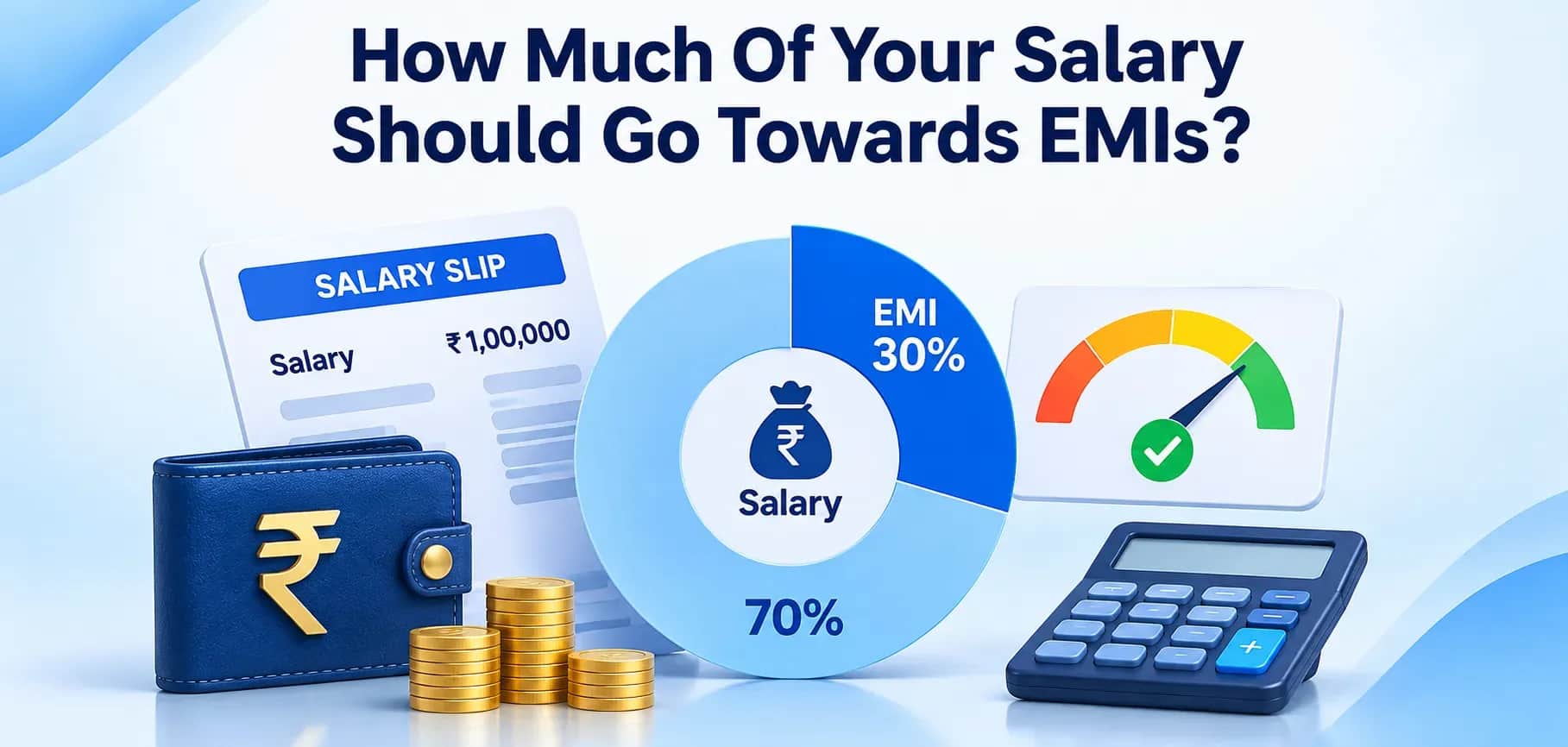
Your monthly EMIs should leave enough room for household expenses, savings and unexpected financial needs. As a practical budgeting guideline, try to keep your total monthly EMIs within 30% of your monthly take-home salary to maintain enough room for essential expenses, savings and other financial commitments. However, the right amount depends on your income, existing loans, regular expenses and savings. A higher EMI commitment may leave you with less financial flexibility, even if you pay every instalment on time. Therefore, it is important to assess your overall financial position before taking another loan.
Key Takeaway:
Keep your total monthly EMIs within 30% of your monthly take-home salary to maintain a manageable repayment burden and leave enough room for regular expenses and savings. This can help you manage loan repayments without putting too much pressure on your monthly budget.
You should also understand the difference between what a lender allows you to borrow and what you can comfortably repay. A loan amount that meets the lender's eligibility criteria may still put pressure on your monthly finances.
You can calculate your EMI-to-income ratio using a simple formula:
EMI Ratio = Total Monthly EMIs/ Monthly Take - Home Salary x 100
Here, total monthly EMIs include repayments towards all your active loans, such as personal loans, home loans, car loans and other instalment-based borrowings.
Example:
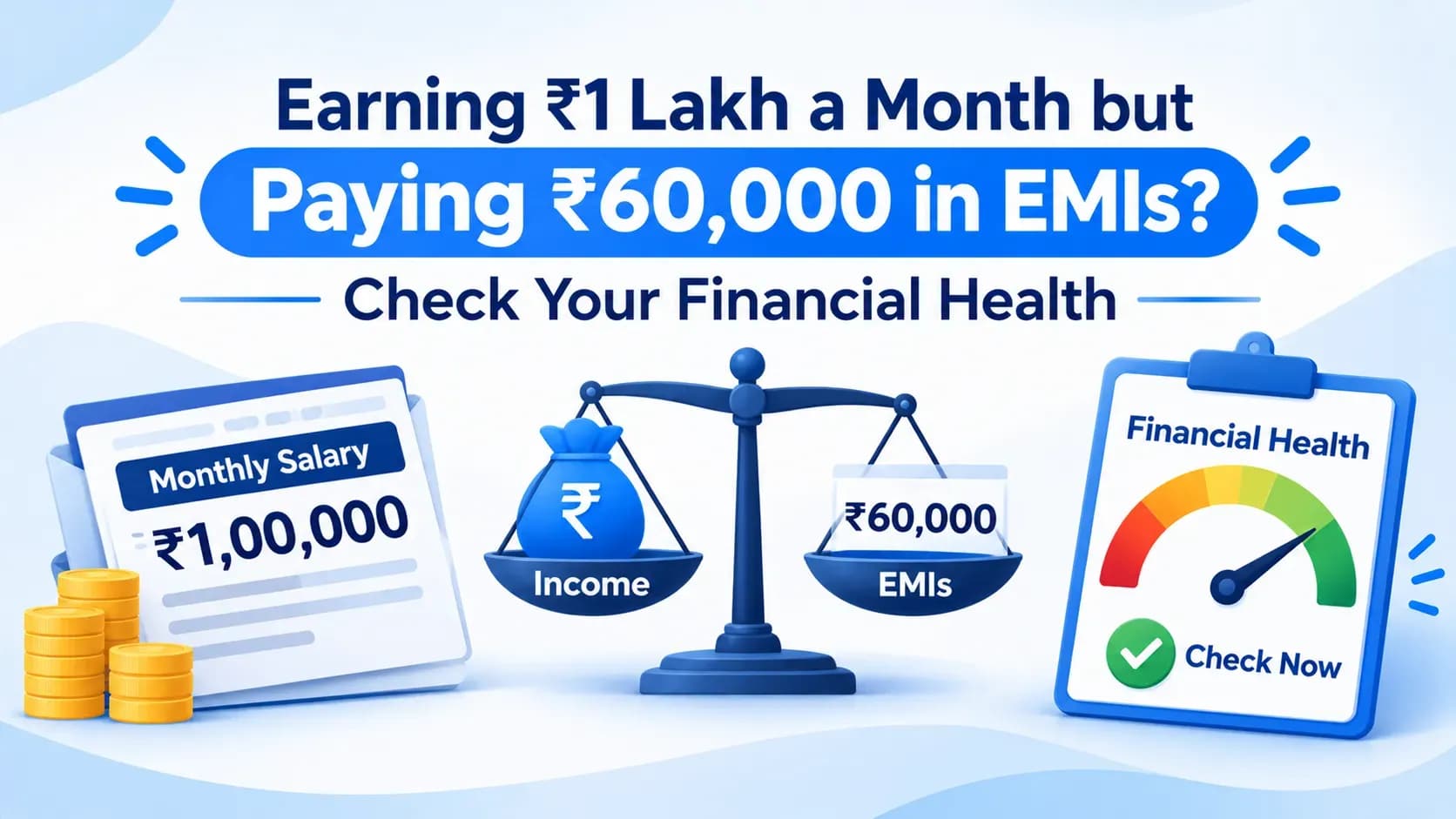
Suppose your monthly take-home salary is ₹80,000, and you pay ₹28,000 towards different loan EMIs.
EMI-to-Income Ratio: (₹28000 ÷ ₹80000) x 100
EMI-to-Income Ratio: 35%
This means 35% of your monthly salary goes towards loan repayments. You have ₹52,000 left to manage household expenses, savings, and other financial commitments.
The calculation gives you a starting point to understand your loan burden. You should also consider how much money remains after meeting your essential expenses.
High EMI commitments can affect your monthly financial flexibility. Even when you make every payment on time, a large repayment burden may leave you with limited money for other needs.
Here are some common concerns:
Therefore, timely EMI payments alone do not necessarily indicate that your finances are comfortable. You should also assess your savings and the money available after meeting your monthly obligations.
Your salary is only one part of the calculation. Consider these factors before deciding how much you can comfortably spend on loan repayments.
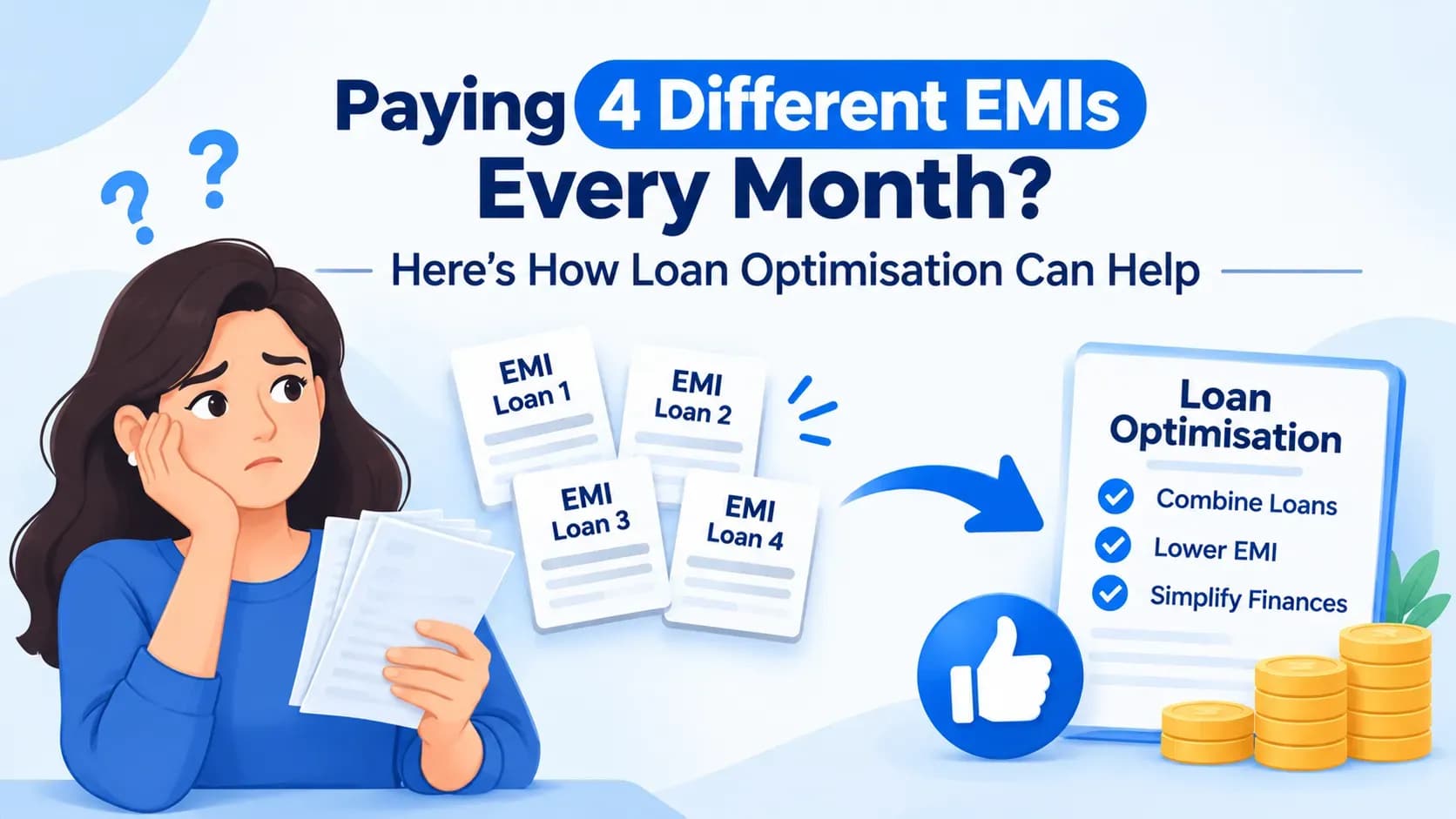
If your existing EMIs take up a large part of your salary, review your current repayment arrangements before considering another loan. Here are some steps you can consider:
The right approach depends on your financial profile. Refinancing or consolidation may not always be suitable, particularly if the new arrangement increases the total borrowing cost.
Your credit score may reflect your repayment history, but it does not show how comfortably you manage your monthly EMIs. You may have a good credit history and still have several active loans, limited savings and little money left after repayments.
Financial Peace Score by LoansJagat offers a broader assessment of your financial wellness. It uses an assessment to calculate a score between 0 and 100, considering four important areas:
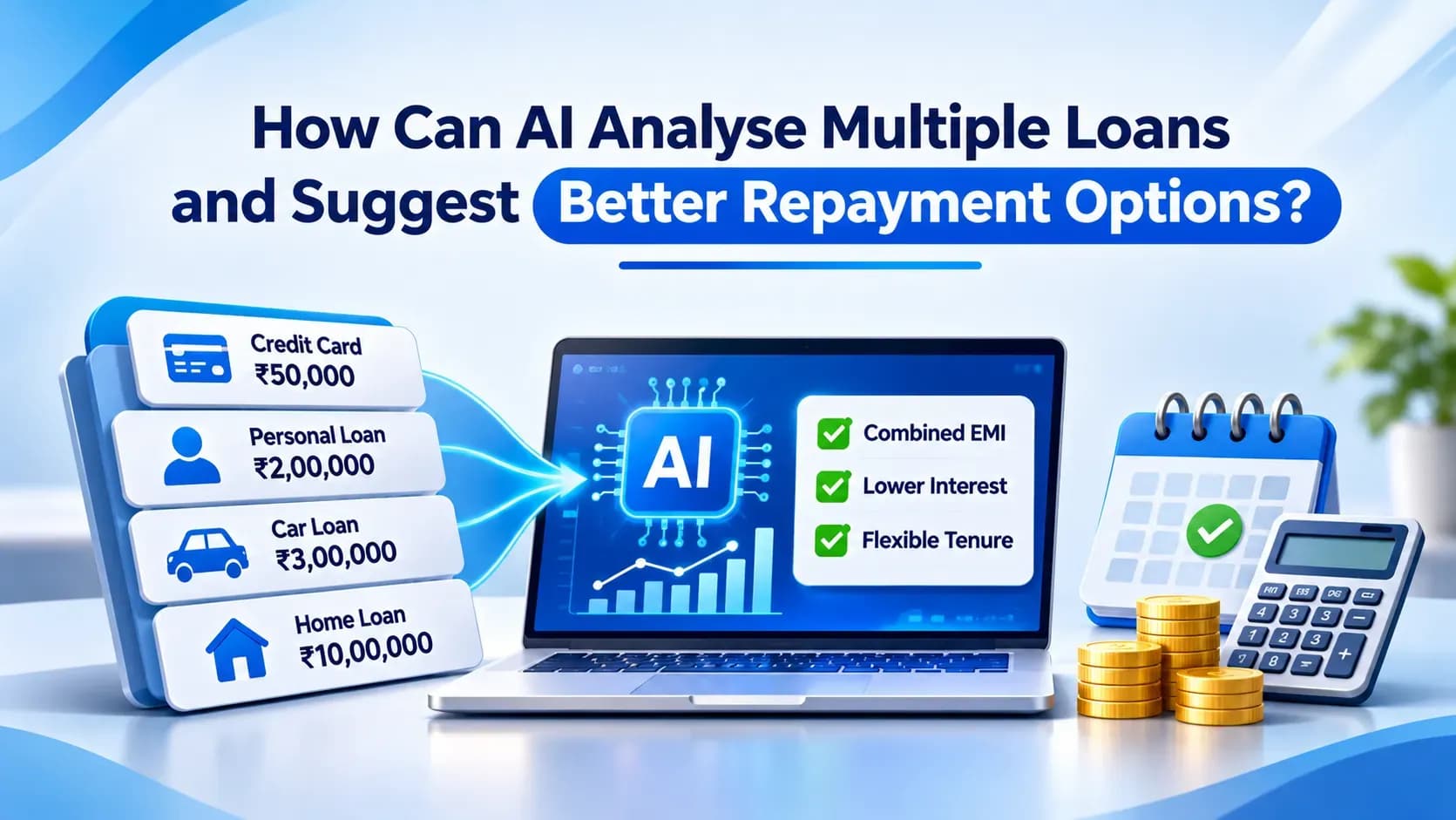
Based on your financial profile, the assessment provides personalised loan optimisation plans. These may include loan consolidation, refinancing or other suitable options.
You can use this assessment to understand your current financial position and identify areas that may need attention. LoansJagat also enables borrowers to compare options from 50+ banks and NBFCs, subject to eligibility and lender terms.
Check your Financial Peace Score with LoansJagat to understand your EMI burden and explore suitable ways to manage your existing loan commitments.
Aim to keep your total monthly EMIs below 30% of your take-home salary to maintain a manageable debt burden and leave enough room for regular expenses, savings and financial goals. However, your financial comfort also depends on regular expenses, savings and existing commitments. Review these factors before taking another loan. Financial Peace Score by LoansJagat can offer a broader view of your financial position and help you explore suitable loan optimisation opportunities.
It may leave limited room for household expenses and savings. Whether it is manageable depends on your income, essential expenses and financial responsibilities.
Use your monthly take-home salary for personal budgeting. It reflects the amount available after statutory deductions.
Yes, you should account for regular credit card repayment obligations when reviewing your monthly debt commitments, even if they are not structured as conventional EMIs.
You can check your eligibility, but approval depends on the lender's policies and your financial profile. Consider your remaining income and repayment capacity before applying.
Fixed Obligation to Income Ratio (FOIR) measures your existing monthly debt obligations against your income. Lenders may use it to assess your repayment capacity.
A good credit score reflects your credit history and repayment behaviour. It does not necessarily indicate that you have enough disposable income for additional EMIs.
You can review refinancing, loan consolidation or restructuring options, depending on your eligibility and lender policies. Compare the overall repayment cost before choosing an option.
Not necessarily, maintain a suitable emergency fund while managing your loan repayments. Avoid using all your savings for loan prepayments.
Review it whenever your income, expenses or loan commitments change. A periodic review can help you identify increasing repayment pressure.
Financial Peace Score by LoansJagat assesses your loan obligations, credit habits and savings. Based on your profile, it may suggest suitable optimisation options, such as consolidation or refinancing.
Start your journey today
Apply Now*T&C apply