Check AI Loan Optimisation Plans to Reduce Your EMI

Disclaimer: The information published on LoansJagat is intended for general informational and educational purposes only and should not be considered financial, legal, or investment advice. Interest rates, loan terms, statistics, and other data may change over time and may vary by lender or source. Please verify the latest information and consult a qualified financial advisor or the respective Bank/NBFC before making any financial decisions.
Subscribe Now
About the author

Diwaker Sharma is a finance content specialist with expertise in banking, personal finance, credit cards, loans, fintech, and financial news. An MBA in Finance with prior experience in the banking sector, he combines industry knowledge with SEO and content strategy to produce insightful, research-backed articles. Passionate about making finance accessible, he transforms complex financial concepts into clear, engaging content that empowers readers to make smarter financial decisions with confidence.
Related Blog Post

Pay Less EMI Every Month

1Cr+
Loans analysed by our AI

50Lacs+
Customers served

10,000+
Pincodes served

₹1,000Cr+
EMI savings delivered

1,400+ Google reviews

Quick Apply Loan
Consolidate your debts into one easy EMI.

Takes less than 2 minutes. No paperwork.

10 Lakhs+
Trusted Customers

2000 Cr+
Loans Disbursed

4.7/5
Google Reviews

50+
Banks & NBFCs Offers
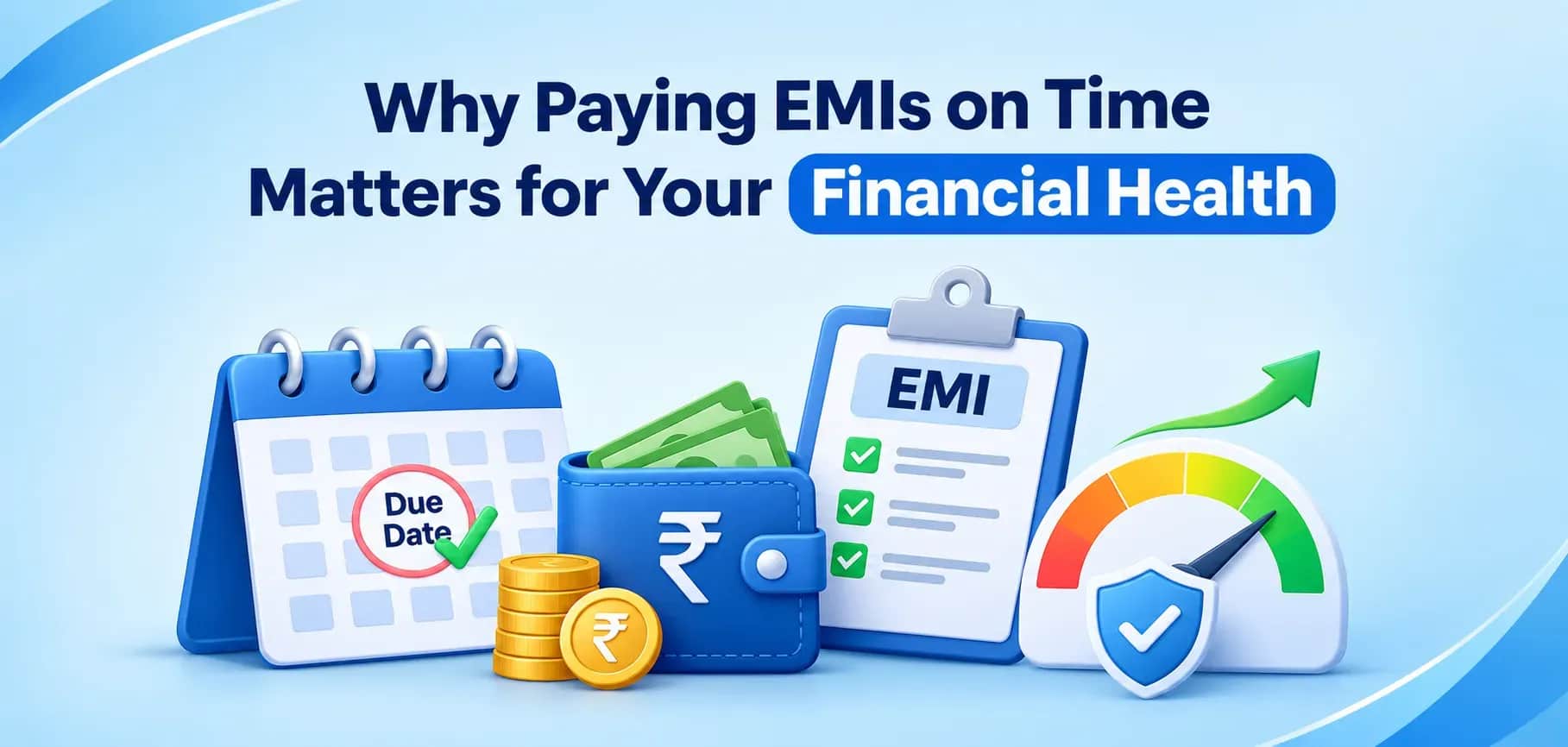
Have you ever paid an EMI a few days late and assumed it would not matter? Even a short delay can leave a mark on your credit report. Your EMI repayment history is the month-by-month record of whether you paid your loan instalments on time. TransUnion CIBIL treats payment history as a key factor in your CIBIL score. Late or missed EMIs can lower your score, attract penal charges and make future loans harder to get. Paying every EMI on time protects your credit profile, your cash flow and your long-term financial health.
Key Takeaways

EMI repayment history is the record of how consistently you have paid your loan and credit card dues over time.
Lenders share this information with credit bureaus every month. The Accounts section of your CIBIL Report shows your repayment history for up to the past 36 months. Lenders often review repayment consistency through markers such as Days Past Due (DPD) and account status.
Your EMI repayment history covers several types of credit:
Your EMI repayment history is recorded as a Days Past Due (DPD) value for each account, for every month.
The DPD shows how many days a payment on that account was late in a given month. Any value other than “000” or “STD” is considered negative by the lender.
The table below shows how DPD entries generally read in your report:
Each month’s entry adds to your record. A long run of “000” entries builds a strong EMI repayment history over time.
When you miss an EMI, your loan becomes overdue, and the lender begins tracking how many days it stays unpaid.
The Reserve Bank of India has set clear categories for overdue loan accounts. These are known as Special Mention Account (SMA) categories, and they act as early warning stages.
The table below shows how a term loan is classified as overdue days increase:
For NBFCs, the RBI notes that the 90-day reference may be read as per the applicable norms. Once a loan becomes an NPA, getting fresh credit can become much harder.
A missed EMI can also lead to the following:
Your EMI repayment history directly affects your credit score because payment history is one of its main inputs.
Late payments or defaulting on your EMIs negatively affect your score. Missing even one payment can hurt your credit profile. Overdue payments can stay on your report for many years.
A strong or weak repayment record can change your borrowing options in these ways:
CIBIL adds that the impact of old overdue payments reduces over time as you build newer positive records. This means steady, on-time payments can gradually repair a weak history.
Timely EMIs also protect your monthly budget, savings and peace of mind.
Missed EMIs often create a chain of costs. Penalty charges, bounce fees and pending dues add to what you owe the following month. This can push you to borrow again just to stay current.
The table below compares the effect of timely and delayed EMIs on your finances:
The difference grows over months, not just days. A single missed EMI can affect your finances well after you clear it.
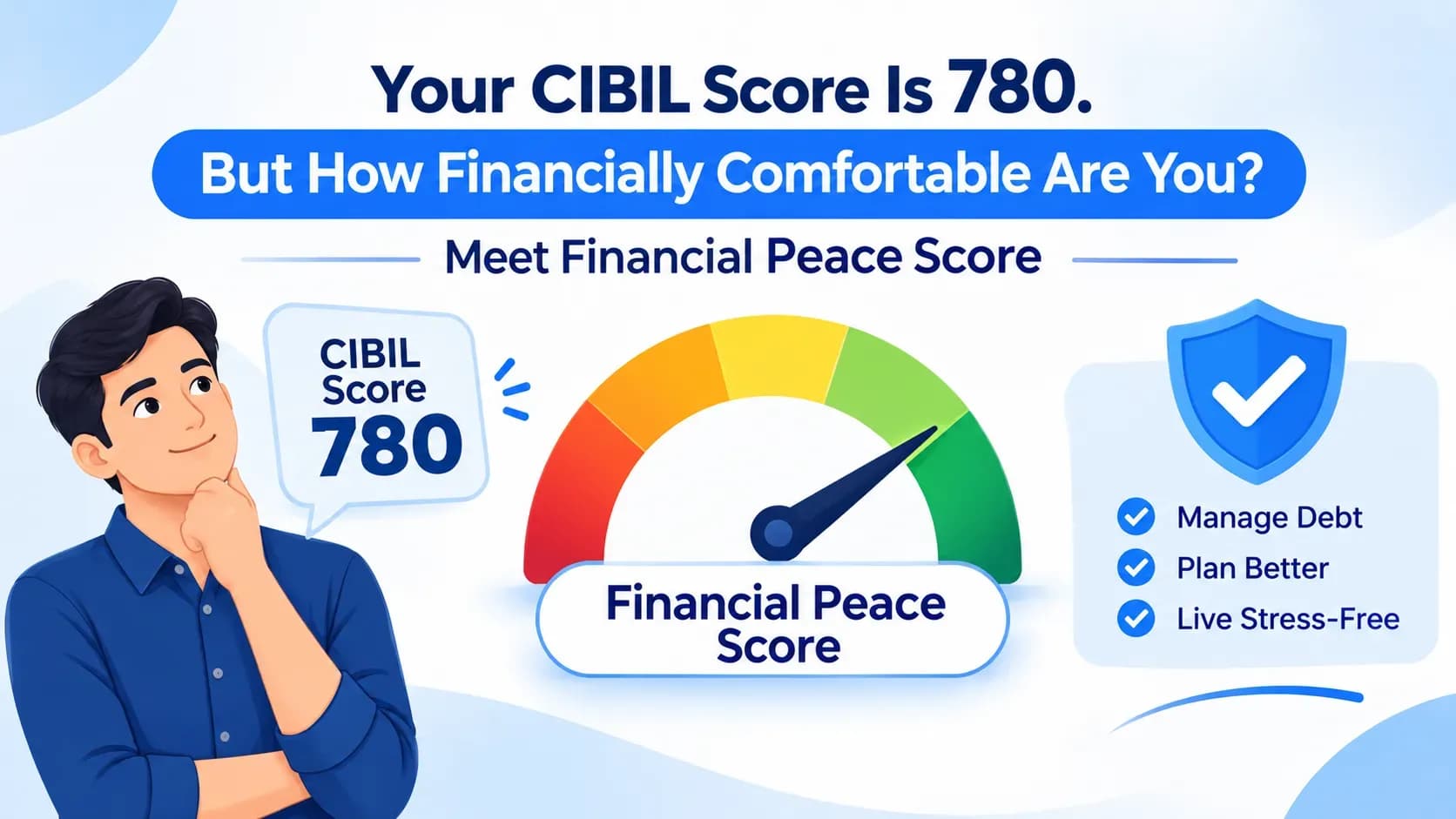
The LoansJagat Financial Peace Score also reflects this. Its Credit Habits part checks your payments over the last 12 months, alongside other credit signals. Regular, on-time EMIs support a healthier score.

You can avoid missed EMIs by automating payments, keeping a buffer and matching your EMI dates with your income.
If you have missed an EMI, pay the overdue amount as soon as possible and speak to your lender.
Your EMI repayment history is one of the strongest signals lenders use to judge your creditworthiness. Paying on time keeps your credit report clean, avoids penalty charges and protects your monthly budget. Automate your payments, keep a buffer and act quickly if you ever fall behind.
EMI repayment history is the record of whether you paid your loan and credit card dues on time. Lenders report it to credit bureaus every month.
The accounts section shows your repayment history for up to the past 36 months.
DPD stands for Days Past Due. It shows how many days a payment on an account was late in a particular month.
Missing even one payment can hurt your credit profile, and late payments are viewed negatively by lenders.
As per RBI norms, a term loan overdue for more than 90 days is generally classified as a non-performing asset. NBFCs follow their applicable norms.
No, RBI rules state that penalties for default must be levied as penal charges and not as penal interest added to the loan rate.
The RBI requires lenders to send SMS or email alerts when they report a default or DPD to credit bureaus, wherever your contact details are available.
Pay all current EMIs on time from now on. CIBIL notes that the impact of old overdue payments reduces as newer positive records are added.
Yes, the Financial Peace Score checks your payments over the last 12 months under its Credit Habits part.
Raise a dispute with the credit bureau and share proof of your payment. You can also inform your lender so that it corrects the data it reports.
Start your journey today
Apply Now*T&C apply