By continuing, you agree to LoansJagat's Credit Report Terms of Use, Terms and Conditions, Privacy Policy, and authorize contact via Call, SMS, Email, or WhatsApp
Disclaimer: The information published on LoansJagat is intended for general informational and educational purposes only and should not be considered financial, legal, or investment advice. Interest rates, loan terms, statistics, and other data may change over time and may vary by lender or source. Please verify the latest information and consult a qualified financial advisor or the respective Bank/NBFC before making any financial decisions.
Subscribe Now
About the author

LoansJagat Team
‘Simplify Finance for Everyone.’ This is the common goal of our team, as we try to explain any topic with relatable examples. From personal to business finance, managing EMIs to becoming debt-free, we do extensive research on each and every parameter, so you don’t have to. Scroll up and have a look at what 15+ years of experience in the BFSI sector looks like.
Related News
Simplify All Your Loans Into One Affordable EMI

Customers Served

Debt Consolidated

1200+ Reviews

Locations in India
Club all Loans & Credit Card Bills into Single EMI

Quick Apply Loan
Consolidate your debts into one easy EMI.

Takes less than 2 minutes. No paperwork.

10 Lakhs+
Trusted Customers

2000 Cr+
Loans Disbursed

4.7/5
Google Reviews

50+
Banks & NBFCs Offers
Other services mentioned in this article
The rupee’s slide towards ₹100/$ may raise import costs, travel bills, overseas education fees and fuel-linked inflation for Indian families.
Key Takeaways
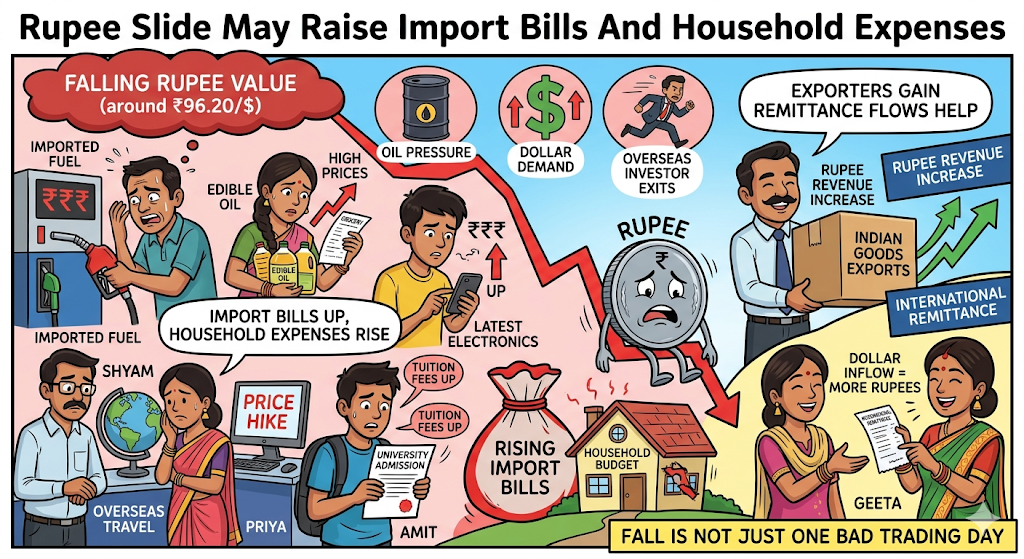
The Indian rupee fell to a fresh record low near ₹96.20 against the US dollar on May 18, 2026, after pressure from high oil prices, global bond yields and weak investor appetite. Reuters reported that the currency has hit record lows for 5 straight sessions.
In the short term, imported fuel, electronics, edible oil, foreign travel and overseas education may become costlier. In the long term, a weaker rupee can raise India’s import bill and hurt household budgets, though exporters and remittance-receiving families may gain.
This shows that the fall is not one single bad trading day. It has been building through oil pressure, dollar demand and overseas investor exits.
For common Indians, the first hit can come through petrol, diesel, LPG-linked costs and transport bills. India imports a large share of its crude oil, so every fall in the rupee makes dollar-priced oil more expensive in rupee terms.
Students planning foreign education may also feel the pressure. A $50,000 annual cost was ₹48 lakh at ₹96/$. At ₹100/$, it becomes ₹50 lakh before fees, rent and insurance hikes. Families sending children abroad may need larger education loans.
*T&C Apply
Overseas education
There is one positive side. Exporters in IT, textiles, pharma and auto components can earn more rupees for every dollar. NRIs sending money home may also help their families receive higher rupee value.
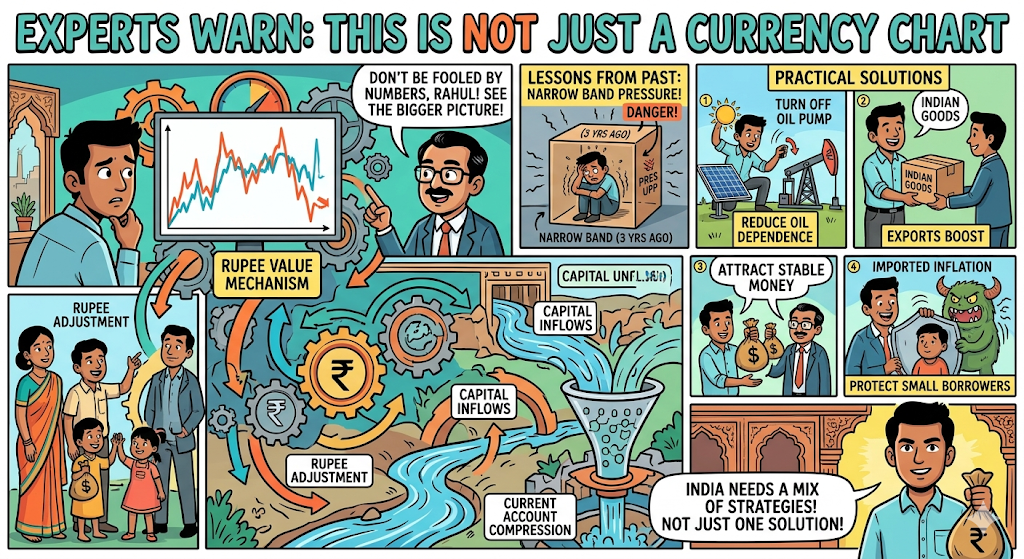
The Indian Express reported that policymakers are looking back at lessons from around 3 years ago, when the rupee was kept in a narrow band before later pressure built up. The report said the debate now is whether delaying depreciation made the present fall sharper.
Experts quoted by Reuters said India may need a mix of rupee adjustment, capital inflows and current account compression to handle pressure. A practical solution is to reduce oil dependence, boost exports, attract stable foreign money and protect small borrowers from imported inflation shocks.
The rupee moving near ₹100/$ is more than a market headline. It can enter homes through fuel, food transport, education, gadgets and travel. The fall also brings some gains for exporters and remittance families, but the wider burden is likely to be heavier for import-dependent India.
Why is the rupee falling against the dollar, and what changes for normal Indians?
The rupee is falling because India buys many things from other countries in dollars, mainly crude oil. When oil becomes expensive, India needs more dollars to pay the bill. This puts pressure on the rupee. Foreign investors selling Indian stocks or bonds can also make it weaker, because dollars leave the country.
A strong US dollar adds more pressure. For normal Indians, this can mean higher fuel prices, costlier imported phones, laptops, foreign trips and overseas education. Exporters and families getting dollars from abroad may benefit, but daily expenses can rise for many households.
Why did the Indian rupee fall sharply against the US dollar?
The rupee has weakened because India pays for many imports in dollars, especially crude oil. When crude oil becomes expensive, India needs more dollars, so pressure comes on the rupee. Foreign investors selling Indian shares and bonds also add to it, because money moves out of the country. The US dollar has also been strong in global markets.
For Indians, this can make petrol, diesel, imported goods, foreign trips and overseas education more expensive. Exporters and families receiving money from abroad may get some benefit, but household costs can still go up.









.png&w=3840&q=75)



