Check AI Loan Optimisation Plans to Reduce Your EMI

Disclaimer: The information published on LoansJagat is intended for general informational and educational purposes only and should not be considered financial, legal, or investment advice. Interest rates, loan terms, statistics, and other data may change over time and may vary by lender or source. Please verify the latest information and consult a qualified financial advisor or the respective Bank/NBFC before making any financial decisions.
Subscribe Now
About the author

Vidhi Chauhan is a copywriter and content writer with extensive experience creating high-quality, SEO-driven content across multiple industries, with a strong focus on fintech. She has written extensively on GST, banking, personal loans, business loans, credit cards, income tax, insurance, and other financial topics, helping Indian readers understand complex concepts through clear, accurate, and engaging content.
Related Blog Post
Simplify All Your Loans Into One Affordable EMI

Customers Served

Debt Consolidated

1200+ Reviews

Locations in India
Club all Loans & Credit Card Bills into Single EMI

Quick Apply Loan
Consolidate your debts into one easy EMI.

Takes less than 2 minutes. No paperwork.

10 Lakhs+
Trusted Customers

2000 Cr+
Loans Disbursed

4.7/5
Google Reviews

50+
Banks & NBFCs Offers
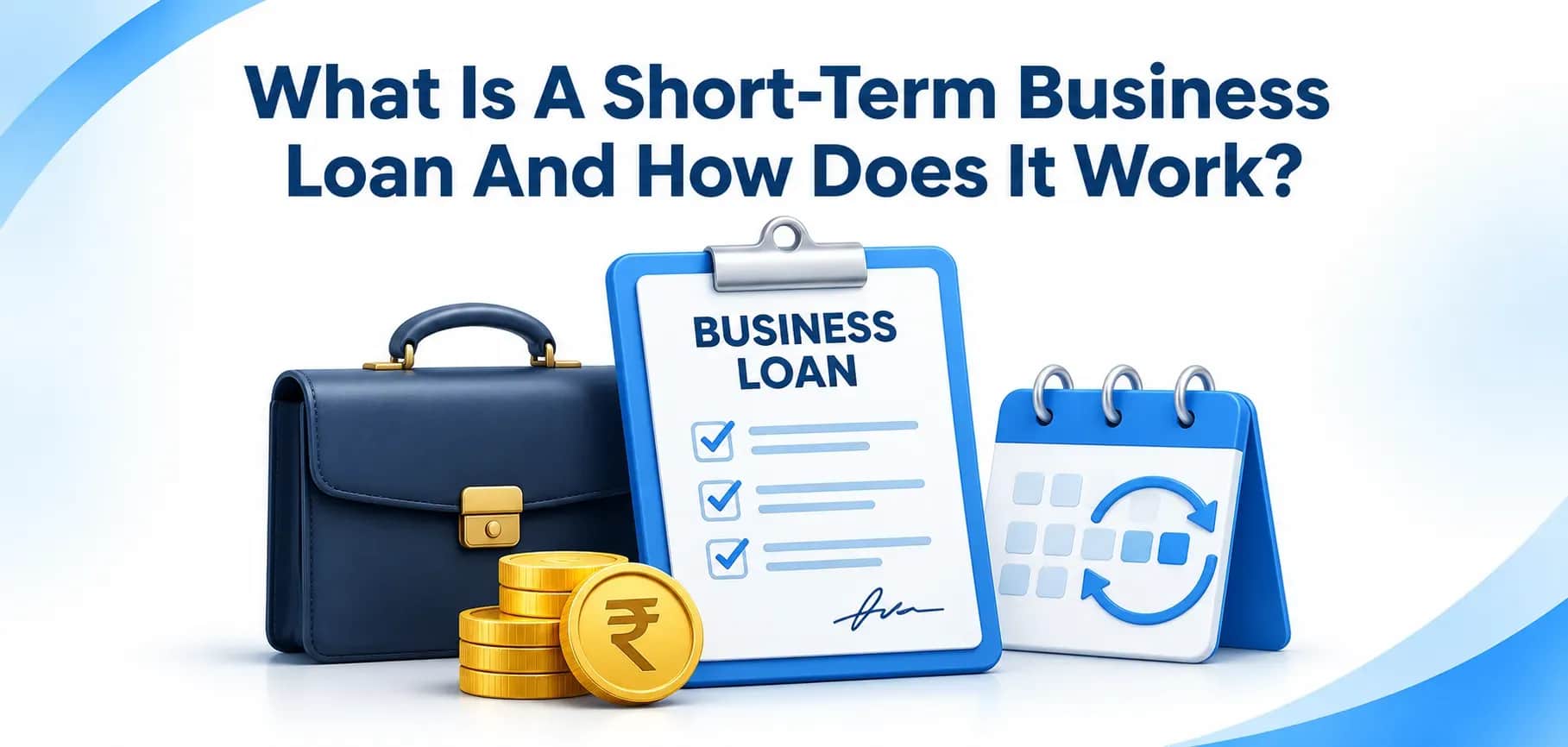
A short term business loan is the amount that the business borrows to meet the funding requirements of the business for a relatively short period of time and paid back as per the agreed terms. It can help companies meet their working capital needs, fill in temporary cash-flow gaps, finance the purchase of inventory or pay other short-term expenses. Short-term financing is not the same thing as long-term financing such as long-term business loans, which are meant to meet the future needs of a company, such as expansion, buying new equipment, and so on. Understanding the features of long-term business loans, their types and differences, costs, eligibility and repayment terms can help a company choose the right option to finance its needs.
Key Takeaways
A short-term business loan is money borrowed by a business for a relatively short duration and paid back according to the terms agreed upon with the lender. It can be arranged as a term loan or in other forms of short term business finance depending upon the lender and the needs of the borrower.
For MSMEs, short-term working capital finance can be used for requirements like inventory purchases, cash credit, overdrafts, bill discounting, factoring, and purchase-order finance. The Ministry of MSME considers these as working capital financing.
One of the major differences between short term and long term financing is the period of repayment. A short term facility is for relatively short term funding needs. A term loan may be for a period of years. The Ministry of MSME says term loans generally have tenures of one to 10 years or more depending on the financing requirement.
The process generally begins when a business applies for a loan from a bank, NBFC or any other eligible lending institution. The lender will assess the application against its lending criteria, which may include the financial position of the business, the ability to repay, credit history, banking transactions, turnover and the purpose of the loan.
If approved, the lender provides the sanctioned amount, interest rate or other applicable pricing, repayment schedule, fees, security requirements, and other terms in the loan agreement.
The business then gets the money as per the agreed disbursement terms and pays back the amount within the specified period. Depending on the facility, repayment can be structured as regular instalments or in another agreed way.
The volume of finance required for working capital needs may be estimated with reference to the operating cycle of the business and short-term credit needs. The RBI guidance says banks should adequately evaluate the real working capital needs of MSE borrowers considering their business cycle and short-term credit requirements.
Example: .
For example, suppose a small manufacturing company receives a large order, but it needs additional cash to purchase the raw materials before it is paid by its customer. The business could look at a short-term working capital facility to meet this temporary funding requirement.
The lender could consider the business’s financials, cash flows, existing liabilities, and repayment capacity before deciding on whether to approve the facility. Subject to approval, the business may use the funds for the permitted purpose and repay them in accordance with the agreed terms.
The actual size of the loan, its pricing, the length of time over which it is to be repaid, and any security required will all depend on the lender and the borrower’s circumstances.
What you can spend the money on is up to the lender and the terms of the loan agreement Common business requirements, which can be funded with short term facilities:
Working capital financing is especially important when business expenses and customer receipts are not occurring at the same time. For example a company might have to pay suppliers before it has got money from customers.
Before using borrowed funds, it is important to check the lender’s terms, as the end use allowed may vary between different loan products.
There are many types of short term business funding. Depending on the requirement, a business may look at different financing structures.
1. Short Term Credit
A term loan is a fixed amount of money that is repaid over an agreed period via regular repayments. Term loans are a form of business finance that can be availed for particular needs as per the Ministry of MSME.
2. Loan for working capital
A working capital loan is designed to help a business meet its day-to-day operating needs. According to the ministry of MSME, working capital loans are short-term finance with a tenure of less than a year.
3. Cash Credit or Overdraft Facility
Businesses may avail cash credit and overdraft facilities to get funds for working capital requirements as per the terms and limits approved by the lender.
4. Invoice Discounting or Factoring
If there are outstanding invoices, you might want to consider invoice financing or factoring, depending on the lender or financier’s eligibility criteria and arrangement.
5. Credit for Purchase Orders
Some types of working capital finance help companies cover the costs of fulfilling the requirements of confirmed purchase orders. Availability and terms will differ depending on the lender and the particular transaction.
The primary difference lies in the duration and nature of the funding requirement.
There is no universal tenure or structure for every business loan. The lender, product, and purpose of borrowing determine the applicable terms.
A short-term loan might be right if a business needs funding for a short time and intends to pay off the borrowing within a relatively short period.
Potential benefits include:
Short repayment periods may also mean that the business has to manage its cash flow carefully. Before you apply, consider the following:
Interest and Other Costs
Don’t just look at the rate of interest. Verify the agreement for any other applicable costs such as check processing fees, documentation charges, penalties, etc.
Terms of Repayment
Know the repayment schedule and if the projected cash flow of the business can meet repayments.
Total Borrowing Cost
Compare the total amount you will pay over the life of the loan, not just the headline interest rate.
Security Requirements
Certain business loans might require collateral or other types of security, while other loans might be available without collateral depending on eligibility and lender policies. For example, the CGTMSE information of the Ministry of MSME states about the credit guaranty support for eligible collateral-free credit facilities extended to micro and small enterprises.
Eligibility Requirements
Lender requirements may differ. A lender may consider some of the factors such as business vintage, turnover, financial statements, banking history, credit profile, and repayment capacity.
A short-term business loan may be considered by a business that has a clearly defined, relatively short-term funding requirement and a repayment plan based on expected cash flows.
For example, a company with a temporary need for working capital funds may decide to raise money via such a loan to fund its short-term need instead of taking out a long-term loan. The suitability for a company, the price, and the capacity to repay a loan are significant factors when considering such an option. Comparing the different solutions can give the company a better idea of the total cost and terms to choose the most suitable one.
LoansJagat can help businesses research and compare business loan options based on factors such as loan amount, interest rates, tenure, eligibility, and applicable charges. By bringing relevant loan information together, the platform can make it easier for businesses to understand available financing options and evaluate them before making a borrowing decision.
A short-term business loan can help businesses to meet immediate funding and working capital needs. Its suitability depends on purpose, repayment capacity, borrowing cost, terms of lender. Knowing the financing options, who’s eligible, how it will be repaid, and the costs related to it will allow businesses to make an informed decision regarding short-term financing.
Prepayment is possible, depending on the terms of the loan agreement and the lender. Businesses should look out for any prepayment or foreclosure fees before closing early.
The requirements vary by lender and loan product. A lender may want to see banking records to show cash flow and the ability to repay the business.
Some lenders may lend to newer businesses, and others may desire an established operating history. This eligibility is different for each lender and is based on the business profile, financial information, promoter information, etc.
Some lenders will report missed repayments to credit reference agencies and a missed repayment may lead to additional charges. Non-payment continued may also result in collection or other recovery action under the applicable loan agreement and regulations.
If lenders approve the applications and the business meets their respective eligibility requirements, a business may have more than one borrowing facility. Existing debt obligations can be taken into account when assessing the business’ ability to take on further debt.
No, a business loan usually gives you financing under a specific loan agreement, while a business credit card offers you a revolving credit facility up to its approved limit and terms. Interest, fees, method of repayment and permitted usage may differ between the two.
This depends on the lender and the specific loan product. If debt refinancing or consolidation is permitted, the lender may assess the existing liabilities and the proposed repayment structure before approving the facility.
The effect can depend on the lender, the type of credit enquiry, and whether the business owner’s personal credit profile is part of the assessment. Businesses should check which credit bureau records the lender reviews and reports to before applying.
An increase is not automatic and depends on the lender’s policies and the borrower’s circumstances. The lender may reassess factors such as repayment history, outstanding obligations, financial position, and additional funding requirements.
The borrower should obtain the applicable closure documents and verify that the lender’s records reflect the repayment correctly. If any security or charge was created against business assets, the borrower should also check the applicable process for its release.
Start your journey today
Apply Now*T&C apply