By continuing, you agree to LoansJagat's Credit Report Terms of Use, Terms and Conditions, Privacy Policy, and authorize contact via Call, SMS, Email, or WhatsApp
Disclaimer: The information published on LoansJagat is intended for general informational and educational purposes only and should not be considered financial, legal, or investment advice. Interest rates, loan terms, statistics, and other data may change over time and may vary by lender or source. Please verify the latest information and consult a qualified financial advisor or the respective Bank/NBFC before making any financial decisions.
Subscribe Now
About the author

LoansJagat Team
‘Simplify Finance for Everyone.’ This is the common goal of our team, as we try to explain any topic with relatable examples. From personal to business finance, managing EMIs to becoming debt-free, we do extensive research on each and every parameter, so you don’t have to. Scroll up and have a look at what 15+ years of experience in the BFSI sector looks like.
Related News
Simplify All Your Loans Into One Affordable EMI

Customers Served

Debt Consolidated

1200+ Reviews

Locations in India
Club all Loans & Credit Card Bills into Single EMI

Quick Apply Loan
Consolidate your debts into one easy EMI.

Takes less than 2 minutes. No paperwork.

10 Lakhs+
Trusted Customers

2000 Cr+
Loans Disbursed

4.7/5
Google Reviews

50+
Banks & NBFCs Offers
Other services mentioned in this article
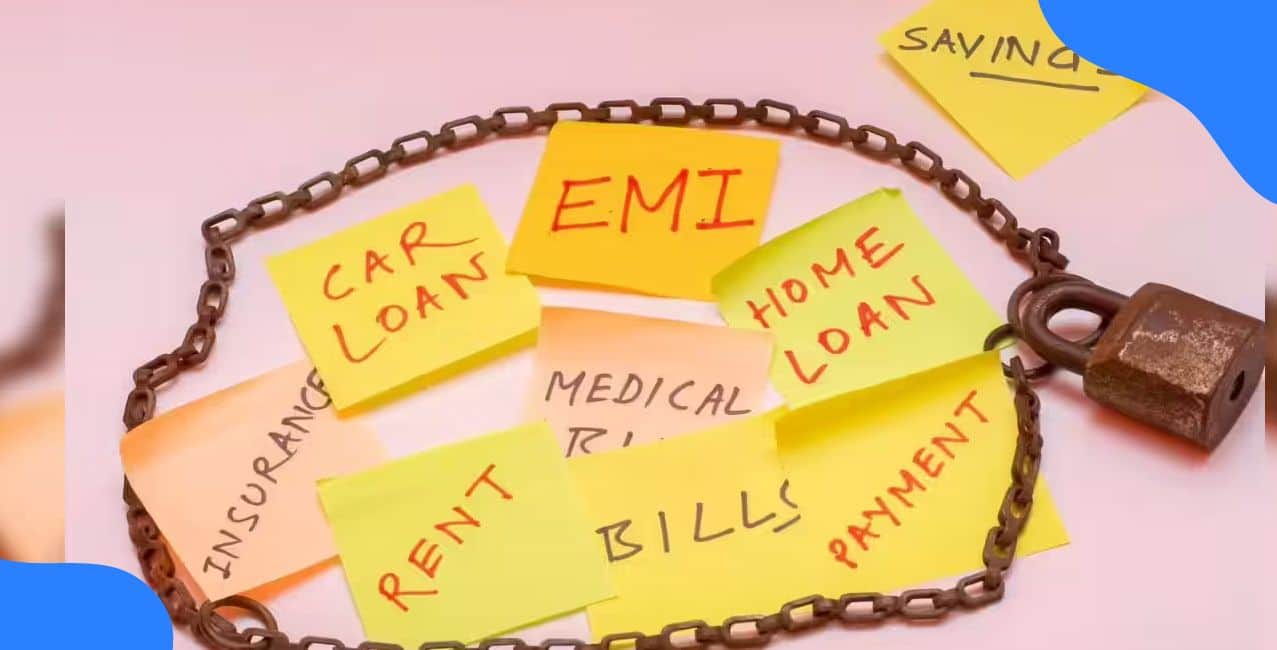
For many salaried Indians today, payday relief disappears within days as Equated Monthly Instalments (EMIs) consume a large portion of income. Home loans, personal loans, credit cards, and Buy Now Pay Later (BNPL) purchases have quietly increased monthly obligations.
Financial planners generally suggest keeping total EMIs within 35–40% of monthly income, but many households now exceed this limit, leaving little room for savings or emergencies.
When EMIs start taking up nearly half your salary, the problem is rarely income alone — it is cash-flow management. The good news is that small financial adjustments can restore balance without drastic lifestyle changes.
EMIs are fixed commitments. Unlike discretionary spending, they must be paid regardless of income fluctuations. When loan repayments rise too high, savings shrink and unexpected expenses often push people toward fresh borrowing, creating a debt cycle.
Experts recommend tracking your Fixed Obligation to Income Ratio (FOIR). Anything above roughly 55% signals financial strain and reduces flexibility in managing daily expenses.
The issue worsens because many borrowers underestimate “silent EMIs” such as subscriptions or small credit purchases that accumulate over time.
The first solution is surprisingly simple, know where your money goes.
Start by listing:
Budgeting helps prioritise EMIs while identifying spending leaks. Financial planners often suggest the 50-30-20 rule, 50% for essentials and EMIs, 30% for lifestyle expenses, and 20% for savings or debt reduction.
Read More - RBI Imposes Penalty On Cashfree Payments
Even small expense tracking can reveal thousands saved monthly through reduced impulse spending.
Instead of taking new loans, focus on lowering existing repayment stress:
Expense control does not mean extreme frugality. Practical changes work better:
These adjustments free cash without affecting essential living standards.
Also Read - Payment Aggregator
Step 4: Build a Financial Safety Cushion
An emergency fund covering 3–6 months of expenses, including EMIs, protects against job loss or medical emergencies and prevents dependence on new debt.
When EMIs start consuming a major share of income, the solution lies in restructuring finances rather than increasing borrowing. A disciplined budget, strategic loan management, and controlled spending can gradually restore financial stability. The goal is simple: ensure loans remain a tool for progress, not a monthly financial burden.
Related Financial News | |||
*T&C Apply









.png&w=3840&q=75)



