By continuing, you agree to LoansJagat's Credit Report Terms of Use, Terms and Conditions, Privacy Policy, and authorize contact via Call, SMS, Email, or WhatsApp
Disclaimer: The information published on LoansJagat is intended for general informational and educational purposes only and should not be considered financial, legal, or investment advice. Interest rates, loan terms, statistics, and other data may change over time and may vary by lender or source. Please verify the latest information and consult a qualified financial advisor or the respective Bank/NBFC before making any financial decisions.
Subscribe Now
About the author

LoansJagat Team
‘Simplify Finance for Everyone.’ This is the common goal of our team, as we try to explain any topic with relatable examples. From personal to business finance, managing EMIs to becoming debt-free, we do extensive research on each and every parameter, so you don’t have to. Scroll up and have a look at what 15+ years of experience in the BFSI sector looks like.
Related News
Simplify All Your Loans Into One Affordable EMI

Customers Served

Debt Consolidated

1200+ Reviews

Locations in India
Club all Loans & Credit Card Bills into Single EMI

Quick Apply Loan
Consolidate your debts into one easy EMI.

Takes less than 2 minutes. No paperwork.

10 Lakhs+
Trusted Customers

2000 Cr+
Loans Disbursed

4.7/5
Google Reviews

50+
Banks & NBFCs Offers
Other services mentioned in this article
A Pune man seeking a ₹20,000 app loan allegedly paid ₹5 lakh, then faced threats and blackmail, exposing how small digital loans can spiral fast.
A 48-year-old man from Pune allegedly borrowed ₹20,000 through a loan app and ended up paying around ₹5 lakh to fraudsters who kept asking for more money. The harassment did not stop there. He was allegedly threatened with morphed photos and public shaming before relatives.
His wife filed a missing complaint on March 8 after he left home on March 6, and police traced him to a hotel on Sinhagad Road on March 13. The case has again pushed unsafe loan apps and coercive recovery tactics into focus.
This case is also a warning list for borrowers. Once a loan is taken, they should never keep paying fresh “closure”, “late fee” or “settlement” charges just because callers are shouting or threatening. In the Pune case, the alleged payments rose from a ₹20,000 borrowing to nearly ₹5 lakh.
Read More -Kerala’s Loan App Trap Gets Darker
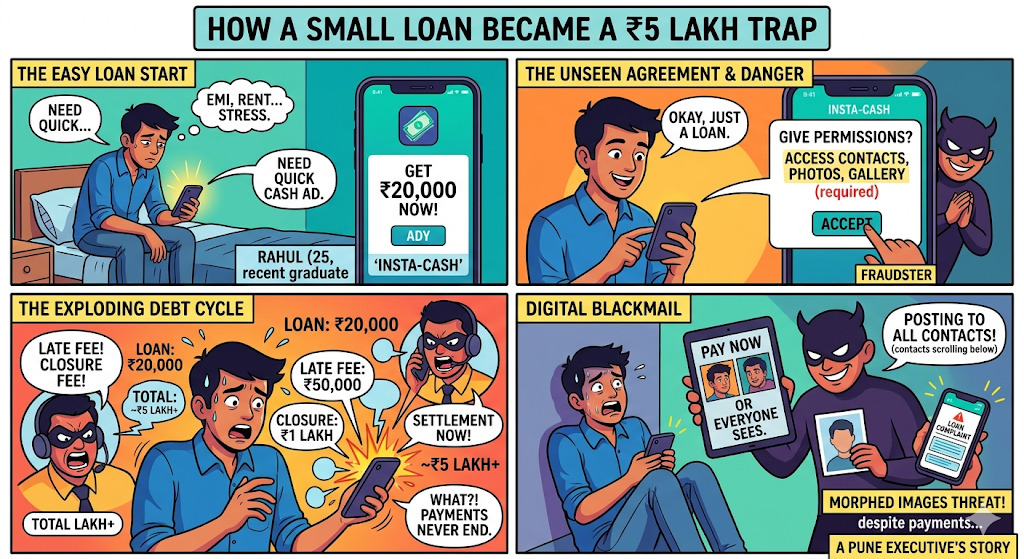
They should also never allow an unknown app to freely access contacts, photos or gallery data. In another Pune quick-loan-app complaint reported on March 11, 2026, a 29-year-old executive alleged that fraudsters used app permissions and then threatened to post morphed images despite regular EMI payments.
Before looking at the wider pattern, the immediate red flags are easy to spot.
Borrowers should also never repay into random UPI IDs or private accounts sent over chat. The moment repayment trails move outside a verified lender channel, risk rises sharply.
This is not a one-off pattern. On July 14, 2025, The Indian Express reported a Pune case in which cybercriminals allegedly used a loan app to access a borrower’s contacts and photos, and later sent morphed nude images to people in the contact list after a repayment dispute over ₹15,000.
LoansJagat, in a report published on May 15, 2025, said all regulated entities using digital lending apps would have to report those apps on the CIMS portal, with June 15, 2025 set as the submission deadline. That article flagged how scrutiny of lending apps had tightened as complaints around hidden charges, data misuse and abusive recovery continued.
For victims, speed is critical. The National Cyber Crime Reporting Portal says financial fraud complaints can be reported on 1930 and through the cybercrime portal.
That wider trail shows why borrowers should act early, not after the pressure peaks.
Also Read - Biggest Fraudulent Loan App Scams
The pattern is clear: harassment grows when borrowers stay isolated and keep complying.
Police action in the Pune case helped trace the missing man before a tragedy unfolded. In the separate Pune app-harassment case, investigators told Times of India that the accused appeared to be masking locations through VPN use.
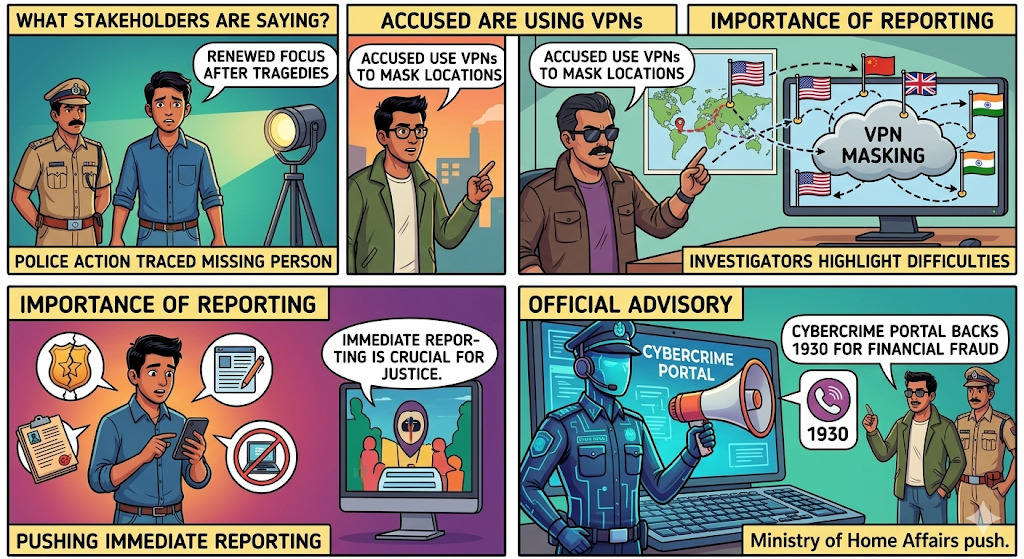
The cybercrime portal, backed by the Ministry of Home Affairs, continues to push immediate reporting through 1930 for financial fraud.
If a person has borrowed a loan, they should never keep paying under fear, never hand over phone data blindly, and never hide the harassment. The earlier the complaint is filed, the better the chance of stopping both financial loss
*T&C Apply
Related Financial News | |||









.png&w=3840&q=75)



