By continuing, you agree to LoansJagat's Credit Report Terms of Use, Terms and Conditions, Privacy Policy, and authorize contact via Call, SMS, Email, or WhatsApp
Disclaimer: The information published on LoansJagat is intended for general informational and educational purposes only and should not be considered financial, legal, or investment advice. Interest rates, loan terms, statistics, and other data may change over time and may vary by lender or source. Please verify the latest information and consult a qualified financial advisor or the respective Bank/NBFC before making any financial decisions.
Subscribe Now
About the author

‘Simplify Finance for Everyone.’ This is the common goal of our team, as we try to explain any topic with relatable examples. From personal to business finance, managing EMIs to becoming debt-free, we do extensive research on each and every parameter, so you don’t have to. Scroll up and have a look at what 15+ years of experience in the BFSI sector looks like.
Related News
Simplify All Your Loans Into One Affordable EMI

Customers Served

Debt Consolidated

1200+ Reviews

Locations in India
Club all Loans & Credit Card Bills into Single EMI

Quick Apply Loan
Consolidate your debts into one easy EMI.

Takes less than 2 minutes. No paperwork.

10 Lakhs+
Trusted Customers

2000 Cr+
Loans Disbursed

4.7/5
Google Reviews

50+
Banks & NBFCs Offers
Other services mentioned in this article
Key Takeaways
Gold is at a Record High. But Should You Pledge Your Jewellery for a Loan?
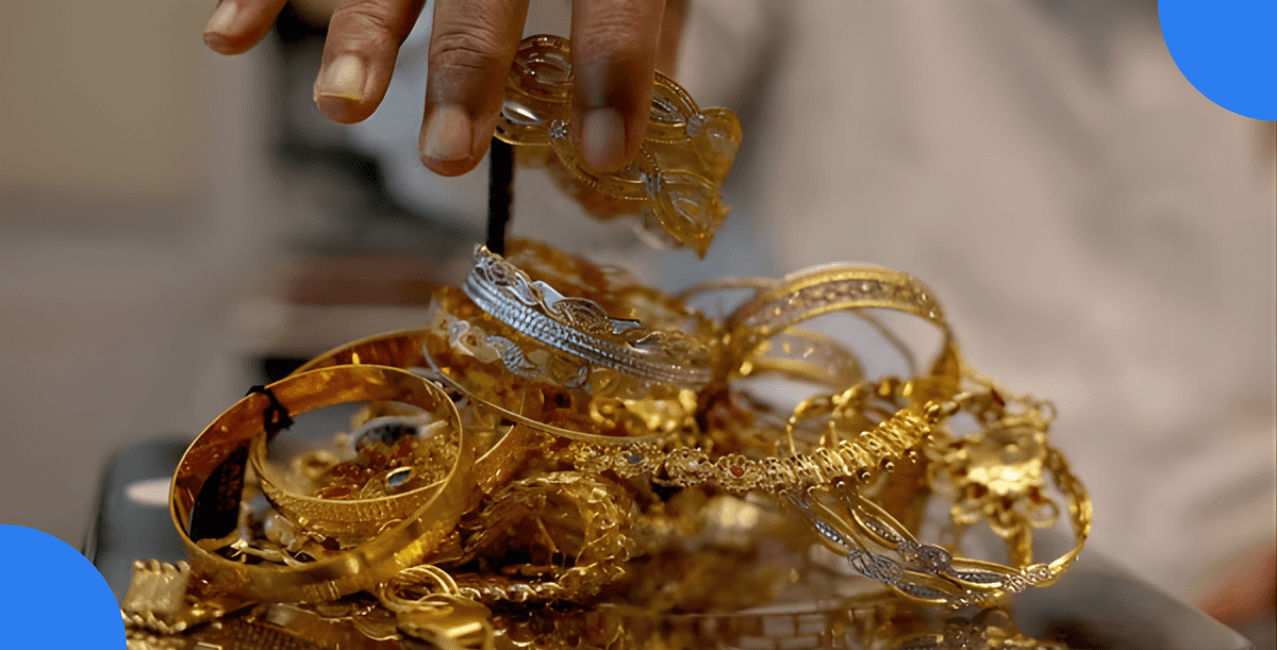
Gold in India is trading at about ₹15,420 per gram for 24-carat purity, close to record highs. This may feel like a good time to get cash against jewellery, but a higher price only means a bigger loan, not a safer one. If you cannot repay, you can still lose your jewellery.
It may seem tempting to borrow more, but that leads to higher interest and quicker repayment pressure. Gold loans are short-term, and renewing them again and again can increase your total cost.
The lender checks your jewellery’s purity and weight, uses the current gold price, and gives a loan based on a percentage of its value, called the LTV ratio, under RBI rules. This helps small borrowers get easier access, while larger loans are handled more carefully.
Here is how the new system looks, effective from April 2026:
Repayment can be monthly or as a bullet payment, but bullet loans must now be cleared within 12 months. Loans under ₹2,50,000 need very little paperwork and are often approved the same day.
The RBI’s 2025 gold loan rules aim to make the system safer and more transparent, with stricter limits, proper repayment rules, and better handling of pledged gold.
If you do not repay, your gold can be auctioned, but lenders must give notice and set a fair price. After repayment, your gold should be returned within seven working days, or a penalty applies.
Check these before taking a gold loan:
Only take a loan when it is really needed, because if your jewellery is auctioned, you won’t get it back.
Gold loans are quick and useful when used properly. People now have better protection with the new RBI rules. But one thing stays the same. Borrow only what you can repay, and remember your gold is security, not extra money.
1. Why do gold prices keep increasing, and what impact does that have on the economy?
Gold prices rise due to inflation, global uncertainty, currency weakness, and high demand. It can increase import bills for countries like India and affect inflation when gold becomes expensive. It also pushes people to invest more in gold instead of other assets.
2. Why are jewellery-making charges rising when labour costs haven’t changed much?
The making charges increase along with gold prices because they are sometimes calculated as a percentage of the gold value. Even if labour costs stay the same, higher gold prices make the final charges look higher. Demand, brand value, and design complexity can also increase these charges.
Related Financial News | |||
75%
*T&C Apply









.png&w=3840&q=75)



