Check AI Loan Optimisation Plans to Reduce Your EMI

Disclaimer: The information published on LoansJagat is intended for general informational and educational purposes only and should not be considered financial, legal, or investment advice. Interest rates, loan terms, statistics, and other data may change over time and may vary by lender or source. Please verify the latest information and consult a qualified financial advisor or the respective Bank/NBFC before making any financial decisions.
Subscribe Now
About the author

Vaishnavi is a Financial Content Writer at LoansJagat. She holds a B.Sc. and an M.Sc. She has experience in writing SEO-focused content across finance. At LoansJagat, Vaishnavi writes on banking, loans, personal finance, and insurance. Her work involves researching financial topics, understanding user search intent, and creating content that is clear and accurate. She has experience in SEO content writing, keyword research, content optimisation, and AEO.
Related Blog Post
Simplify All Your Loans Into One Affordable EMI

Customers Served

Debt Consolidated

1200+ Reviews

Locations in India
Club all Loans & Credit Card Bills into Single EMI

Quick Apply Loan
Consolidate your debts into one easy EMI.

Takes less than 2 minutes. No paperwork.

10 Lakhs+
Trusted Customers

2000 Cr+
Loans Disbursed

4.7/5
Google Reviews

50+
Banks & NBFCs Offers
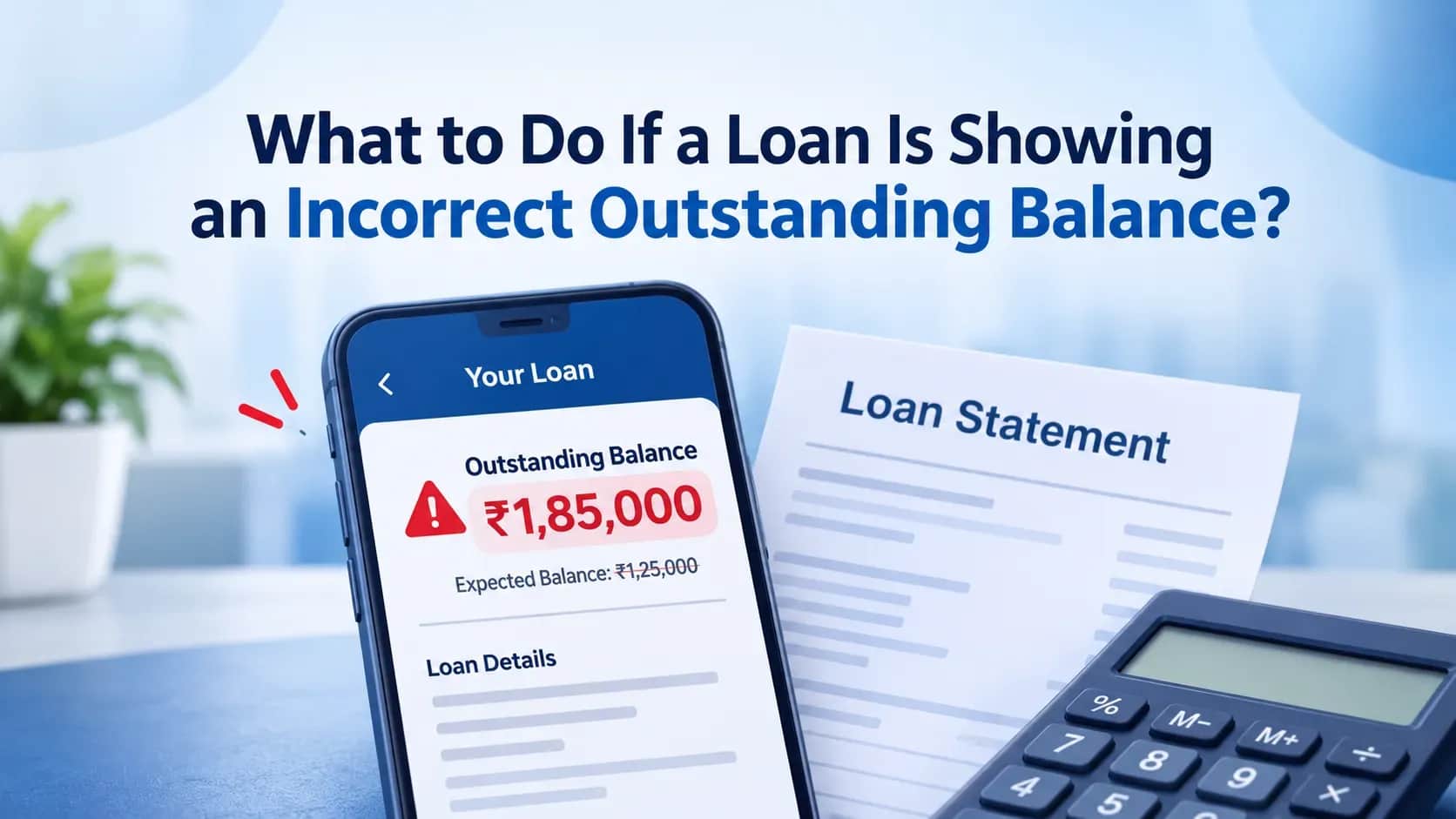
Have you repaid your EMIs on time but still see an outstanding balance on your credit report? An incorrect loan balance can create confusion and affect how lenders assess your credit profile. The error may occur because a recent payment has not been reported yet, or the lender has shared inaccurate information with credit bureaus.
If you notice an incorrect balance, compare it with your loan records first. Then contact the lender and request a correction. You can also raise a dispute with the relevant credit bureau if the issue remains unresolved.
Key Takeaways
If your credit report shows a balance that does not match your loan records, follow these steps to identify and correct the error.
Before raising a complaint, check when the lender last reported your loan information. A recent EMI or part-prepayment may not appear immediately because credit information is updated periodically.
From 1 July 2026, RBI directions require credit institutions to report information as on the 9th, 16th, 23rd and last day of each month, or at shorter mutually agreed intervals. Therefore, a payment made after a reporting date may take time to appear in your credit report.
Check the following details:
If the payment was made recently, allow the reporting cycle to pass. However, if an older payment is missing or the balance remains incorrect, contact the lender.
Collect documents that establish how much you have repaid and what amount remains outstanding. Keep the following records ready:
These documents can help the lender trace payments, verify charges and identify discrepancies.
The lender provides your loan information to credit bureaus. Therefore, correcting the credit report alone may not resolve an error in the lender's original records. Contact the bank or NBFC through its customer support channel. If the issue remains unresolved, write to its grievance redressal officer.
Include these details in your complaint:
Clearly explain the correction required. Ask the lender to verify its loan records and share the corrected information with the relevant credit bureaus. Keep the complaint reference number and copies of all emails or written communication. These records will help if you need to escalate the matter.
If the lender does not correct the information, raise a dispute with the credit bureau where the incorrect balance appears. For example, if the error is visible in your CIBIL report, you can submit a dispute through the official TransUnion CIBIL website.
The general process involves:
CIBIL forwards the dispute to the concerned lender for verification. It cannot independently change lender-reported information without the lender's confirmation.
You can also raise disputes with Experian, Equifax or CRIF High Mark if the same error appears in their reports. Check the respective bureau's official website for its dispute process.
Under RBI guidelines, complaints about incorrect credit information must be resolved within 30 calendar days. The lender gets 21 days to submit corrected information, while the credit bureau gets the remaining nine days. If the delay qualifies under RBI's framework, you may be entitled to compensation of ₹100 per calendar day.
If the issue remains unresolved, you can approach the RBI under the Integrated Ombudsman Scheme, 2026, where eligible. Submit your complaint through the RBI Complaint Management System. Once resolved, check your updated credit report and keep the correction confirmation for future reference.
An incorrect outstanding balance on your credit report should not be ignored. First, check the reported date and compare the amount with your loan statement. If the discrepancy remains, collect your payment records and contact the lender for correction.
You can also raise a dispute with the relevant credit bureau and escalate the complaint through the appropriate grievance mechanism if necessary. Review your updated report to confirm that the correction has been made.
The lender may not have completed payment reconciliation or updated the loan account. Pending interest, applicable charges or a reporting delay may also explain the difference. Request a final loan statement to verify the amount.
A recent part-prepayment may take time to reflect in your loan account and credit report. Check whether the lender has processed the payment and revised the repayment schedule or outstanding principal.
Share your bank statement, payment receipt and transaction reference number with the lender. Request an investigation to trace and reconcile the payment with your loan account.
An inaccurate balance can affect the credit information used by lenders to assess your credit profile. The impact on your credit score depends on the reported information and other factors in your credit history.
Request a detailed loan statement from your lender. Check the principal outstanding, accrued interest, payments, prepayments and applicable charges to understand how the balance was calculated.
Ask for a written breakdown of the outstanding amount. Compare it with your payment receipts and loan agreement. If the calculation appears incorrect, submit a written complaint with supporting documents.
Start your journey today
Apply Now*T&C apply