By continuing, you agree to LoansJagat's Credit Report Terms of Use, Terms and Conditions, Privacy Policy, and authorize contact via Call, SMS, Email, or WhatsApp
Disclaimer: The information published on LoansJagat is intended for general informational and educational purposes only and should not be considered financial, legal, or investment advice. Interest rates, loan terms, statistics, and other data may change over time and may vary by lender or source. Please verify the latest information and consult a qualified financial advisor or the respective Bank/NBFC before making any financial decisions.
Subscribe Now
About the author

LoansJagat Team
‘Simplify Finance for Everyone.’ This is the common goal of our team, as we try to explain any topic with relatable examples. From personal to business finance, managing EMIs to becoming debt-free, we do extensive research on each and every parameter, so you don’t have to. Scroll up and have a look at what 15+ years of experience in the BFSI sector looks like.
Related Blog Post
Simplify All Your Loans Into One Affordable EMI

Customers Served

Debt Consolidated

1200+ Reviews

Locations in India
Club all Loans & Credit Card Bills into Single EMI

Quick Apply Loan
Consolidate your debts into one easy EMI.

Takes less than 2 minutes. No paperwork.

10 Lakhs+
Trusted Customers

2000 Cr+
Loans Disbursed

4.7/5
Google Reviews

50+
Banks & NBFCs Offers
Other services mentioned in this article
Finance Minister Nirmala Sitharaman’s warning on mis-selling has landed as RBI’s draft rules push 100% refunds, stricter consent, and a July 2026 start.
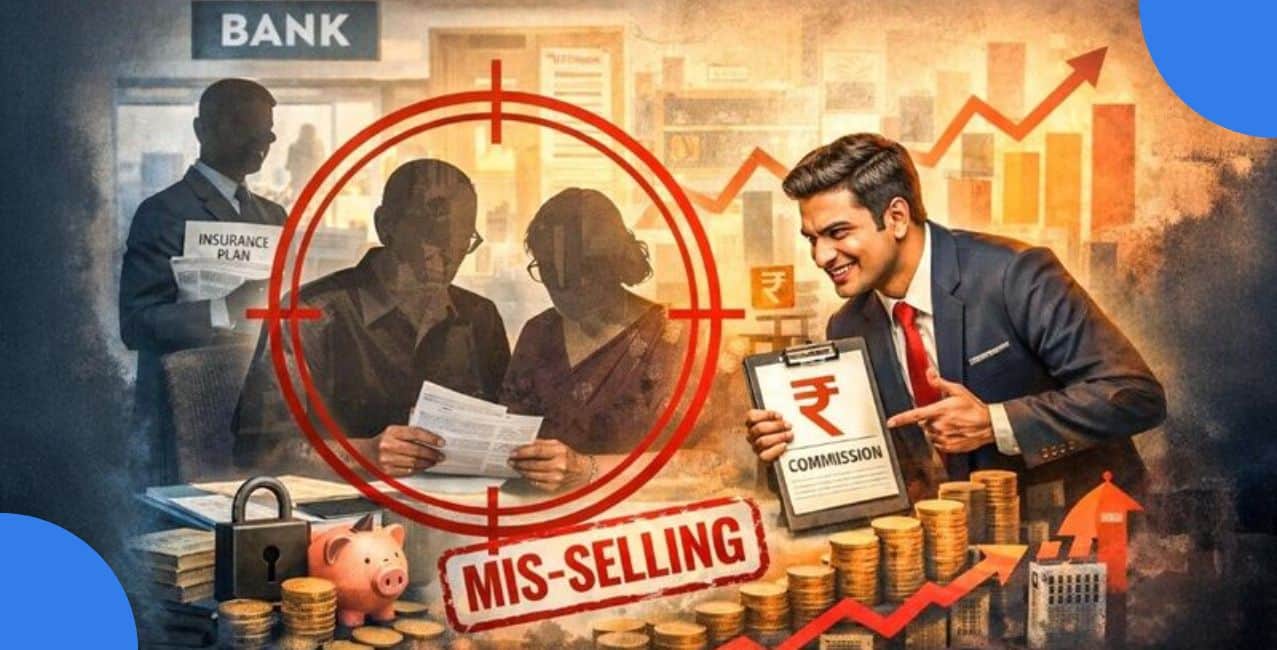
Mis-selling has become a fresh flashpoint for banks, especially where insurance and investment products are pushed at branch counters or during loan processing.
On 24 Feb 2026, Finance Minister Nirmala Sitharaman said banks “cannot afford” to mis-sell and called it an offence, in remarks reported by India Today (Updated: Feb 24, 2026 08:36 IST).
Her warning comes just as the regulator’s draft framework seeks to curb dark patterns, forced bundling, and weak disclosures, making banks more directly liable when mis-selling is established.
The immediate issue is customer harm from products being sold as “safe”, “required”, or “recommended”, even when they do not match a customer’s profile.
The government’s tone sharpened after Sitharaman’s comments on 24 Feb 2026 that mis-selling should not be treated like routine selling, as reported by India Today. At the same time, banks are being asked to tighten the full sales journey, from pitch to consent to post-sale checks, across branches, apps, and calling.
Read More - RBI Proposes July 1 Rollout of Stricter Mis-Selling Rules for Banks in India
Quick context before the timeline: the recent developments have moved quickly, with key dates now shaping compliance decisions.
After this timeline, what banks do next will likely be shaped by how strict “refund plus compensation” becomes in the final rules.
The draft approach raises the compliance bar by shifting focus from paperwork to outcomes. Reuters (11 Feb 2026) reported that banks would have to align products with customer profiles such as age, income, education and risk tolerance, even where “consent” exists, and stop conditional selling.
In practical terms, it targets dark patterns in digital journeys and hard-sell practices at counters.
Explain articles expanded on enforcement expectations. LiveMint (Updated 11 Feb 2026, 07:42 PM IST) reported that if mis-selling is established, banks must refund the entire amount paid and compensate for loss, and also seek customer feedback within 30 days of sale and compile half-yearly reports.
This makes branch scripts, incentive plans, and post-sale verification far more central than earlier.
Customer protection has been gathering pace through February. Economic Times reported that draft changes aim to curb mis-selling with a proposed rollout from 01 Jul 2026, and flagged a stronger refund-and-cancellation expectation once mis-selling is proven.
Moneycontrol (Feb 16, 2026 / 11:00 IST) also highlighted the push against dark patterns and stricter selling norms, with more responsibility placed on regulated entities for product suitability and disclosures.
One related track has also shaped the debate on customer relief. LoansJagat (News: Feb 16, 2026) linked the mis-selling push to a broader consumer-protection mood, citing that 65% of small-value digital fraud cases involve losses under ₹50,000, and a proposal discussed a one-time compensation up to ₹25,000 or 85% of the loss.
Also Read - Top 10 High-Risk Investments with Huge Returns in 2025 – Should You Try Them
Before the next table: here is what changes will look like for banks and customers if the draft themes hold.
*T&C Apply
After this table, the story is also about tone. The government’s messaging has become sharper, and banks are being told to return focus to core banking.
Sitharaman said mis-selling is an offence and banks cannot afford it, and asked lenders to focus on core banking, as covered by Economic Times and TOI.
Regulators, through the draft, are signalling “profile-based selling”, not signature-based comfort.
If the draft becomes final, mis-selling will shift from a customer grievance into a high-cost compliance risk, with refunds and compensation sitting at the centre. For banks, the pressure is on before 01 Jul 2026.
Related Financial News | |||









.png&w=3840&q=75)



