By continuing, you agree to LoansJagat's Credit Report Terms of Use, Terms and Conditions, Privacy Policy, and authorize contact via Call, SMS, Email, or WhatsApp
Disclaimer: The information published on LoansJagat is intended for general informational and educational purposes only and should not be considered financial, legal, or investment advice. Interest rates, loan terms, statistics, and other data may change over time and may vary by lender or source. Please verify the latest information and consult a qualified financial advisor or the respective Bank/NBFC before making any financial decisions.
Subscribe Now
About the author

LoansJagat Team
‘Simplify Finance for Everyone.’ This is the common goal of our team, as we try to explain any topic with relatable examples. From personal to business finance, managing EMIs to becoming debt-free, we do extensive research on each and every parameter, so you don’t have to. Scroll up and have a look at what 15+ years of experience in the BFSI sector looks like.
Related News
Simplify All Your Loans Into One Affordable EMI

Customers Served

Debt Consolidated

1200+ Reviews

Locations in India
Club all Loans & Credit Card Bills into Single EMI

Quick Apply Loan
Consolidate your debts into one easy EMI.

Takes less than 2 minutes. No paperwork.

10 Lakhs+
Trusted Customers

2000 Cr+
Loans Disbursed

4.7/5
Google Reviews

50+
Banks & NBFCs Offers
Other services mentioned in this article
Asia’s energy shock and AI-led power demand are pushing inflation risks higher, forcing central banks to weigh rate hikes despite fragile growth across Asia now.
Key Takeaways
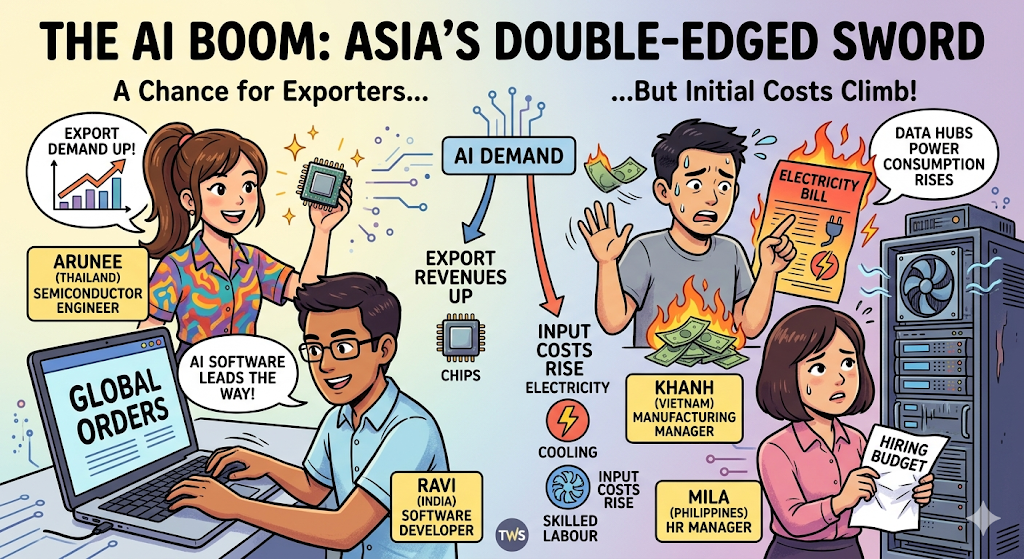
Asia is facing a double inflation hit. One comes from higher oil and gas prices after West Asia tensions. The other comes from the AI boom, which is raising electricity use, chip demand and infrastructure spending.
For India, the short-term pain can come through fuel, transport, food and imported goods. In the long term, expensive energy and higher borrowing costs can hit household budgets, company expansion and government spending.
The pressure is not based on one data point. IMF, Reuters, IEA and market reports show that energy, AI demand and currency weakness are moving together.
The AI boom can help Asian exporters in semiconductors, electronics and software. But before productivity gains arrive, electricity, chips, cooling systems and skilled labour can become costlier.
India imports around 90% of its crude oil, according to Reuters, 2 June 2026. If crude stays expensive, petrol, diesel, freight, fertiliser and food transport can become costlier.
A LoansJagat report, published on 14 May 2026, also flagged that higher oil prices and rupee weakness could raise inflation pressure in India. This can hurt borrowers because lenders may price loans more cautiously if inflation stays high.
There is also a positive side. If India attracts AI-linked manufacturing, cloud infrastructure and electronics investment, jobs and exports can improve. The gain, however, may take longer than the price shock.
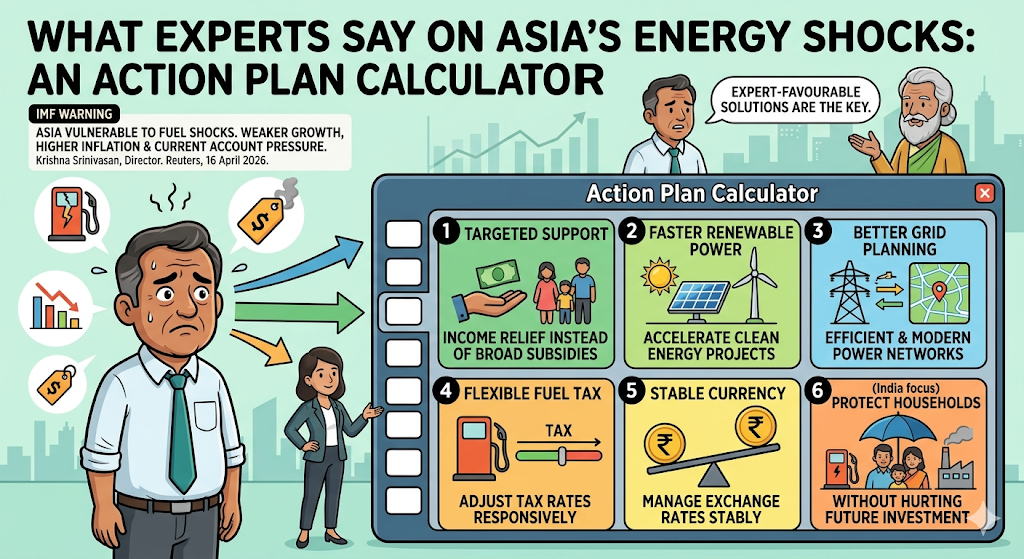
IMF Asia-Pacific Director Krishna Srinivasan said Asia is more vulnerable because of its heavy reliance on Middle East fuel, Reuters reported on 16 April 2026. He warned of weaker growth, higher inflation and current account pressure.
Experts favour targeted support instead of broad fuel subsidies. Faster renewable power, better grid planning, fuel tax flexibility and stable currency management can reduce the shock. For India, the biggest task is to protect households without hurting investment.
Asia’s AI boom is no longer only a growth story. For India, the next risk is higher living costs before the tech gains reach ordinary households.
*T&C Apply
Costly crude oil creates problems for India because the country buys most of its oil from other nations. When crude becomes expensive, India has to pay more dollars for the same oil. This can put pressure on the rupee. After that, petrol, diesel, LPG, transport and food bills may rise. Many companies also spend more on fuel, packaging, chemicals and shipping.
Their profit can get hit. If prices rise too much, banks may keep loan rates higher for longer. That affects home loans, business loans and market mood. So crude oil prices directly touch families, companies and investors.
Why Are Petrol And Diesel Prices So High In India?
Petrol and diesel prices remain high in India mainly because of taxes. The central and state governments earn a lot from fuel, and this money goes into roads, schemes, salaries, defence and other expenses. India also imports most of its crude oil, so global price changes and a weak rupee can push costs up.
But when crude becomes cheaper, the full benefit does not always reach people because taxes stay high. For the public, this means costlier travel, higher delivery charges and expensive food items. So fuel prices help government income, but ordinary families end up paying more.
Related Financial News | |||









.png&w=3840&q=75)



