By continuing, you agree to LoansJagat's Credit Report Terms of Use, Terms and Conditions, Privacy Policy, and authorize contact via Call, SMS, Email, or WhatsApp
Disclaimer: The information published on LoansJagat is intended for general informational and educational purposes only and should not be considered financial, legal, or investment advice. Interest rates, loan terms, statistics, and other data may change over time and may vary by lender or source. Please verify the latest information and consult a qualified financial advisor or the respective Bank/NBFC before making any financial decisions.
Subscribe Now
About the author

‘Simplify Finance for Everyone.’ This is the common goal of our team, as we try to explain any topic with relatable examples. From personal to business finance, managing EMIs to becoming debt-free, we do extensive research on each and every parameter, so you don’t have to. Scroll up and have a look at what 15+ years of experience in the BFSI sector looks like.
Related News
Simplify All Your Loans Into One Affordable EMI

Customers Served

Debt Consolidated

1200+ Reviews

Locations in India
Club all Loans & Credit Card Bills into Single EMI

Quick Apply Loan
Consolidate your debts into one easy EMI.

Takes less than 2 minutes. No paperwork.

10 Lakhs+
Trusted Customers

2000 Cr+
Loans Disbursed

4.7/5
Google Reviews

50+
Banks & NBFCs Offers
Other services mentioned in this article
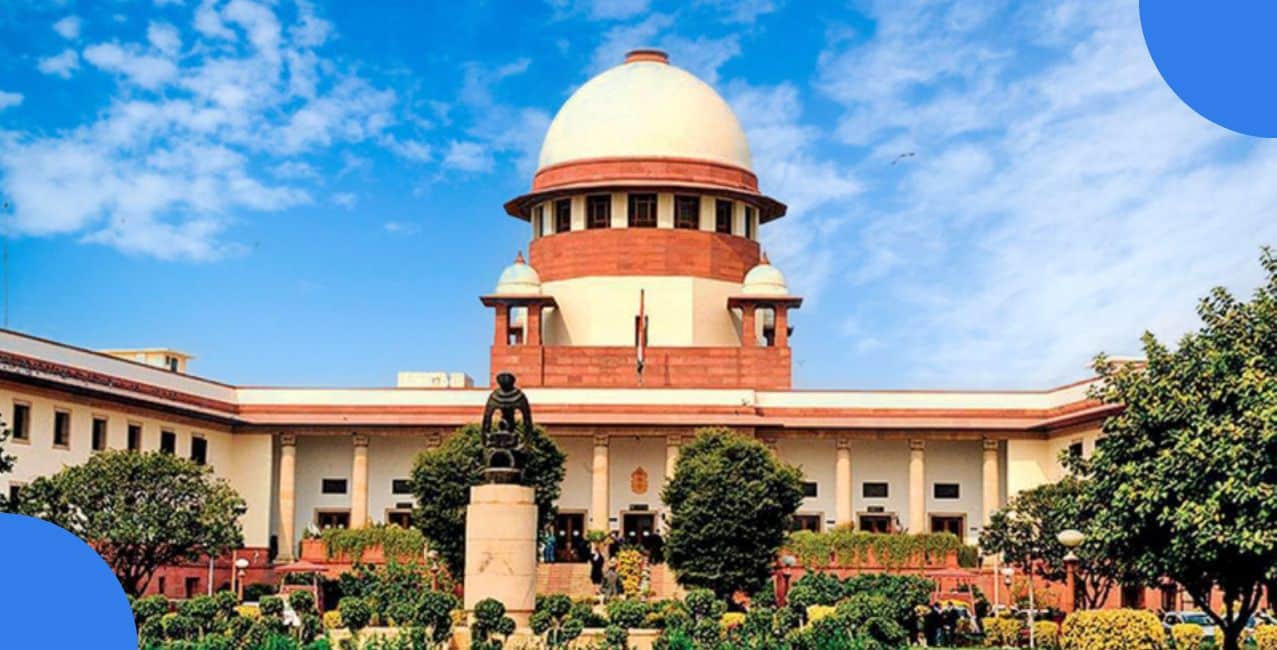
A Supreme Court hearing on wife maintenance has revived a basic legal question in India: can a husband cite low earnings and still avoid payment?
A fresh Supreme Court hearing has pushed maintenance law back into the spotlight. During the hearing, the husband said he earned only ₹325 a day, or about ₹9,000 a month, and could not pay ₹12,000 per month to his wife.
The bench was not convinced. Reports published by India Today on 1 March 2026 and Bar & Bench on 28 February 2026 said the Court questioned whether such an income claim was believable in present conditions and signalled that maintenance to the wife could not be dodged so easily. The Court has reserved judgment, so the strongest lines from the hearing remain oral observations for now.
The immediate issue came up in a divorce-linked dispute where the husband described himself as a daily wager employed with Hindustan Auto Agency. According to India Today’s 1 March 2026 report, he said that even after working through the month, his income stayed near ₹9,000, making ₹12,000 monthly maintenance impossible.
The bench reportedly found the figure difficult to accept and even indicated that it could call the employer to verify the claim. Bar & Bench, in its 28 February 2026 report, similarly recorded the Court’s remark that hardly anyone earns ₹9,000 a month now. Both reports also noted the wife’s demand for either continuing monthly support with annual escalation or a ₹30 lakh one-time settlement.
The viral line about paying maintenance even by taking a loan has gained traction because it captures the Court’s mood during the hearing. But the legally careful reading is narrower. What is publicly verified so far is a strong oral pushback from the bench against a low-income defence, not a final written ruling creating a new blanket formula for all maintenance disputes. That distinction is important for news coverage and for SEO-led legal reporting.
Read More :Court Says Husband’s EMIs Cannot Reduce Wife’s Maintenance Amount
How Earlier Rulings Set The Ground For This?
This hearing fits a longer judicial line. In Rina Kumari @ Rina Devi @ Reena v. Dinesh Kumar Mahto, judgment dated 10 January 2025, the Supreme Court said Section 125 CrPC is a social justice measure meant to prevent destitution and vagrancy. In that case record, the husband’s pay-slip showed a gross salary of ₹62,000 and net salary of ₹43,211, while the Family Court had directed ₹10,000 per month as maintenance from 3 August 2019. The judgment underlined that a wife’s maintenance right cannot be brushed aside through weak excuses.
Then, in Rajnesh v. Neha-style principles reiterated in a later Supreme Court judgment dated 31 January 2025, the Court said maintenance must account for food, clothing, shelter, education, medical expenses, the standard of living in the matrimonial home, and the impact of inflation. It also said that even if a husband claims to have no source of income, his ability to earn based on education and qualifications must be considered. The same judgment recorded that the earlier award under Section 125 CrPC in that dispute was only ₹3,000 per month and found that the husband had not been forthright in disclosing income and assets.
In another Supreme Court judgment dated 10 December 2024, the Court noted evidence that the appellant had earned over ₹4,00,000 per month between 2007 and 2016 and said courts must consider inflation, rising living costs and truthful financial disclosure while fixing maintenance. It also recorded a pattern of deliberate suppression of assets aimed at reducing liability.
Earlier Supreme Court rulings also show a clear pattern: concealment and weak income pleas usually fail.
These figures strengthen the present hearing’s core takeaway: courts test disclosure, earning capacity and actual lifestyle carefully.
The bench’s message, as captured by India Today and Bar & Bench, was simple: a doubtful income claim will not easily defeat a wife’s maintenance claim. The husband’s side said the income disclosure was genuine. The wife’s side asked for ₹12,000 per month with annual increase or ₹30 lakh as one-time settlement.
Separately, a LoansJagat report published on 25 November 2025 noted that divorce-related financial disputes often spill into loan records, co-borrower exits and property documentation, adding another layer to marital breakdowns.
The present hearing does not yet amount to a final Supreme Court rule saying every husband must literally borrow to pay maintenance. But the direction is clear. Courts are increasingly unwilling to accept bare low-income claims when a wife’s right to dignified support is at stake.
*T&C Apply
If you want, I can now turn this into a cleaner website copy version with embedded outlet names as hyperlinks and no visible citations format.
Related Financial News | |||









.png&w=3840&q=75)



