By continuing, you agree to LoansJagat's Credit Report Terms of Use, Terms and Conditions, Privacy Policy, and authorize contact via Call, SMS, Email, or WhatsApp
Disclaimer: The information published on LoansJagat is intended for general informational and educational purposes only and should not be considered financial, legal, or investment advice. Interest rates, loan terms, statistics, and other data may change over time and may vary by lender or source. Please verify the latest information and consult a qualified financial advisor or the respective Bank/NBFC before making any financial decisions.
Subscribe Now
About the author

LoansJagat Team
‘Simplify Finance for Everyone.’ This is the common goal of our team, as we try to explain any topic with relatable examples. From personal to business finance, managing EMIs to becoming debt-free, we do extensive research on each and every parameter, so you don’t have to. Scroll up and have a look at what 15+ years of experience in the BFSI sector looks like.
Related News
Simplify All Your Loans Into One Affordable EMI

Customers Served

Debt Consolidated

1200+ Reviews

Locations in India
Club all Loans & Credit Card Bills into Single EMI

Quick Apply Loan
Consolidate your debts into one easy EMI.

Takes less than 2 minutes. No paperwork.

10 Lakhs+
Trusted Customers

2000 Cr+
Loans Disbursed

4.7/5
Google Reviews

50+
Banks & NBFCs Offers
Other services mentioned in this article
Gold and silver are traditionally seen as safe-haven assets. Whenever wars begin or stock markets turn volatile, investors usually rush toward precious metals. However, recent global trends have surprised markets.
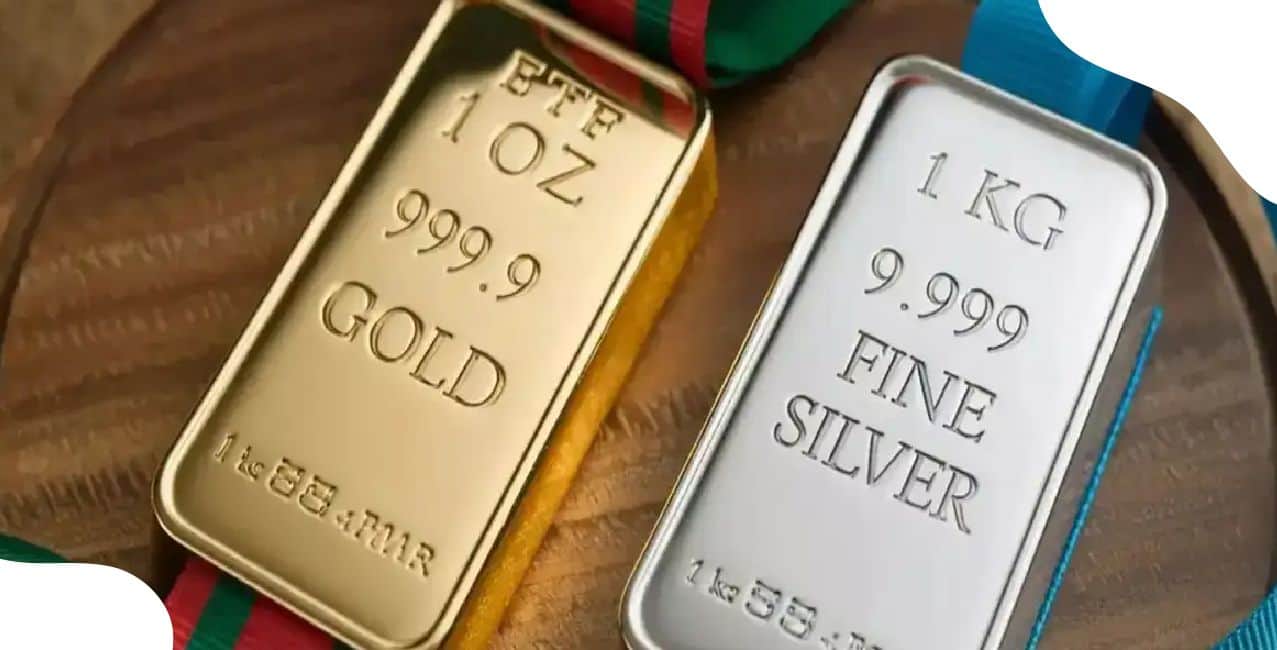
Despite escalating tensions involving the US-Iran conflict and turbulence across global equities, gold prices slipped below the $4,700 mark while silver dropped under $70.
Instead of rising on geopolitical fears, both metals have witnessed sharp corrections, leaving investors confused about what is really driving prices.
Normally, geopolitical conflicts push investors toward gold. But the current market cycle is behaving differently. Analysts say macroeconomic forces are overpowering war-related fears.
Rising oil prices have become the dominant global theme, increasing inflation concerns worldwide. Instead of buying gold, investors are positioning themselves around energy markets and inflation-linked assets. As a result, the usual “war equals higher gold” relationship has weakened.
At the same time, investors facing volatility in equities are selling liquid assets, including gold — to raise cash, which has added downward pressure on prices.
The primary reason behind the fall lies in monetary expectations.
A stronger US dollar makes gold and silver more expensive for global buyers, reducing demand. Meanwhile, expectations that interest rates may remain higher for longer have reduced the appeal of non-yielding assets like precious metals.
Higher bond yields offer investors regular returns, unlike gold or silver, which do not generate income. This has triggered a shift of funds from metals into bonds and other yield-based investments.
Another overlooked factor is market positioning.
Silver had rallied sharply in 2025, delivering massive gains. After such strong rallies, traders often lock in profits. Recent declines were accelerated by forced liquidations, ETF selling, and margin calls as volatility increased globally.
This explains why silver has fallen more sharply than gold, it is partly an industrial metal and reacts faster to economic uncertainty.
Gold is often called an inflation hedge, but the current inflation cycle is different. Rising oil prices are pushing inflation higher, which forces central banks to keep interest rates elevated.
Higher rates strengthen currencies and bond yields, indirectly hurting gold demand. In short, inflation is supporting tighter monetary policy, and that is negative for bullion prices right now.
The recent fall in gold and silver shows that markets are currently driven more by interest rates, dollar strength, and liquidity needs than geopolitical tensions.
Even amid war and stock market volatility, investors are prioritising yield-generating assets over traditional safe havens. Unless rate-cut expectations return or the US dollar weakens significantly, precious metals may continue to remain volatile in the near term.
*T&C Apply
|
|
|
|
|
|









.png&w=3840&q=75)



